Amaravati, a Hyderabad-based startup, has come up with a unique smartphone-based respiratory audio diagnostic to help identify potential TB cases with the involvement of the Andhra Pradesh government and RTIH.

Swaasa has deployed its AI-powered respiratory screening platform across primary health centers in East Godavari district of Andhra Pradesh on a pilot basis under the MedTech Innovation Challenge 2025 in collaboration with the state government and Ratan Tata Innovation Hub.
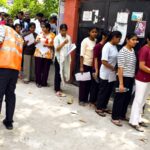
In villages across East Godavari district, healthcare workers carrying smartphones are helping to identify tuberculosis and respiratory diseases among people who might otherwise not undergo medical screening.
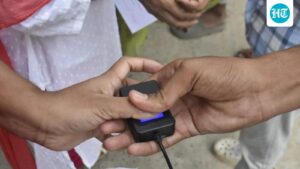
Instead of relying solely on traditional field surveys, auxiliary nurse midwives now ask villagers to cough into a mobile app developed by SWASA that analyzes respiratory sounds using artificial intelligence and recommends further diagnostic tests.
“Our vision is to make respiratory screening accessible to everyone. This pilot shows how a simple cough, captured on a smartphone, can enable early detection even in asymptomatic cases,” Narayana Rao, founder and CTO of Salcit Technologies, told PTI.
The initiative, implemented under the MedTech Innovation Challenge 2025, screened nearly 8,000 people within six weeks through Swaasa, an AI-powered respiratory health screening platform developed by Salcit Technologies.
For many villagers, especially the elderly, daily wage workers and people living in remote enclaves, the screening process only took a few minutes.
Health workers involved in the program said the technology has become useful in rural areas where access to health care is limited and many people delay testing until illnesses become serious.
The AI-based platform analyzes cough sounds recorded via smartphone to identify people at risk of developing tuberculosis, chronic obstructive pulmonary disease (COPD) and asthma.
The pilot project was integrated into the public health workflow, enabling door-to-door screening by ANMs, real-time AI-based risk stratification, and targeted referrals for confirmatory tests such as nucleic acid amplification testing, chest X-rays and spirometry, followed by medical officer-led follow-up and linkage to treatment.
The project was implemented under the aegis of Andhra Pradesh Health Department.
According to Rao, approximately 36 percent of TB cases identified during the trial were asymptomatic and would have remained undetected during traditional screenings.
The screening initiative has reportedly improved TB diagnostic results by approximately 15 percent compared to traditional active case detection methods used in field surveys.
Aside from detecting tuberculosis, screening revealed a hidden burden of chronic respiratory diseases among villagers, with the risk of chronic obstructive pulmonary disease ranging between 6.5 percent and 9.5 percent and the risk of asthma between 1.6 percent and 1.9 percent.
Among asymptomatic individuals reported during screening, approximately 50 percent reportedly showed abnormal lung patterns during screening
Rao said that further examination highlights the importance of early detection.
The deployment also helped identify operational challenges and improve infection control practices in field environments while understanding frontline workers’ expectations and usability needs, healthcare officials said.
The pilot project used structured micro-planning at the sub-center level with specific screening objectives for NMs, active supervision by medical officers and field managers, and real-time monitoring through digital dashboards.
Medical officers and field teams tracked daily examinations and referrals and linked treatment and follow-up care through a surveillance system across primary health centers and villages.
According to Rao, the platform has demonstrated up to 95 percent compliance with spirometry tests while maintaining a failure rate of less than 1 percent during field deployment.
The system is non-invasive, radiation-free and requires no consumables or specialized technicians, making it suitable for large-scale deployment in public healthcare programmes.
The platform is also integrated with Ayushman Bharat Digital Mission systems, enabling registration of patients through ABHA IDs and linking with national TB surveillance platforms like Nikshay.
Rao said more efforts are underway to support smoother adoption within national healthcare programs.
Building on the pilot project in Andhra Pradesh, Salcit Technologies aims to scale the AI-powered screening model across multiple districts in the state, enhance integration with state and national TB programs, and support efficient allocation of diagnostic resources through better triage.
India is intensifying its efforts under its Mukt Abhiyan program to eradicate tuberculosis through screening, testing, treatment and tracing mechanisms, especially among the rural and vulnerable population.
However, for villagers in East Godavari, the process remains remarkably simple: a cough into a smartphone can help detect the disease before it becomes life-threatening.
The deployment process is designed as a closed-loop care screening model powered by AI.
This initiative was followed by specific daily screening goals for each ANM and active supervision by medical officers and field managers.
Healthcare teams also used real-time dashboards to monitor and track referrals and ensure follow-up care, allowing administrators to make field-level corrections where required.
Field-level deployment also helped authorities understand the challenges of infection control in rural field settings and the expectations of frontline workers regarding ease of use and workflow integration.
Swaasa has performed more than five respiratory assessments to date and is licensed under the Health Insurance Portability and Accountability Act, ISO 27001 and ISO 13485/IEC 62304 standards, the company said.
The platform is also licensed under Central Drugs Standards Control Organization Class B certification through the Drugs Control Department, Telangana, as a software as a medical device.
Officials and corporate representatives described the Andhra Pradesh initiative as a replicable model for deploying AI-assisted respiratory screening programs at the state and national levels.
This article was generated from an automated news feed without any modifications to the text.