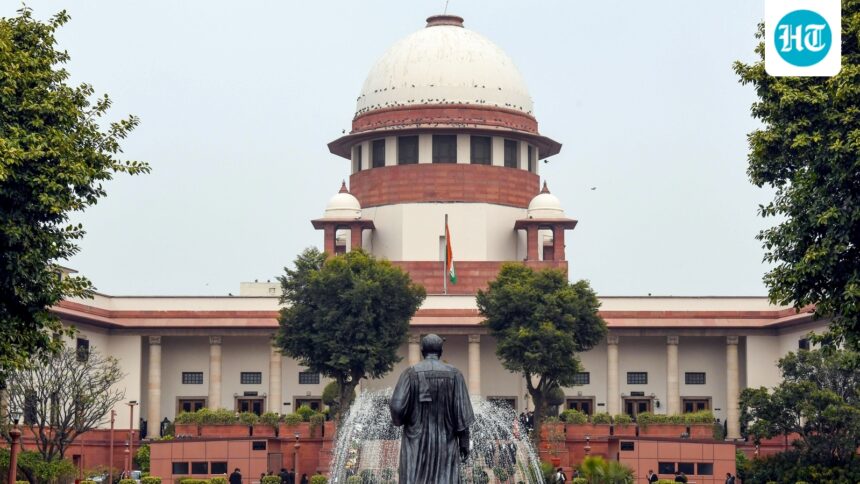
The Supreme Court on Friday suspended the Punjab government for not arresting the “big sharks” in drug trafficking, stating that the increase in narcotic drug cases in the state is “worrying” and the police should reconsider their strategy to deal with it as the situation spirals out of control.

The court was dealing with a suo motu petition to set up exclusive courts to try cases under special laws like the National Investigation Agency (NIA) Act, the Narcotic Drugs and Psychotropic Substances (NDPS) Act among others.
As advocates general from all states were present during the hearing either physically or virtually, Chief Justice of India (CJI) Surya Kant and Justice Joymalia Bagchi referred to Maninderjeet Singh Bedi, Solicitor General of Punjab, and said: “The increase in NDPS cases in your state is alarming. So what is the state doing about it?”
The court referred to a news report highlighting the plight of families where boys and men lose their lives one after another due to drug addiction. “You should arrest these big sharks instead of small drug peddlers because the situation is getting out of control. All stakeholders should reconsider their strategy,” the council said.
Bedi told the court that the state is aware of the problem and intensive measures are being taken to target the drug menace. Not convinced, the CJI commented, “Your police are more interested in getting publicity. The police must be sensitized. Everyone knows whom to arrest and whom to release. You must get to the root of the matter and identify who the key players are.”
After dealing with such cases while in the Punjab and Haryana High Court, the CJI said: “These people are very influential. They do not work in silos. They are a mafia, they have a deep-rooted syndicate that requires coordination among states. Your motto should be how to end this crime, which is why any cooperation should be welcome.”
Assistant Secretary General Aishwarya Bhatti said that the Center has agreed to provide this $2 crore for infrastructure and recurrent expenses to cover salaries of judicial officials and staff while the building and other logistics should be provided by the Supreme Court in consultation with the state government. The court asked the chief justices of the high courts concerned to consult with the state governments to provide the necessary space for setting up these courts within one month.