LUCKNOW: Uttar Pradesh has released a comprehensive district-level culinary map under the ‘One District One Cuisine’ (ODOC) scheme, allocating each of the state’s 75 districts with a set of signature dishes for branding, marketing and export. Every item on the menu is vegan.

Lucknow, recognized by UNESCO as a World City of Gastronomy and cited by its chief minister when announcing the scheme last November, has been earmarked for rewari, mango produce, chaat and malai makhan. Dishes like Galawati kebab, awadi biryani, nihari kulcha and kakori kebab – dishes that have made the state capital’s culinary identity so significant beyond its borders – do not feature.
Moradabadi biryani, among the most popular dishes in the state’s west, is also absent from the list notified on Tuesday.
The cakes and bakery products are allocated to Gautam Budh Nagar, the National Capital Region comprising Noida and Greater Noida. Raebareli’s entry reads simply: Spices.
The scheme was announced by Chief Minister Yogi Adityanath on November 8 last year, and was formally launched by Union Home Minister Amit Shah on January 24 this year, on the lines of the ‘One District, One Product’ program in the state. The government allocated $150 million for implementation and artisans and businessmen will be eligible for subsidies of up to 25%, maximum $20 thousand. Support can only be used once. The exact details of the support program have not yet been published.
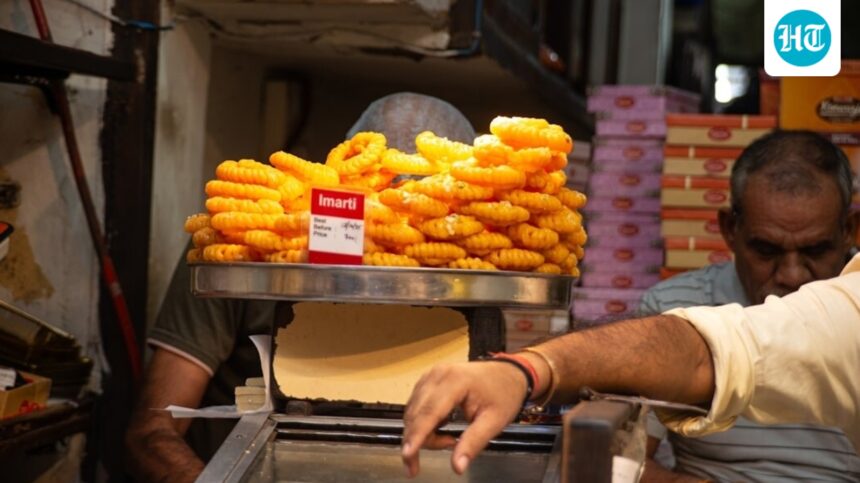
In many regions, the menu reflects a true and diverse regional tradition. White carrot sweets from Azamgarh, Mahoba dates, bundili dal-based preparations from Hamirpur, thandai, lassi and banarsi paan from Varanasi, and Imarti Jaunpur represent the kind of locally rooted and historically grounded foods that the chart is designed to document. Pita Agra, Pedda Mathura and Chappan Bhog – among the state’s most popular sweet traditions – are prominently included.
“The aim is to increase the presence of UP kitchens in the Indian and global food plate by improving quality, packaging, branding and marketing practices,” said Shashi Bhushan Lal Sushil, Principal Secretary, Export Promotion and MSME Department, UP. The scheme envisions shelf life improvements, quality standardization, a custom logo for each specific delicacy, and market access through festivals, exhibitions and online aggregators.
But the vegetarian nature of the menu, and the choices made within it, raised doubts.
Pushpesh Pant, president of the Indian Cuisine Society and food historian, was unimpressed. “I find this exercise laughable and not worthy of serious comment,” he said, adding that the word “kitchen” was fundamentally misunderstood. “There should at least be a clearly identifiable dish.” He noted that regions are administrative units that are periodically redrawn from existing units, severing the common culinary inheritance in the process. “Food does not recognize man-made boundaries.”
A senior MSME official, who requested anonymity, said several factors were taken into consideration before finalizing the list of other direct operating costs. These included branding, packaging and passing on benefits to legitimate claimants.