

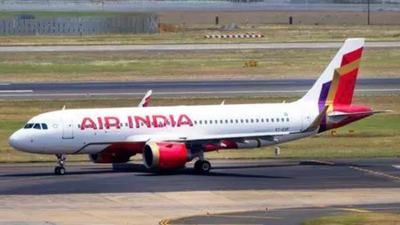
Air India’s board will meet on May 7 to review cost-saving measures, discuss CEO succession plans and consider the company’s financials for fiscal 2026 as rising losses and conflict in the Middle East increase pressure on the Tata Group-owned carrier, news agency PTI reported.The board, headed by Tata Sons Chairman N Chandrasekaran, is scheduled to meet in Mumbai, sources told news agency PTI.
He watches
Why rising jet fuel prices are putting pressure on Indian Airlines: Explained
The Air India group is expected to incur losses of over Rs 22,000 crore in the financial year ending March 2026, with rising fuel costs and airspace disruptions worsening the situation.The sources said that among the main items on the agenda are cost-cutting measures, choosing the next CEO, and reviewing financial performance for the period 2025-2026.
Tata Sons and Air India did not comment.Campbell Wilson, current CEO and veteran member of Singapore Airlines Group, is expected to step down later this year, prompting a search for a successor.Names from Air India, Singapore Airlines and potential European candidates are understood to be under consideration.There is also the possibility of a joint managing director or CEO structure, one of the sources said.Singapore Airlines owns a 25.1 per cent stake in Air India.
Apart from Chandrasekaran and Wilson, the airline’s board includes Singapore Airlines CEO Goh Choon Phong, Sanjeev Mehta, Alice Vaidian, BR Ramesh and BB Balaji.As part of efforts to contain costs, Air India is considering delinking meals from ticket prices and making lounge access optional for business class passengers.Under the plan, a lower fare class may be offered to passengers who do not want meals, while business class passengers can choose whether they want to pay for lounge access.The sources said that the proposals are still under discussion and no final decision has been taken on them.The airline has also been hit by airspace restrictions linked to the conflict in West Asia, forcing it to take longer international routes and increase fuel consumption.In a letter to staff on May 1, Wilson said the airspace situation and fuel costs remained a major challenge.“…the huge rise in jet fuel prices, which, coupled with airspace closures and longer flight routes, has made many of our international flights unprofitable to operate,” he said.Wilson said cuts in international flights made in April and continuing in May may need to be extended into June and July.He added: “We deeply regret the disruption to our customers’ plans and crew rosters, and we hope that the situation in the Middle East stabilizes – and the Strait of Hormuz opens – soon so that we can return to a more normal state.”He added that domestic profitability was also affected, but to a lesser extent due to the government’s 25 percent cap on local fuel price increases.“To partly compensate for the significant rise in costs, we have increased airfare prices and introduced fuel surcharges, but it is understood that rising airfare prices are impacting customer demand, so we can only raise prices so far before people decide to stay home,” he said.On April 26, Air India, IndiGo and SpiceJet told the government that the Indian aviation sector was under severe pressure and was about to “cease operations”, seeking changes in jet fuel prices and financial support.Jet fuel prices for international flights were raised by just over 5 percent in the monthly review on May 1.Globally, airlines are also facing pressure from turmoil in West Asia, where many airlines are adopting cost-cutting measures, while US low-cost carrier Spirit Airlines has halted operations.Asia and Europe could face jet fuel shortages in the coming months, with fuel costs increasingly pushed through by ticket prices, IATA Director-General Willie Walsh said on April 29.