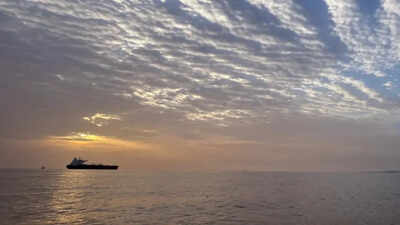
US President Donald Trump claimed that Washington had the Strait of Hormuz under “total control,” and described the ongoing naval blockade as a “tremendous success.” However, a very large crude tanker (VLCC) operated by the National Iranian Tanker Company reportedly evaded the US Navy and arrived in the Asia-Pacific region, carrying more than 1.9 million barrels of crude oil worth about $220 million, according to TankerTrackers.com.The ship, identified as a “huge” one, was last spotted off Sri Lanka more than a week ago and is now moving through Indonesia’s Lombok Strait towards the Riau Archipelago.
He watches
BREAKING: After Hormuz, an oil tanker is seized off the Yemeni coast in a dramatic takeover, and armed men storm…
In a post on site“Her name is Huge (9357183), and we last saw her off Sri Lanka over a week ago.
It is currently crossing the Indonesian Lombok Strait towards the Riau Archipelago. “So far, the HUGE ship has not broadcast on the AIS system since 2026-03-20, when it left the Strait of Malacca heading to Iran,” she added.The report comes as Iranian state media claims that at least 52 Iranian ships violated the blockade imposed by the United States during a 72-hour period. According to Fars News Agency, the ships included 31 oil tankers and 21 cargo ships.
Al Jazeera reported that the US military confirms that it has intercepted or forced about 41 ships linked to Iran to return since the start of the blockade.Despite the reported violations, US officials have insisted that the blockade is working, claiming that it has cost Tehran billions of dollars in lost revenue and severely limited its ability to export oil. Washington also said Iran may soon have to store excess oil until its capacity is exhausted, which could halt production.Earlier last month, data from maritime tracking company Vortexa indicated that at least 34 tankers linked to Iran had managed to bypass the US naval blockade. Of these ships, 19 ships exited the Gulf while 15 entered, indicating continued ship movement despite the tightened restrictions.The United States has also redirected 48 ships in the Persian Gulf region over the past 20 days as part of its efforts to impose restrictions on Iranian maritime activity, especially around the Strait of Hormuz.The United States has made clear that its blockade targets Iranian ports and coasts, not the Strait of Hormuz itself. The United States has also warned shipping companies that they could face sanctions if they pay Iran for safe passage through the Strait of Hormuz.An alert from the US Office of Foreign Assets Control (OFAC) said these payments could include not only cash but also “digital assets, compensation, informal swaps, or other in-kind payments,” including charitable donations or embassy payments.Iran had previously restricted movement in the strait after the conflict broke out on February 28, and later offered alternative routes near its coast for a fee.The Strait of Hormuz remains a critical global corridor, handling nearly a fifth of the world’s oil and natural gas trade. The US blockade, imposed on April 13 and later expanded, is part of a broader effort to pressure Iran economically and strategically, even as maritime tensions and diplomatic efforts continue in parallel.