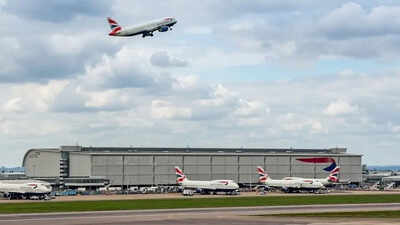
Britain changes airline rules to avoid airport chaos this summer as tensions rise in the Middle East / Image: File
The UK government is preparing for the possibility of travel disruption in the summer by allowing airlines to cancel or consolidate flights in advance without losing valuable airport space. The temporary move comes as global jet fuel markets remain under pressure following turmoil linked to the conflict over the Strait of Hormuz, one of the world’s most important oil shipping routes.Under normal aviation rules, airlines operating at busy airports such as Heathrow and Gatwick must use at least 80% of their take-off and landing slots or risk losing them to competitors. The system is commonly known as the “use it or lose it” rule.Now, the government wants to temporarily relax these rules so airlines can reduce their schedules early if fuel supplies tighten later in the summer. Officials say the goal is to avoid sudden cancellations at airports and prevent airlines from operating nearly empty “ghost flights” just to protect their airport slots.Transport Minister Heidi-Alexander said the measures were intended to give families “greater confidence” while helping airlines plan realistic schedules in advance. According to the Department for Transport, there is currently no immediate shortage of jet fuel in the UK, but contingency plans are being prepared before the busy holiday season heats up.
The Strait of Hormuz crisis in Europe
The growing concern comes after the severe disruption of fuel shipping routes linked to the escalating tensions in the Middle East.
The Strait of Hormuz, through which nearly a fifth of the world’s oil and gas passes, has become a major pressure point for global energy markets.Industry data cited in recent reports showed that Gulf jet fuel exports fell sharply during the crisis period, raising concerns that airlines across Europe may suffer from higher costs and reduced fuel availability during peak travel months.The UK government has already asked local refineries to maximize jet fuel production as part of wider emergency planning. Energy Minister Michael Shanks confirmed that officials are working closely with airlines, airports and fuel suppliers to monitor inventory levels daily.Although British airlines say they are not yet experiencing direct shortages, many airlines across Europe are already starting to adjust their operations. Lufthansa has reportedly canceled thousands of flights to conserve fuel and manage costs.The uncertainty has also put increased pressure on aviation finances. Airlines are facing sharply rising fuel prices, unexpected passenger demand, and operational planning challenges simultaneously.
What do the new British Airways rules mean?
The government says the new approach aims to reduce stressful last-minute disruptions rather than create more cancellations. Instead of stopping flights hours before departure, airlines will be encouraged to make decisions much earlier and move passengers to alternative services in advance.Officials say the flexibility will allow airlines to:
- Combine multiple flights to the same destination,
- Avoid unrealistic timetables,
- Reducing fuel waste from lightly booked aircraft,
- And protect passengers from chaos at the airport.
Most importantly, passenger rights remain unchanged. Under UK law, passengers whose flights are canceled are still entitled to any of the following:
- A full refund, or
- Arrange an alternative flight.
However, airlines are also lobbying the government to classify fuel shortages as an “exceptional circumstance”, which could allow airlines to avoid paying additional compensation for short-notice cancellations.Meanwhile, the government has advised travelers to continue checking airline updates before departure and ensure they have appropriate travel insurance.
Airlines are facing pressure
Fears of fuel outages come at a difficult moment for the aviation industry, which is already struggling with the high cost of sustainable aviation fuel (SAF). Britain introduced SAF blending mandates in 2025, requiring fuel suppliers to gradually increase the amount of clean aviation fuel used on flights.But airlines and fuel suppliers say production is still limited and very expensive. Industry groups have warned that sustainable fuel supplies are nowhere near the levels needed to meet long-term climate goals.The International Air Transport Association (IATA) has repeatedly warned that Sudanese jet fuel (SAF) currently represents less than 1% of global jet fuel use, while costs remain several times higher than conventional fuel.At present, the UK Government insists there is “no current need” for travelers to cancel or change holiday plans. But behind the scenes, it is clear that officials are preparing for a difficult summer if tensions in global fuel supplies worsen further.