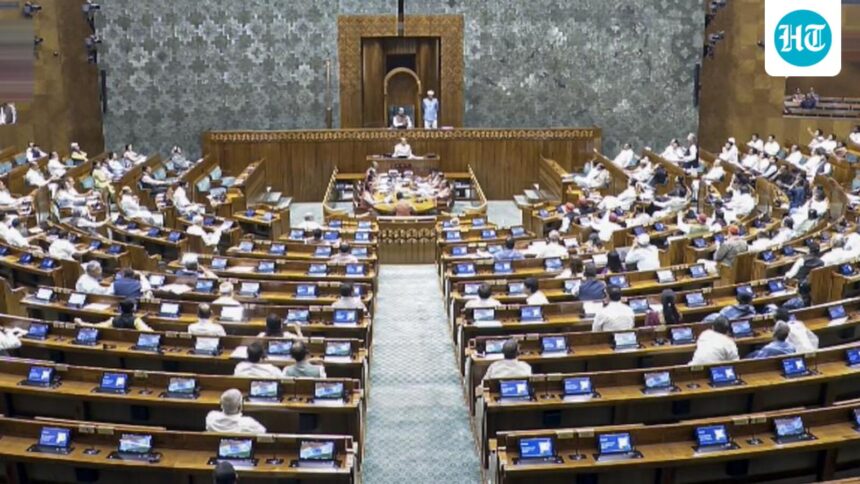
The Parliamentary Standing Committee on Rural Development and Panchayati Raj will submit a report on the impact of mining and industrial corridors on rural population and land during the monsoon season in Parliament, people familiar with the matter said.

Last Wednesday, the committee met with officials from the Ministry of Mines and Land Resources Management, the Ministry of Rural Development and the Ministry of Tribal Affairs. She discussed the protests in Odisha’s Rayagada over the construction of a road for Sijimali bauxite mines, land acquisition for the Ken Betwa river linking project in Madhya Pradesh and Uttar Pradesh, issues related to deforestation, Gram Sabha approval processes and rigging.
The Standing Committee will reach out to the Ministry of Environment, Forests and Climate Change to comment on issues related to deforestation, and a civil society organization from one of the affected areas.
The lack of documentation of local communities’ opposition to mining projects is likely to be among the issues that could be addressed in the Standing Committee’s report.
Saptagiri Sankar Ulaka, Congress MP from Odisha, chairs the standing committee.
In its December 2025 report entitled “The Right to Fair Compensation and Transparency in Land Acquisition, Rehabilitation and Resettlement Act of 2013 – Implementation and Effectiveness,” the committee considered cases, including land acquisition in Great Nicobar and Lakshadweep, and issues of fair compensation in other tribal areas.
The committee recommended strict implementation of the law so that all persons whose primary source of livelihood depends on Great Nicobar forests, coasts, creeks, beaches, reef flats and shared paths are treated as “affected households” under Section 3(c), even when the land is registered as government or forest land.
In the case of Lakshadweep, the Commission noted that it had come across instances where proposals were advanced on the basis of the claim that since the flat shore of the fore reef or the edge of the lagoon is government land, its appropriation or fencing does not amount to an appropriation affecting people. The committee disagreed with this opinion. It recorded that the law expressly protects the livelihood of government dependents and common lands.