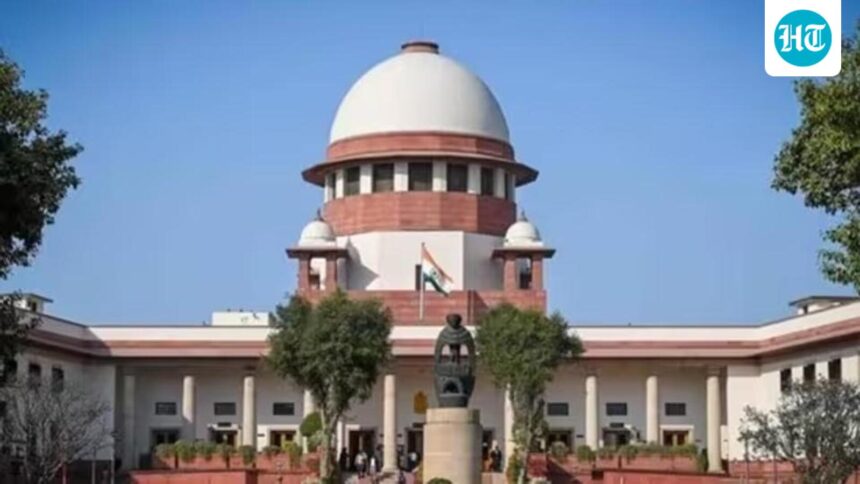
Directing a woman to continue her unwanted pregnancy would be a direct affront to her right to live with dignity and reproductive autonomy, while making her “subordinate” to the unborn child, the Supreme Court ruled on Friday, allowing a 15-year-old Delhi girl to terminate her pregnancy that had lasted more than 28 weeks.

A bench of Justices B V Nagrathna and Ujjal Bhuiyan stressed that constitutional courts must give priority to the wishes and welfare of the pregnant woman over procedural and legal restrictions under the Medical Termination of Pregnancy (MTP) Act when faced with unwanted pregnancies that are likely to cause severe mental and physical trauma.
By allowing the minor, who has been admitted to AIIMS Delhi since April 10, to undergo medical termination, the court made it clear that “the court shall not compel any woman, especially a minor child, to continue the pregnancy to full term against her express will.”
The ruling clarified reproductive choice as a fundamental constitutional guarantee. The court held that the right to make decisions relating to one’s body, particularly in matters of reproduction, is a fundamental aspect of personal freedom and privacy under Article 21.
“If a pregnant woman with an unwanted pregnancy is forced to continue that pregnancy, the constitutional rights of the pregnant woman will be violated,” the court noted.
The court stressed that the mother’s well-being and best interests must be a priority, warning against methods that make her “subordinate to the unborn child.” In cases of unwanted pregnancy, continuing with the guidance would negate her dignity, independence and long-term well-being, the court said.
The MTP Act, first passed in 1971 and then amended in 2021, allows all women to legally undergo abortion for up to 20 weeks, and gives an additional extension to women for mental anguish, rape, assault, and health complications, among others.
The ruling is expected to have broader implications for how courts deal with late-term abortion cases, especially involving minors, reinforcing that constitutional protections for dignity, independence and privacy in decision-making cannot be curtailed by strict legal thresholds for when a pregnancy is unwanted.
The ruling also clarified the role of the Constitutional Courts when legal remedies are not available, particularly in cases where the pregnancy exceeds the pregnancy limits stipulated in the Medium-Term Plan Law.
The court rejected strict application of statutory timelines and said that courts exercising writ jurisdiction under Articles 226 and 32 must weigh the facts from the perspective of the woman seeking to end her marriage.
“Can the Constitutional Court say that since a statutory remedy is not available, no constitutional remedy will be available either? That cannot be the approach,” the court said, adding that such an interpretation would push women towards unsafe and illegal abortion centres.
The court warned that refusing assistance in such circumstances may expose women, especially minors, to serious risks, including resorting to unregulated procedures that may cause irreparable harm.
The court noted the psychological distress suffered by the minor, including alleged suicide attempts, and noted that forcing her to continue the pregnancy would have “long-term repercussions” on her mental health, education, social standing and general development.
The court noted that the pregnancy arose as a result of a consensual relationship between minors and was unequivocally unwanted. The girl clearly expressed her unwillingness to continue and was willing to bear the medical risks associated with termination.
The court held that denying her relief would force her to bear “irreversible consequences” and was inconsistent with established constitutional principles that recognize reproductive choice as a fundamental right. It also set aside the Delhi High Court’s April 21 order, which had rejected a petition filed by the minor’s mother to allow her to abort the 28-week-old fetus.
During the hearing, the bench repeatedly emphasized that the court could not substitute its feeling of sympathy for the express wishes of the pregnant minor. “We cannot force a woman to undergo pregnancy. It would be against her bodily autonomy and freedom,” the court noted, even as the Union government, represented by Solicitor General Tushar Mehta and Additional Solicitor General Aishwarya Bhatti, cited concerns about the risks involved at advanced stage of pregnancy and the state’s readiness to take care of the girl and child if she completes the pregnancy to full term.
The Council noted that in cases of unwanted pregnancy, forced continuation may push women towards unsafe alternatives. “If we stop receiving such appeals, they will go to illegal centers and quacks,” she warned.
The girl’s mother was represented by lawyers Amit Mishra and Rahul Sharma.
In a telling note of the complexity of the case, the court noted that “in a case like this, there is no question of winning. Everyone loses.”
Directing that the procedure be carried out at AIIMS Delhi with all necessary medical safeguards, the court asked the minor’s guardian to furnish an undertaking agreeing to the termination.