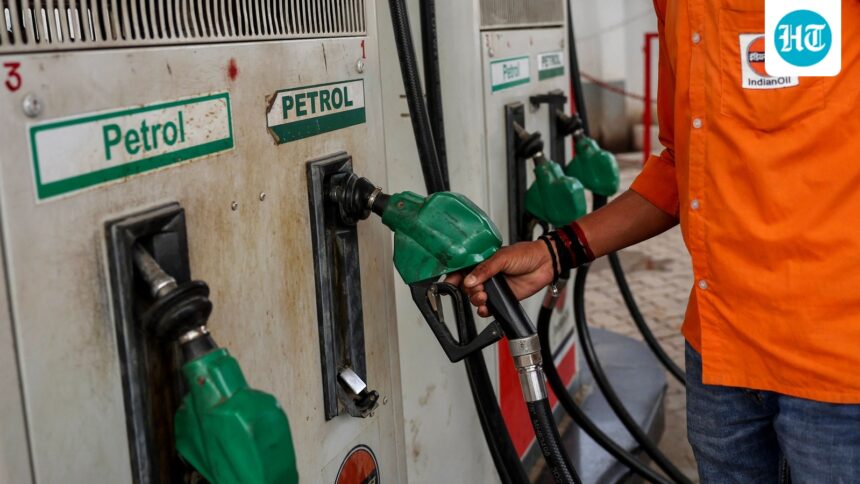
The government is considering blending E100 fuel and moving to flex-fuel vehicles to reduce India’s dependence on imported crude, senior officials said on Wednesday, while also announcing that the Center has allowed blending of jet fuel.

The steps come amid a growing energy crisis caused by the war in West Asia that has choked off supplies of crude oil and gas.
Giving a daily update on the power supply situation, Petroleum Ministry Joint Secretary Sujata Sharma said the government has allowed blends of sustainable aviation fuel (SAF), produced from used cooking oil or ethanol. She was referring to the Ministry’s Official Gazette notification published on Tuesday.
The Notice legally defines aviation turbine fuel (ATF) as a complex mixture of hydrocarbons and as combined hydrocarbons mixed with cooking oil or ethanol, creating a legal basis for SAF. “The way we did it with MS (motor spirit or gasoline), it goes the same way,” she said.
Read also | India amends ATF rules, allows ethanol to be blended into jet fuel
Asked about E100 and flex-fuel vehicles, Sharma said: “I have to say it is an idea whose time has come.”
What is E100?
E100 refers to fuel that is 100% ethanol — or close to 100%, since small amounts of water improve the combustion process. Flex-fuel vehicles are designed to run on any blend of ethanol and gasoline, from pure gasoline to E100, with on-board sensors adjusting engine parameters accordingly. There is precedent: Brazil has been running the world’s most mature flex-fuel program since 2003, with sugarcane-derived ethanol powering a large share of the vehicle fleet – although users typically have the option of purchasing gasoline with a lower percentage of ethanol.
Moving to E100 or higher ethanol blends requires significant vehicle reconfiguration: fuel system components—seals, fuel lines, and injectors—must be upgraded to handle the corrosive properties of ethanol, and engine management systems need to be retuned for the different ethanol combustion characteristics. The fuel provides approximately one-third less energy per liter than gasoline, requiring larger fuel tank capacity or more frequent refueling.
“By blending, we are saving on our imports and consultations with stakeholders are ongoing. In due course, we will inform you of the decision there as well. On flex-fuel as well, the government is trying to bring all stakeholders together,” Sharma said, adding that the timeline will depend on the preparedness of both auto companies and oil refineries. “So this exercise is ongoing,” she said.
Speaking about the efforts of the Department for Promotion of Industry and Internal Trade in facilitating industries, DPIIT Joint Secretary Nidhi Kesarwani said the ministry has taken several measures to facilitate power supply to industry. DPIIT is an arm of the Ministry of Commerce and Industry.
The government has also granted several regulatory exemptions to encourage the adoption and use of alternative fuels across industrial sectors, she added, while providing updates on government initiatives to facilitate energy supply amid the ongoing war in West Asia.
DPIIT’s Petroleum and Explosives Safety Organization (PESO) has expeditiously given regulatory approvals to 467 applications for installation of compressed natural gas (CNG) and compressed biogas (CBG) distribution stations between March 25 and April 21, she said.
She added that in order to protect its availability locally, the government imposed a complete ban on the export of ammonium nitrate on March 18. Ammonium nitrate is used as an explosive in coal production. According to the March 18 notification, the decision was taken in light of “current geopolitical tensions” in West Asia and to ensure adequate supplies of ammonium nitrate for “uninterrupted coal production” in India.
She said the government also issued guidelines on April 2 allowing night-time operation, especially for LPG filling plants, extending operating hours and boosting production capacity.
The government also granted permission to Petronet LNG Ltd on March 30 to operate an additional 5 million metric tons per annum (MMTPA) regasification capacity at the Dahej terminal, taking the total capacity to 22.5 MMTPA, with the aim of improving the availability of natural gas to city gas distribution (CGD) networks.
Keserwani said: “The Department of Investment and International Cooperation held consultations with stakeholders in coordination with the Ministry of Commerce and the Ministry of Energy to address supply and demand challenges in the induction stove sector and evaluate the immediate measures required to stabilize supply and prices.”
She said the government has already reduced basic customs duties on various inputs to provide relief to specific sectors and enhance energy allocations – especially commercial and Papua New Guinea LPG – for their unhindered operations. Industries covered include paint, paper, tires, glass, leather, shoes, and ceramics.