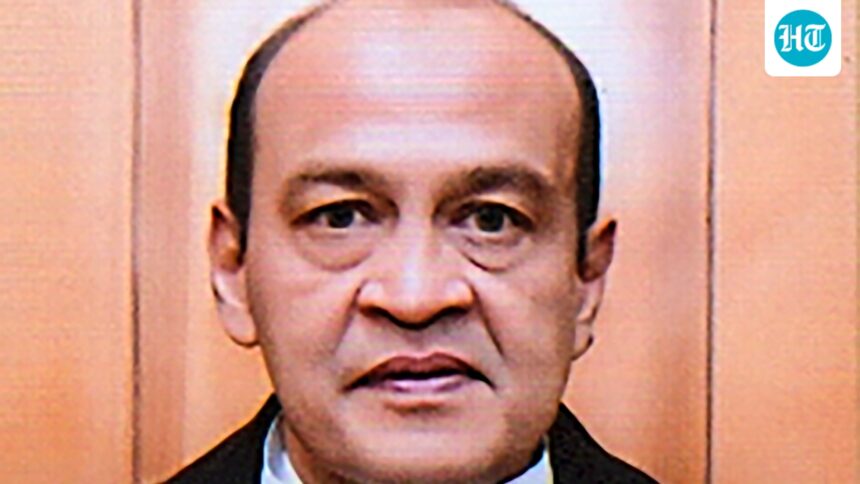
The Lok Sabha-constituted probe committee probing allegations of unaccounted funds discovered at the official residence of Allahabad High Court judge Justice Yashwant Varma formally concluded its proceedings on Tuesday, formally shutting down the parliamentary inquiry following the judge’s resignation earlier this month.

The three-member committee, led by Supreme Court judge Justice Aravind Kumar, decided to submit its report to the Lok Sabha after declaring that no further action was needed in view of Justice Varma’s resignation on April 9, people aware of the developments said.
Read also | The Parle Commission is yet to close Justice Varma’s investigation, and may respond to his criticism
The committee also recorded a letter from the Union government in response to Justice Varma’s strongly worded letter criticizing the investigation. The center’s letter rejected the judge’s allegations of procedural unfairness and bias and defended the committee’s conduct, the people cited above said.
The formal closure marks the culmination of a high-profile and procedurally complex investigation initiated under the Judges (Investigation) Act, 1968, after the Lok Sabha approved a motion in August 2025 seeking the removal of Justice Varma.
The panel, comprising Justice Aravind Kumar, Chief Justice of the Bombay High Court Shrikrishna Chandrashekhar, and senior advocate P V Acharya, conducted multiple rounds of closed hearings, cross-examined at least nine key witnesses, and was about to enter the defense phase when the judge recused himself.
Justice Varma submitted his resignation to President Draupadi Murmu on April 9, stating that he was doing so with “deep pain,” without elaborating on the reasons. Chief Justice of India Surya Kant also informed of his decision on the same day. The resignation came at a time when he was scheduled to begin presenting his defense before the investigation committee from April 10 to 14.
While the resignation effectively halted the impeachment process because the legal mechanism only applies to the sitting judge, the committee has not yet officially closed its proceedings. As reported earlier, the team was expected to meet again to record its position on the allegations made by Justice Varma against the investigation process and to complete the necessary institutional procedures. One of the people cited above said that the committee’s final views on the issue will be submitted to the Lok Sabha subject to the confidentiality required by such proceedings.
Tuesday’s decision brings this process to an end, with the committee formally recording the conclusion of the proceedings and transmitting its report to the Lok Sabha. The case arose out of allegations that burnt quantities of unaccounted cash were discovered at Justice Varma’s official residence in Delhi after a fire incident in March 2025, when he was serving as a judge of the Delhi High Court. A subsequent internal inquiry conducted under the Supreme Court’s internal mechanism found his explanation unsatisfactory, prompting CJI Sanjeev Khanna to recommend action. This led to the removal motions being tabled in both Houses of Parliament in July 2025. While the Lok Sabha recognized the motion and set up an inquiry committee, the Rajya Sabha refused to accept a parallel motion, citing procedural flaws.
In January this year, the Supreme Court paved the way for the investigation to continue, rejecting Justice Varma’s legal challenge to the process. The Court stressed that the constitutional guarantees available to judges could not be used to “paralyze” the impeachment mechanism, and held that the legal framework provided adequate procedural protection, including the right to defend, examine and cross-examine witnesses. After the ruling, Justice Varma appeared before the committee on January 24, and the hearings were conducted behind the scenes in accordance with the law.
Procedures were initially expedited but the committee had to be reconstituted in February due to the retirement of one of its members. In a 13-page letter sent to the committee on the same day of his resignation, Justice Varma criticized the investigation, alleging that it had been “characterized by unfairness from its inception,” suffered from procedural lapses, and relied on unreliable evidence.
He also claimed that he was denied a real opportunity to defend himself and that the process appeared to be “pre-determined”. The Centre’s response, now recorded by the committee, is understood to have refuted these allegations and defended the integrity of the investigation. With the proceedings now officially closed, the parliamentary impeachment mechanism has stalled without reaching any conclusion on the merits, as the constitutional scheme does not allow for the continuation of impeachment proceedings against a judge who has resigned from his position.
However, the end of the parliamentary process does not preclude the possibility of criminal proceedings. With Justice Varma leaving office, the pretrial sanction requirement no longer applies, and investigating agencies may proceed with their work under ordinary criminal law, subject to administrative approval by the ICJ and the President of the relevant Supreme Court, if sufficient material is found.