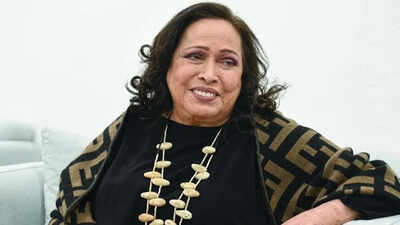
The death of veteran Kuwaiti artist Hayat Al-Fahd after a long struggle with illness / Photo: File
Veteran Kuwaiti artist Hayat Al-Fahd, one of the most influential figures in Gulf television and theater, died at the age of 78 after a long struggle with illness. Her death marks the end of an era for the region’s entertainment industry, where she was widely viewed as a pioneering force and defining cultural voice.In the months before her death, Al-Fahad was suffering from serious health complications. She was repeatedly hospitalized after suffering a stroke and later suffered severe deterioration requiring intensive care; Doctors described her condition as unstable and critical.Her death comes after days of concern across the Arab world, as fans, fellow artists and cultural institutions closely followed updates on her condition and expressed their support.
Who was he? Life of a cheetah ?
Born in Kuwait in 1948, Hayat Al-Fahad has achieved a distinguished career spanning more than five decades. She began her journey in the arts at a young age, overcoming personal difficulties including losing her father early in her life and limited formal education. She taught herself to read and write before entering the world of entertainment.Her breakthrough came through television and theatre, where she quickly established herself as one of the most recognizable faces in the Gulf.
Over the years, she has starred in and helped shape some of the region’s most famous productions, including “Aunty Qamasha,” “Ruqaya and Sabika,” “Jarh al-Zaman,” and “When the Flowers Sing.”Besides acting, she was also a writer, producer and broadcaster, and played a major role in developing Kuwaiti drama and stories. Her work helped define the identity of Gulf television, making her a household name across generations.
Her last days
The health of the cheetah has been a major concern in recent years.
In 2025, she suffered a stroke, which led to her hospitalization and required specialized treatment. Doctors restricted her visits due to her fragile condition.In the days before her death, her condition worsened significantly. She was transferred to intensive care after suffering a sudden health setback. Official data confirmed that she was in a critical and unstable condition under close medical supervision.Rumors had previously circulated about her death, but were denied at the time by family members and officials, highlighting the level of public interest surrounding her health.
Heritage of a Gulf icon
Hayat Al Fahd is widely credited with changing the entertainment landscape in the Gulf. Often described as one of the region’s most important female artists, she has helped elevate local storytelling and brought social issues to mainstream television.Her influence extended beyond acting. She wrote and produced many works that dealt with themes of family, identity, and society, which helped shape the direction of modern Arab drama.For decades, she has remained a central figure in the industry, inspiring generations of actors and creatives. Her performances, often rooted in realism and emotional depth, resonated deeply with audiences across the Gulf and the wider Arab world.Her death sparked a wave of tribute, with fans and fellow artists remembering her not just as a singer, but as a cultural icon whose work defined an era.