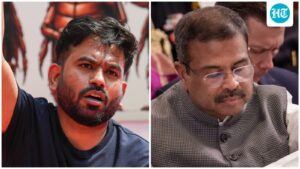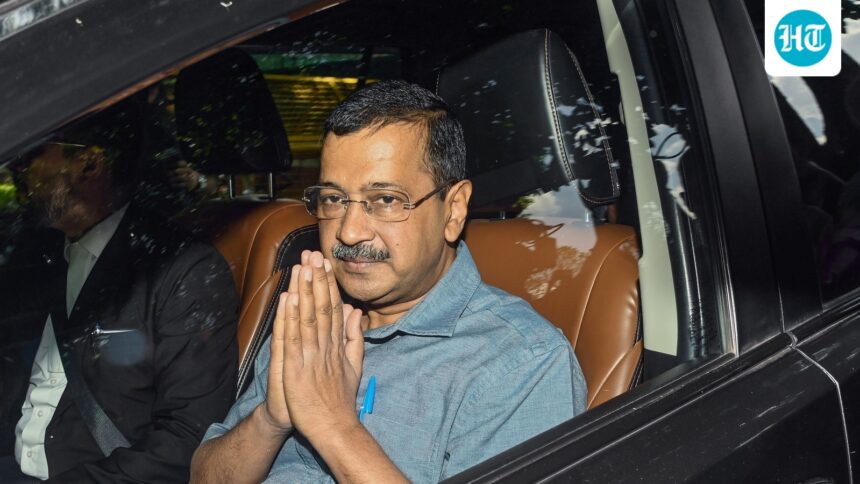
Former Delhi Chief Minister Arvind Kejriwal, along with former MP CM Manish Sisodia and four others, on Monday faced the Central Bureau of Investigation (CBI) bench of Justice Swarana Kanta Sharma, seeking its disqualification from hearing the agency’s appeal in the Delhi excise policy case, even as the probe agency sought contempt action against Aam Aadmi Party (AAP) leaders.

After a hearing lasting more than four hours, Justice Sharma reserved his orders on the disqualification applications. Arguing in person, Kejriwal said he had a “reasonable apprehension” of not getting a fair trial, pointing to what he described as a pattern of orders that effectively “neutralized” the trial court’s discharge. He said the February 27 order — issued after three months of daily hearings and examination of nearly 40,000 pages — was undermined at the CBI’s first appeal hearing on March 9 by a “comprehensive order” based on a “general petition.”
Read also | RSS events and ideological bias: What Kejriwal told Supreme Court Justice Sharma in court, asking her to drop his case
“After just a five-minute hearing, this court declared this order wrong, calling it wrong… When this order was issued, my heart was sad,” Kejriwal said, adding that “most of the lower court’s orders have been neutralized.”
He also alleged a pattern in Justice Sharma’s orders accepting arguments submitted by the ED and the CBI. “Every prayer becomes a rule,” he said.
In response, Justice Sharma said: “I do not understand this argument.”
Kejriwal said the court adjourned the relevant money laundering case after hearing the agency for “barely five minutes”. He described the postponement as a consequence and said: “…If the proceedings had not been stayed, I would have been acquitted of that as well.”
Read also | The CBI is opposing Kejriwal’s petition seeking disqualification of the judge
These applications were opposed by the CBI, represented by Solicitor General Tushar Mehta, along with Additional Solicitors General SV Raju and DP Singh, who urged the court to dismiss the petition with costs and initiate contempt proceedings.
The agency said allowing such defenses would set a dangerous precedent, enabling litigants to choose their forum based on “unfounded conjectures, conjectures and fears” and effectively discrediting the bench.
In response to the March 9 order, the Secretary-General said it was passed after the appropriate hearing and only postponed the executive management actions in order to “balance the shares,” not stopped them.
Kejriwal also cited additional reasons for stepping down, alleging that the judge attended events organized by the Akhil Bharatiya Adivakta Parishad, which followed an ideology opposed to the RJD. The Solicitor General said that the Bar Association is just a bar association and that judges, including Supreme Court justices, routinely attend such events.
In the earlier proceedings, the court had made strong observations that almost declared them “guilty” and “corrupt”, which was inconsistent with the release order of the trial court, Kejriwal said. On February 27, the court released Kejriwal, Sisodia and 21 others, holding that the CBI materials did not even reveal a prima facie case.