

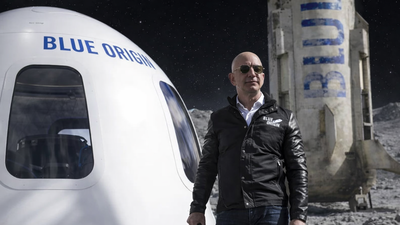
Jeff Bezos’ space company, Blue Origin, has taken a notable step toward enabling sustainable human existence beyond Earth by extracting oxygen from moon-like soil in laboratory conditions.
This development is based on years of scientific research into releasing oxygen trapped within lunar minerals, which make up much of the moon’s surface. By producing oxygen directly from regolith, this technology can reduce reliance on costly terrestrial supplies. Although this achievement is still in its early stages, it highlights how private space companies can translate theoretical science into practical systems for future lunar missions.
How is oxygen extracted from moon dust?
The process used by Blue Origin is based on a technique known as molten regolith electrolysis, which has also been studied by organizations such as NASA and the European Space Agency. In this method, moon-like soil is heated to extremely high temperatures until it melts into liquid form. Once melted, an electric current passes through it, breaking up the chemical bonds that hold oxygen within the metal.As a result, oxygen is released as a gas and can be captured for use.
Although this concept has been explored for years, the focus is now shifting toward building systems that can operate reliably in real lunar conditions rather than just laboratories.
Why does the moon carry so much oxygen?
Lunar soil, known as regolith, may appear lifeless, but it contains a surprisingly high amount of oxygen. Approximately 40 to 45 percent of its weight comes from oxygen bound to minerals such as silica, iron oxides, and aluminum oxide.
These compounds were formed over billions of years through volcanic activity and repeated meteorite impacts.However, unlike on Earth, this oxygen is not freely available in the atmosphere. It remains trapped within solids, which means it must be extracted using energy-intensive processes. Despite this challenge, the abundance of oxygen in lunar soil makes it an extremely valuable resource for future exploration.
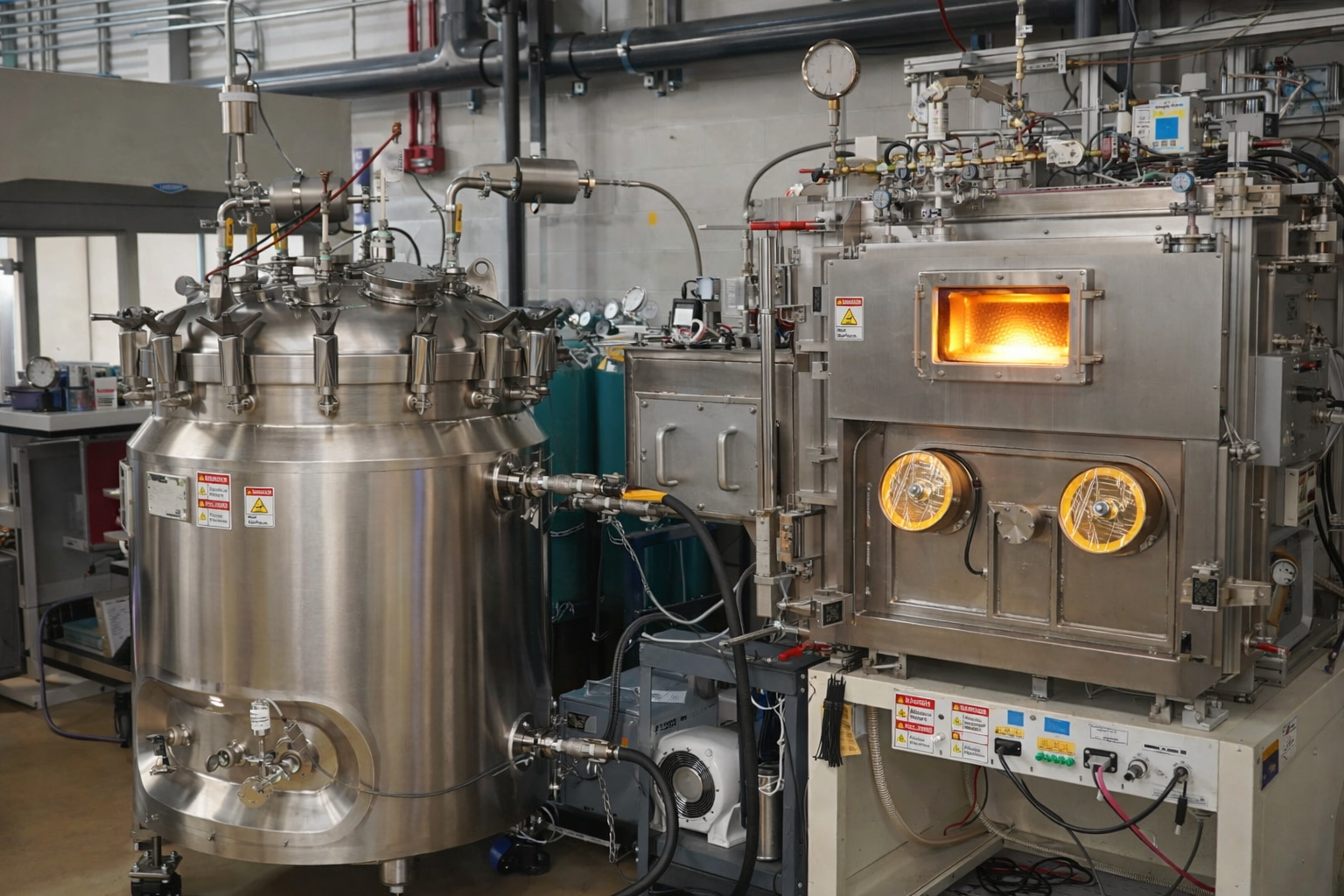
Preparing lunar soil electrolysis research
Blue Origin’s broader lunar ambitions
Blue Origin, founded by Jeff Bezos, is increasingly focused on building infrastructure that can support long-term human activity on the moon. The company is developing technologies aimed at using local resources rather than relying entirely on supplies transported from the ground.This includes systems designed to produce not only oxygen, but also metals and potentially solar panels from lunar materials. These capabilities are consistent with the broader goal of creating self-sufficient lunar bases that can support astronauts for extended periods.
Energy challenge on the moon
One of the biggest barriers to making oxygen extraction viable is the large amount of energy required. Heating regolith to temperatures above 1600°C and maintaining the electrolysis process requires a continuous, reliable power source.Future missions may rely on large solar arrays placed in areas with near-constant sunlight exposure, especially around the Moon’s poles. Meanwhile, NASA is exploring compact nuclear reactors that could provide constant power regardless of environmental conditions.
Without a reliable power source, scaling this technology beyond laboratory experiments will remain difficult.
More than oxygen: the building materials of lunar soil
An important advantage of this process is that it produces useful by-products. Once the oxygen is extracted, the remaining material contains minerals such as iron, aluminum and silicon. These materials could be used to build habitats, instruments and other infrastructure directly on the Moon.This approach, known as in situ resource utilization, can significantly reduce the cost and complexity of space missions.
Instead of transporting heavy building materials from Earth, future explorers could manufacture what they need using resources already available on the Moon.
Why this could change space exploration
Transporting oxygen from Earth is expensive and limits how long astronauts can stay in space. By producing oxygen on the Moon, missions could become more sustainable and less dependent on frequent resupply.Oxygen is not only essential for breathing, it also plays a key role in water production and acts as an oxidizer in rocket fuel.
This means the moon could eventually serve as a refueling station for missions destined for deep space, including those to Mars and beyond.
A step towards long-term human existence
Although this technology has not yet been deployed on the Moon, its successful demonstration represents an important milestone. Programs like Artemis aim to establish a sustainable human presence on the moon, and oxygen extraction will be an important part of that effort.By turning lunar dust into a usable resource, scientists and private companies are laying the foundation for a future in which humans can live and work on the moon for extended periods.