In 2011, the Left Front, which had ruled for 34 years, ousted 81 legislators, including six ministers, as part of efforts to counter anti-incumbency ahead of the Assembly elections in West Bengal that year. It did little to prevent the Mamata Banerjee-led Trinamool Congress from coming to power, against the backdrop of the Nandigram and Singur anti-land grabbing movements. The TMC and Congress won 228 of the 294 seats, with Prime Minister Buddhadeb Bhattacharjee losing his seat.

Fifteen years later, the TMC has dropped 74 legislators, including four ministers, and changed constituencies for 15 others to counter anti-incumbency and undermine the BJP’s campaign focus on alleged corruption. Prime Minister Narendra Modi promised to take action against corruption if the BJP is voted to power.
TMC leaders and analysts feel that voters’ interest, especially in villages and small towns, has shifted from anti-incumbency to deletions as part of the largely Special Intensive Voters’ List Review (SIR).
University of Calcutta political science professor Udayan Bandopadhyay said anti-incumbency could affect even a single-term government. “The Left Front ruled from 1977 to 2011, but received more than 50% of the vote only in 1987 and 2006. The 2001 elections were marred by allegations of fraud and violence.”
He said Banerjee would have faced anti-incumbency effects if the SIR had not been conducted. He pointed out that there is no united opposition and no face, with the BJP, the Left and the Congress competing separately. “Since 1995-96, Banerjee has emerged as the undisputed opposition face against Chief Minister Jyoti Basu. The current opposition, including the BJP, has no such anti-Mamata face,” Bandopadhyay said.
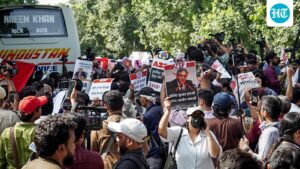
There were about 76.6 million voters in Bengal before the revolution, resulting in about 9.1 million names being removed. The BJP claimed that most of those deleted were “Bangladeshi infiltrators”. The TMC asserted that genuine Muslim and Hindu voters, especially those belonging to the Dalit Mata community, were being stripped of their right to vote.
Bandopadhyay noted that a section of the educated urban population supports the RSP, even though many of them have been dropped from the voter list. “They will definitely vote for the BJP.”
The SIR is likely to unite Muslim voters, who account for 27.01% of Bengal’s population according to the 2011 census, and the effect results in about 120 seats for TMC, said Center for Social Science Studies professor Midul Islam. “People are only looking at the number that has been deleted, not the fact that 3.3 million names have been added. The TMC is likely to get their support. Also, relatives of the 2.7 million voters who were deleted from the list will now support the TMC even if they had voted for the Congress or the Left in the past,” he said.
He added that the BJP was entirely focused on excluding alleged “illegal” Muslim voters. “But the SIR affected Matua’s family as well, even though they supported the BJP in the last elections. Matua’s relative whose name has been omitted is unlikely to support the BJP again,” Islam said.
Islam said the elections scheduled for April 23-29 are centered around the SIR. “People no longer talk about corruption, lack of development, healthcare and unemployment,” Islam said. “However, the BJP is likely to be supported by a large section of educated Bengali middle class, upper middle class and affluent voters, who are mainly those who are not worried about documentation.”
He said a section of lower middle class Bengalis may continue to support the TMC. He added that a section of Hindu Other Backward Class (OBC) population in villages is strongly influenced by the BJP. “We have noticed this for the last 10 years because the TMC government included many Muslim communities in the OBC category, a decision that was challenged in court,” Islam said.
TMC leader Jai Prakash Majumdar admitted that the government was facing anti-incumbency, saying a 15-year rule had to do that. “But the BJP or other parties have not been able to raise this issue because the current situation is about the democratic rights of the people. Political awareness is very high in Bengal because it suffered the worst effects of partition, in 1905 and 1947. The revolutionary constitution has obliterated all other issues,” Majumdar said.
Bengal BJP spokesperson Debjit Sarkar said the SIR was of no consequence. He added that the competition is not between the BJP and the TMC, but between the people and Mamata Banerjee. “The situation would be no different if there was no SIR and no ED [Enforcement Directorate] And the Central Bank of Iraq [Central Bureau of Investigation] Investigations. The TMC will lose because the people have decided to defeat it. “The only alternative is the BJP,” Sarkar said.