A two-week ceasefire window in West Asia has helped New Delhi intensify its energy security efforts in the Gulf region, with Oil Minister Hardeep Singh Puri visiting India’s largest natural gas supplier Qatar from Thursday, while External Affairs Minister S Jaishankar heads to the oil-rich United Arab Emirates on Saturday.

Besides crude oil, NGL and LPG supplies, high-level engagements with the energy-rich GCC countries are of importance as India and the GCC countries are currently negotiating a free trade agreement (FTA).
In addition, one of the six GCC countries (UAE, Oman, Bahrain, Kuwait, Qatar and Saudi Arabia) has invested in India’s strategic reserve of 5.33 million tons.
Read also | India and Bangladesh are taking steps to mend strained relations and boost energy cooperation
“Continuing dealing with countries in the region”: Middle East Airlines
External Affairs Ministry spokesperson Randhir Jaiswal confirmed the visits at an inter-ministerial press conference on Thursday.
He added, “We are closely following developments in West Asia. We continue to communicate with countries in the region,” adding that the Minister of Foreign Affairs will make an official visit to the UAE on April 11 and 12.
He added that “during the visit, he will meet with the leadership of the UAE to review the close cooperation and deepen the comprehensive strategic partnership between the two countries.” Referring to the official visit of the Petroleum Minister to Qatar on April 9-10, Jaiswal said: “We are also engaging with other countries in the GCC region.”
Read also | A fire broke out at the Habshan gas processing facility in Abu Dhabi, and UAE authorities are responding
Details will be published after the visit: Ministry of Petroleum
While the Petroleum Ministry on Thursday said in a post on the
The ministers’ visits are important at a time when the world is facing an energy crisis due to the war between the United States, Israel and Iran since February 28. While India has been able to manage uninterrupted supply of oil and gas to its people due to its diverse sources from 41 countries, it has faced a significant rise in the cost of importing energy.
The price of benchmark Brent crude, which was at $72.87 a barrel before the war in West Asia, rose to $119.5 by March 9, a jump of almost 64%. After that, the price ranged between $100 and $110 per barrel, closing at $109.27 on Tuesday.
While news of the truce on Wednesday saw the price of Brent crude fall sharply by 10% to $94.75 per barrel, its price bounced back to nearly $100 again on Thursday ($98.06 at 7:30 EST) after news of the fragility of the truce came to the fore.
The UAE and Qatar are important energy suppliers to India, and the ministerial visits will help support the country’s energy security and provide an opportunity to assess the impact of the conflict in West Asia on the energy infrastructure of both countries, people familiar with the matter said.
India’s hydrocarbon imports from the UAE were worth $24.74 billion in FY25. Qatar is the largest supplier of LNG (11.19 million metric tons worth $6.39 billion in 2024-25) and LPG (4.89 million metric tons worth $3.21 billion in 2024-25).
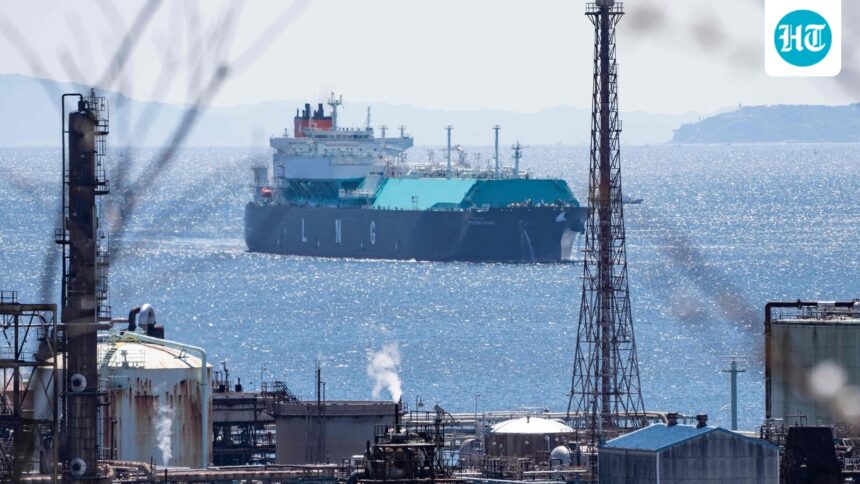
Puri’s visit to Qatar is significant because it is India’s largest supplier of natural gas – both in the form of LNG and LPG (used as cooking gas for 332 million household consumers). India imports about 60% of its LPG consumption, and about 90% of these imports come through the Strait of Hormuz, which has been affected by the war in West Asia.
To protect energy supply to India
The Iranian attack on gas facilities in Ras Laffan, Qatar, in mid-March exacerbated the situation. The sources said that New Delhi is taking steps to ensure that the force majeure declared by major West Asian energy producers, such as Qatar Energy Company, for long-term contracts does not affect energy supplies to India. “These visits will facilitate the assessment of the state of energy supplies. In cases where energy facilities were damaged in attacks, an assessment can be made about how long it will take for supplies to return to normal,” one of the people said.
Indian companies such as Petronet LNG Ltd (PLL), GAIL India and GSPC have commercially advantageous long-term gas supply contracts with Qatar. PLL imports about 7.5 million tons per year of LNG from Qatar. GSPC gets one million tons per year of LNG, while GAIL gets less than one million tons per year of LNG from Qatar.
The UAE is India’s second largest supplier of natural gas after Qatar and the fourth largest supplier of crude oil after Russia, Iraq and Saudi Arabia. Moreover, Abu Dhabi National Oil Company (ADNOC) in the UAE is the first foreign entity to invest in one of India’s strategic oil reserves.
In January this year, state-run Hindustan Petroleum Corporation Limited (HPCL) and ADNOC Gas signed a 10-year LNG supply agreement to deliver 0.5 million tonnes per annum, starting in 2028. An Indian consortium and ADNOC have a 10% stake in the lower offshore Lower Zakum oil field in the UAE. In December 2024, state-run GAIL India and Qatar Energy signed an agreement to purchase 60 cargoes of LNG over the next five years.
Read also | Freight charges for the passage of Hormuz sharply divide countries
India will be informed of the matter by the UAE and Qatar
The two visits will also be an opportunity for India to update the top leadership of the UAE and Qatar on the latest developments in the West Asia crisis, including consideration of a temporary ceasefire and the overall security situation, the two sources said. At the same time, the two ministers are expected to address the welfare of the Indian community in both countries, as the United Arab Emirates is home to four million Indians, while Qatar hosts more than 830,000 Indians.
The entire GCC is important to India, not only in terms of energy security, but also in terms of trade and commerce. The Gulf Cooperation Council countries contribute about 35% of India’s oil imports and 70% of gas imports. The GCC as a bloc is one of India’s largest trading partners at $178.56 billion in FY25. India exported goods worth $56.87 billion to the GCC and imported goods worth $121.68 billion in 2024-25, accounting for 15.42% of India’s global trade.