The Election Commission of India (ECI) on Tuesday announced that around nine million names have been deleted as part of the Special Intensive Review (SIR) of electoral rolls in West Bengal, adding that nearly 2.71 million of these voters have been removed after adjudication as part of the controversial “logical inconsistency” category.

The announcement – which came just weeks before Bengal goes to the polls in two phases – said the Muslim-majority district of Murshidabad recorded the highest number of deletions under the logical inconsistency category. The border district of Nadia – home to large numbers of Dalit communities who came to India as refugees in the decades after Partition – saw the highest rate of rejections under this category, and nearly three out of every four people flagged for adjudication here were removed.
“The claims of about six million voters have remained under adjudication by judicial officials, after the final list was published on February 28. Of these six million cases, about 45% were found to be ineligible and their names were dropped from the electoral roll,” a senior IEC official in Kolkata said.
People who failed to decide the cases and live in 152 electoral districts who voted in the first stage on April 23 will not be able to vote this time due to the freezing of the lists on Monday. For those in phase two, there is a small chance that some will be able to return through a court hearing although these hearings are not yet fully operational.
With nearly 11.6% removed from the electoral roll before the SIR system, Bengal witnessed the third highest percentage of delisting among the nine states where the controversial process was completed. Only Gujarat and Chhattisgarh are ahead of it.
SIR started in Bengal in November last year. In the draft list published on December 16, 2025, about 5.8 million names were removed.
In the final list published on February 28, the number of deletions rose to 6.36 million, but ECI also flagged another six million people in the “logical inconsistency” category.
After weeks of conflict between the poll commission and the state government, the Supreme Court intervened. Nearly 700 judicial officials decided on these cases – which often contained name discrepancies, title changes, and age mismatches – rejecting about 45% of the requests.
These 2.71 million people can still appeal to 19 courts headed by former judges, but the forums are not yet fully operational. The number of hearings held by the court has not yet been confirmed. The scale of deletions in Bengal is unprecedented, especially as polling approaches.
According to the data, 9.1 million names were removed from the lists. However, this number drops to 8.9 million when adding extras are included.
Of the 6,006,675 “logical contradiction” cases pending adjudication, about 5,984,512 cases were decided by judicial officers appointed by the Calcutta High Court, ECI data showed. Of these 5.9 million cases, 2,716,393 names were deleted, while 3,268,119 eligible voters were found and included in the voter list.
In terms of absolute numbers, the districts with the highest number of deletions were Murshidabad (455,137), North 24 Parganas (325,666), Malda (239,375), South 24 Parganas (222,929) and Purba Bardhaman (209,805).
Murshidabad and Malda are two Muslim-majority districts bordering Bangladesh. North 24 Parganas and Nadia, also adjacent districts, have the largest population of the Matua community, a Scheduled Caste caste with large numbers of refugee members.
In terms of percentages, Nadia recorded the highest rejection rate in the state at 77.9%, followed by Hooghly at 70.3%. North Kolkata recorded a rejection rate of 63.9%, followed by Dakshin Dinajpur (58.1%) and East Burdwan (57.4%). .
North 24 Parganas saw 55.1% ineligible.
In terms of acceptance rates, Bankura recorded the highest at 83.3%, followed by Purulia at 82.3%. Jhargram came in third place with 81.4%. South Kolkata recorded an acceptance rate of 63.6%.
An EU official said that the appeals courts had not yet begun their work.
“The Supreme Court has asked the Chief Justice of Calcutta High Court to form a team of three senior chief justices or former judges to prescribe the procedure that all courts will mandatorily follow. There is also a need to develop a program based on standard operating procedures. The courts are likely to start functioning soon,” the official said, requesting anonymity.
TMC Chairman and Chief Minister Mamata Banerjee promised legal support to those moving the courts.
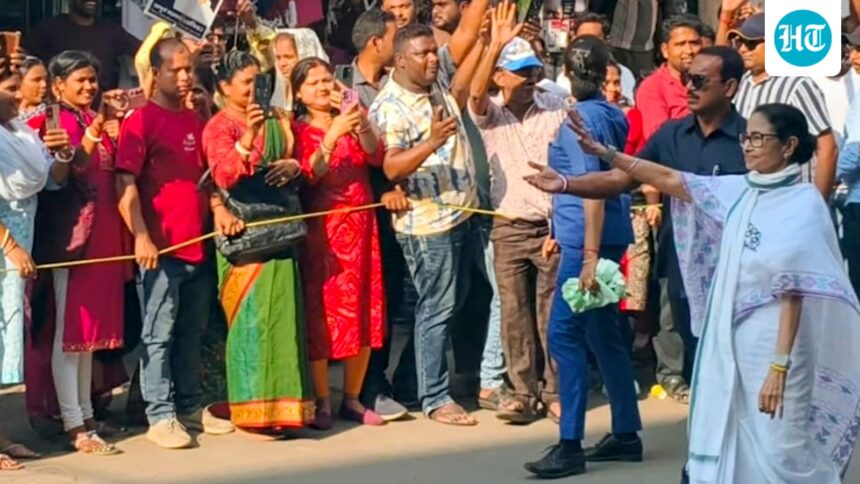
“Several names have been deleted in Murshidabad, Uttar Dinajpur, Malda, South 24 Parganas, North 24 Parganas and Nadia. The names have been carefully selected before deletion. Names from the Matua community in Bagda and Jhajatha (in North 24 Parganas) have been deleted,” Banerjee said while addressing a rally at Chakda in Nadia district on Tuesday.
“Those Indian citizens who have been disqualified and approached the court will be included in the voters list,” said Sukanta Majumdar, a senior BJP leader who is Union Minister of State.
West Bengal Opposition Leader Suvendu Adhikari said: “Does Mamata Banerjee want deceased voters to cast their votes? Because of her, the judiciary intervened and courts had to be set up. Because of her, many voters, whose names were removed, will not be able to vote this time.”