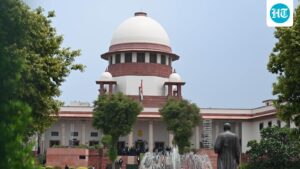
The Supreme Court on Tuesday indicated that the concept of ‘untouchability’ may not be an appropriate basis for testing the validity of restrictions on entry of menstruating women into the Sabarimala temple in Kerala, as a nine-judge bench observed that Section 17 (which prohibits untouchability) cannot be extended to a practice that operates for a limited period every month.

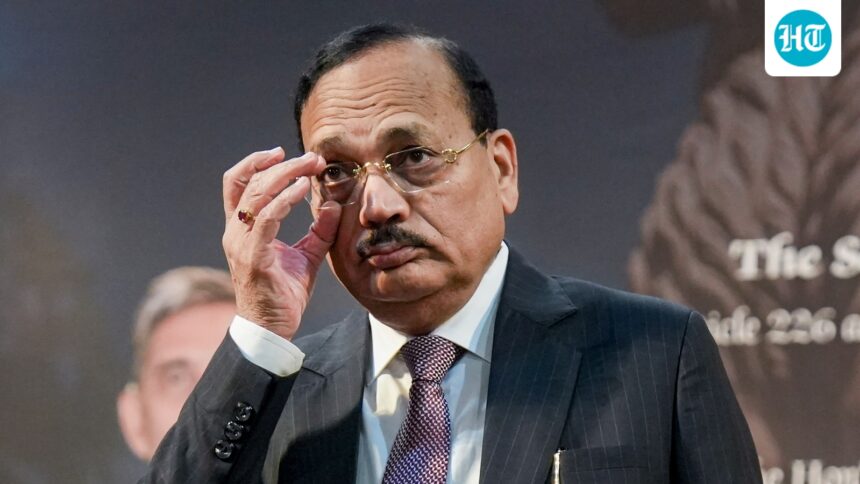
“The principle of untouchability has its own history in India, and in order to overcome that, Article 17 has become a fundamental right. But Article 17 in the context of Sabarimala… we don’t know how that will be discussed,” the bench, headed by Chief Justice of India Surya Kant, observed during the hearing.
In a sharp observation, Justice BV Nagarathna, the only judge on the current bench, added that there cannot be “three days of untouchability every month and on the fourth day there is no untouchability”, underscoring the difficulty of equating menstrual exclusion with the historically entrenched practice of caste-based untouchability.
“Speaking as a woman, I can say that there cannot be untouchability for three days every month and on the fourth day… there is no untouchability… Let’s get past the hard facts. Article 17 cannot be implemented for three days every month and on the fourth day, there is no untouchability,” she said.
These observations gain importance because the 2018 Sabarimala judgment expanded the scope of Article 17 beyond its traditional caste-based understanding. The majority, particularly Justice DY Chandrachud, held that practices rooted in notions of “purity and pollution,” including the exclusion of menstruating women, could amount to a form of untouchability prohibited by the Constitution. The nine-judge panel is now considering whether such an expanded reading is constitutionally sustainable.
Tuesday was the first day of substantive hearings before the bench, with Solicitor General Tushar Mehta opening arguments for the Union government. Apart from the ICC and Justice Nagarathna, the bench also includes Justices M M Sundresh, Ahsanuddin Amanullah, Aravind Kumar, A G Masih, R Mahadevan, Prasanna P Varali and Joymalia Bagchi.
In its memorandum submitted on Monday, the Center urged the court to uphold restrictions imposed on women of menstruating age, considering that the issue falls within the realm of religious belief and sectarian independence and falls outside the scope of judicial review.
Notably, the government also urged the nine-judge panel to declare that the law and reasoning in the 2018 Joseph Schein ruling, which struck down the crime of adultery, was not good law, arguing that the ruling relied on a broad and subjective application of “constitutional morality” – what the Center described as “a vague, judicially evolving and ill-defined concept.”
At the outset, the Secretary-General emphasized the complexity and multiplicity of religions in India, cautioning against a one-size-fits-all constitutional approach. She said that both Hinduism and Islam contain multiple sects and sub-sects, each with distinct practices and identities, and that this internal diversity should guide the interpretation of Articles 25 and 26.
The Commission also addressed the scope of judicial review in religious matters, with the Center reiterating its opposition to the principle of “essential religious practices.” The government said that determining what constitutes an essential practice would require courts to interpret religious scriptures and theological principles — a practice for which they are not institutionally equipped. Even if the practice appears irrational or unscientific, the remedy lies in legislative reform, not judicial intervention.
The Union further stressed that the constitutional provisions must be interpreted in light of the Constituent Assembly discussions and the broader constitutional scheme, including the preamble. He stressed that Article 25 protects individual freedom of conscience, while Article 26 protects the rights of religious communities to manage their own affairs, and that the two provisions must be read in harmony and not in a hierarchical manner.
One of the Centre’s main arguments was that the Sabarimala temple constituted a sectarian institution entitled to protection under Article 26. The Center argued that the phrase “part thereof” in Article 25 was deliberately introduced to recognize sub-groups within the broader religious tradition, and that the mere fact that the temple was open to all Hindus did not strip it of its sectarian character.
In response to concerns regarding gender equality, the Center emphasized that the restriction is not based on notions of discrimination but is intrinsically linked to the nature of the deity worshiped at Sabarimala. He reiterated that Lord Ayyappan is worshiped in the form of Naysthika Brahmachari (eternal celibate) and that excluding women of a certain age group is a unique practice in this temple.
The court also examined the interaction between guarantees of equality and religious freedom, in particular whether sectarian practices could be tested against Articles 14 and 15. In response, Secretary General Mehta said that neither Article 25 nor Article 26 is subordinate to the other, and that meaningful interpretation is required to strike a balance between individual rights and communal autonomy.
On the broader issue of judicial intervention, the center reiterated its position, as stated in written submissions submitted on Monday, that courts should refrain from evaluating religious practices on grounds such as rationality, modernity or scientific defence. Such an approach, he said, would be tantamount to replacing judicial philosophy with an internal understanding of religion.
The nine-judge panel was tasked with answering seven broad constitutional questions arising from the 2019 reference, including the scope of judicial review of religious practices, the contours of the doctrine of essential religious practices, and the meaning of constitutional morality. The outcome is expected to have far-reaching implications not only on the Sabarimala dispute but also on a range of issues involving the intersection of religion, equality and constitutional segregation.