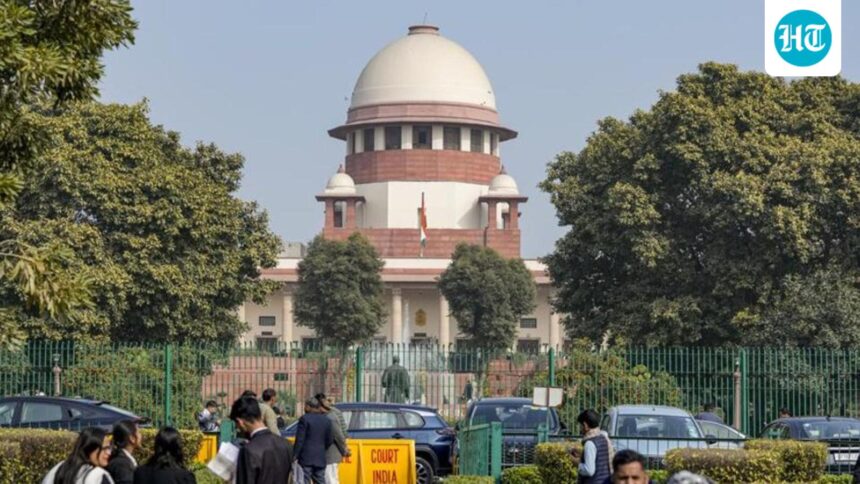
The Supreme Court on Monday expressed its displeasure over a second forensic laboratory report on an audio clip that allegedly referred to former Manipur Chief Minister N Biren Singh’s role in inciting communal violence in the state, questioning why experts could not give a clear answer as to whether the audio in the clip matches the audio of Singh actually available.

“We are not getting any answers. They (forensic lab) are not even in a position to match the audio that is already available,” a bench of Justices Sanjay Kumar and K Vinod Chandran said in a report from the Gandhinagar-based National University of Forensic Sciences, which termed the audio clip “unreliable”.
The bench was hearing a petition filed by Kuki human rights organization through advocate Prashant Bhushan, seeking a court-monitored investigation into an audio tape, claiming that Biren Singh was allegedly heard in the tape saying that the violence between Meitei and Kuki communities in Manipur that began in May 2023 was instigated at his insistence.
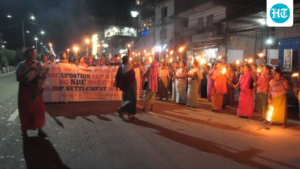
The violence, which continued until February this year, claimed the lives of more than 250 people and displaced tens of thousands in the northeastern state. After two years of unrest and violence in the state, Singh, who was the Chief Minister of Manipur at the time, resigned from his post on 9 February 2025, leading to the imposition of President’s Rule on 13 February. Central rule ended on February 4 this year when BJP leader Yomnam Khemchand Singh took over as prime minister.
The leaked tapes in question allegedly relate to audio recordings made by a whistleblower during a closed-door meeting with Biren Singh.
The NFSU report said the audio clip had been “edited” and “edited” and the data did not reveal the source, though no deep or AI-assisted editing was observed. The petitioner also submitted the original audio clip of Biren Singh from Doordarshan to match the audio in the audio clip.
The court had asked the NFSU to compare the audio in the two clips and submit its report.
But the NFSU said a “reliable forensic examination” could not be performed due to inherent technical limitations.
The bench pointed out that the NFSU even found the additional clip provided by Doordarshan to be edited and manipulated, and hence, it was not possible to view the audio match.
“We should get an answer as to whether the audio matches the audio already available. According to this report, even Doordarshan’s recording has been tampered with. Should we ask him to come and record his voice?” The bench asked the government.
The court noted that this is the second time that the central forensic laboratory has returned an inconclusive result. The first was the National Forensic Laboratory in Guwahati last year asking Additional Solicitor General Aishwarya Bhatti, who appeared for the Manipur government, to take instructions if his voice alone could be matched to any authentic source containing the former Prime Minister’s voice.
Advocate Prashant Bhushan, representing the petitioner, confirmed that he will also be instructed to ascertain whether the complete audio recording of the meeting is available and can be submitted for forensic analysis. He said the whistleblower had only provided the relevant part containing the statement made by the then Prime Minister.
The bench posted the order after two weeks and directed that the NFSU report be shared with ASG Bhatti and Prashant Bhushan.
“The petitioner should ascertain whether the complete audio clip will be submitted to the NFSU for forensic examination,” the bench added.
The ASG said that the two forensic reports – issued by the Guwahati Laboratory and the NFSU – have reached a conclusion, but the petitioner is seeking a “hunting investigation” merely because the report does not fit their requirements.
The bench said: “We are not aware of the technical standards. But suppose there is tampering, but if the audio is clear, why can’t it be used to compare the audio?” The court raised concerns about the admissibility of audio recorded without the consent of the person who made the statement.
However, she stressed that the NFSU report, said to be a reputed institute, had misspelled the word ‘pen drive’ as ‘Pan Drive’.
The petition claimed that the tapes revealed the Prime Minister’s involvement in fueling ethnic clashes between the Meitei and Kuki communities in Manipur. The petitioner supported his claim by submitting a report from Truth Labs, a private forensic agency, which certified the clip as authentic.