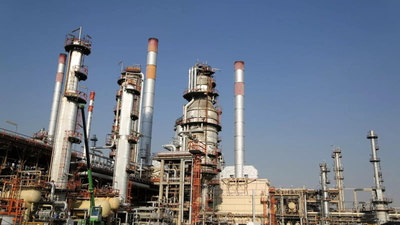
In the first move since liberalization of fuel prices, state-run oil marketing companies (OMCs) have moved to pay reduced prices to refineries of petrol, diesel, aviation turbine fuel (ATF) and kerosene to curb the growing losses caused by self-freezing on retail fuel prices, sources told PTI.OMCs on March 26 fixed prices for petroleum products at discounts of up to Rs 60 per liter on their imported cost, with the revised prices effective from March 16. The move is expected to impact independent refiners like MRPL, CPCL and HMEL the most, according to people with direct knowledge of the matter, as reported by PTI.
He watches
Impact of Iran war hits India: Commercial LPG prices rise, airfare prices are expected to rise as fuel costs double
The decision comes at a time when global crude oil prices have risen from about $70 per barrel before the conflict in the Middle East to more than $100, while local gasoline and diesel prices have remained unchanged, forcing international oil companies to absorb the impact.With no immediate end to the conflict in sight, IOCs chose to apply discounts to the Refinery Transfer Price (RTP) – the internal price at which refineries sell fuel to marketing arms – effectively reducing payments to refiners below import parity levels.For the second half of March, a rebate of Rs 22,342 per kiloliter (Rs 22.34 per litre) was imposed on diesel, bringing down the RTP from Rs 85,349 per kiloliter to Rs 63,007 per kilolitre.
In the first two weeks of April, the diesel discount widened sharply to Rs 60,239 per kilolitre, bringing down the RTP from Rs 146,243 per kilolitre to Rs 86,004 per kilolitre.On ATF, the RTP was reduced to Rs 76,923 per kiloliter from Rs 127,486 per kiloliter after taking a discount of Rs 50,564 per kiloliter. The RTP for kerosene has been reduced to Rs 77,534 per kiloliter from Rs 123,845 per kiloliter with a discount of Rs 46,311 per kiloliter, sources said.Indian Oil Corporation, Bharat Petroleum Corporation and Hindustan Petroleum Corporation did not immediately respond to requests for comment.Discount pricing prevents refiners from fully passing higher crude oil costs through RTP, forcing them to absorb part of the burden caused by higher global oil prices.While integrated public sector companies such as Indian Oil Corporation Limited (IOC), Bharat Petroleum Corporation Limited (BPCL) and Hindustan Petroleum Corporation Limited (HPCL) may offset part of the impact through joint refining and marketing operations, independent refiners that rely on market-linked RTP for revenue are likely to face sharper pressure on margins.Mangalore Refining and Petrochemicals Ltd (MRPL), Chennai Petroleum Corporation Ltd (CPCL) and HPCL-Mittal Energy Ltd (HMEL) – which have a limited retail presence and sell most of their production to OMCs – are expected to be the worst affected.The changes could also affect private refiners such as Nayara Energy and Reliance Industries Ltd if similar cuts are extended, as they sell a significant portion of their petrol and diesel production to OMCs, which operate about 90% of the country’s 100,000-plus fuel retail outlets.Traditionally, petrol and diesel pricing in India has been based on import parity, where the fuel is valued as if it were imported, even though the crude oil is refined domestically. The RTP was linked to the import parity price until June 2006, after which the government adopted trade parity pricing, assigning a weight of 80% to import parity and 20% to export parity.This framework has helped protect refining margins, especially for independent refiners that do not have marketing margin coverage.
Although petrol and diesel prices were liberalized in 2010 and 2014 respectively, retail prices have remained largely frozen since April 2022, with oil manufacturers absorbing losses during periods of higher crude oil prices.The current RTP discount comes as the low recovery range for petrol and diesel expands. Unlike LPG, where the government compensates for losses, there is no such subsidy for motor fuel.The Ministry of Petroleum and Natural Gas in a circular on April 1
reconnaissance
Do you think freezing retail fuel prices is sustainable in the long term?
OMCs believe that the RTP freeze will help spread the financial burden across the refining ecosystem. The sources added that analysts warn that this move may disproportionately affect independent refineries with a limited downstream presence and distort market-related pricing signals.