

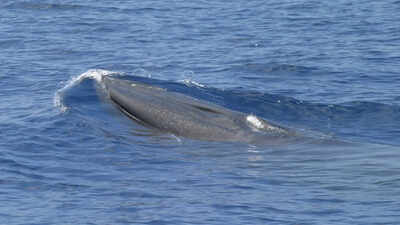
This photo provided by NOAA Fisheries shows a Rice’s whale at the surface in the Gulf of Mexico. (NOAA Fisheries (Permit No. 779-1633) via AP)
A rarely used federal panel with the power to override endangered species protections has approved a request from the Trump administration to expand oil and gas drilling in the Gulf of Mexico, as the White House moves to speed up domestic production in line with a “drill, baby, drill” agenda, with officials citing geopolitical tensions and energy supply risks.
Scientists and environmental groups say the decision could push already vulnerable marine species closer to extinction, including Rice’s whale, a species of which there are fewer than 50 individuals left.
Force is rarely used
The body at the heart of the decision is the Endangered Species Committee, commonly referred to as the “god squad” because of its ability to authorize projects that could determine the survival of protected species. Established in 1978 under the Endangered Species Act, a 1973 law intended to prevent the extinction of endangered plants and animals, the committee can grant exemptions when it determines that a project is in national or regional interests and that there are no reasonable alternatives. Its decisions effectively permit activities that would otherwise be prohibited because they could harm or kill endangered species.
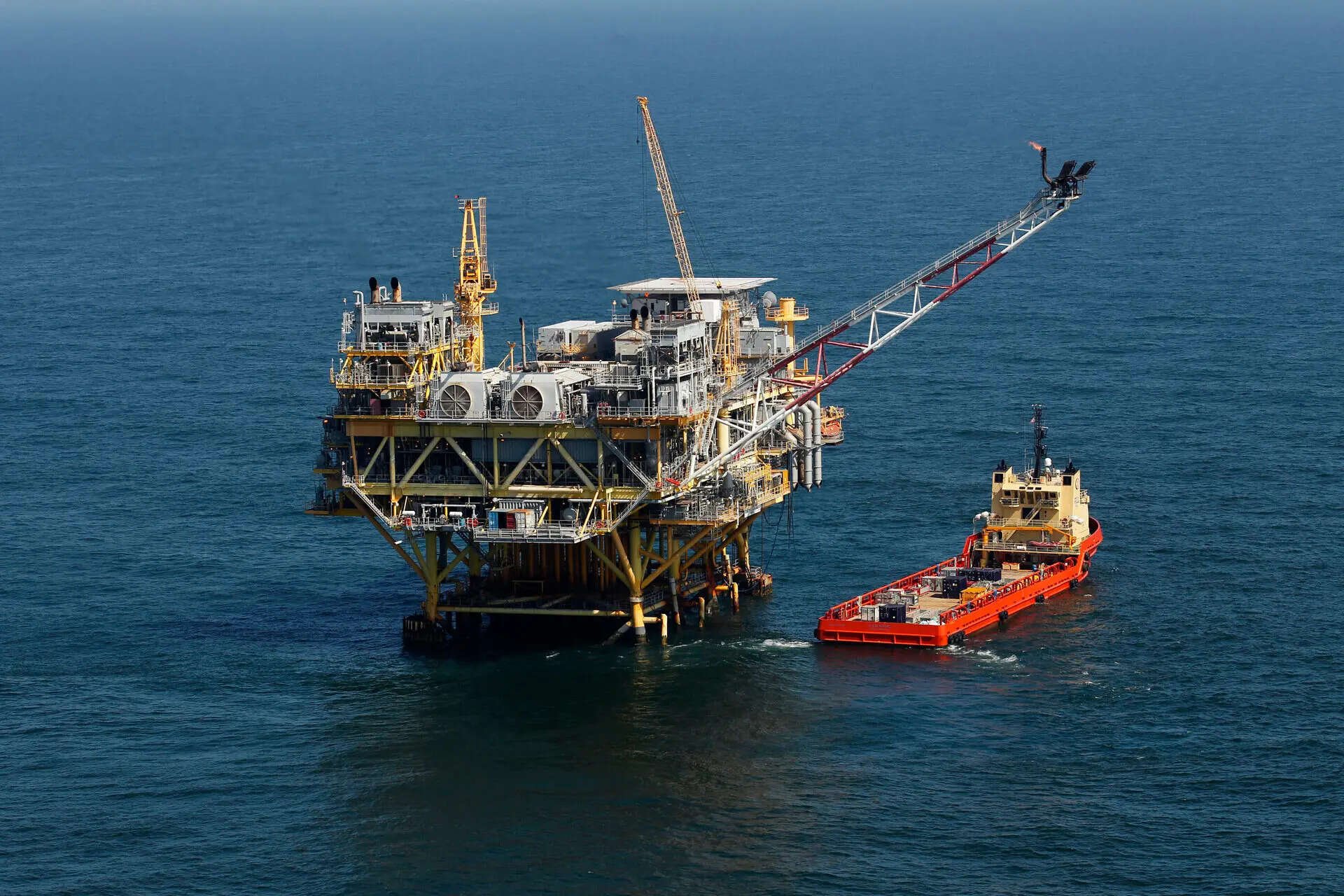
FILE – A supply ship boat sits near an oil rig in the Gulf of Mexico, off the coast of Louisiana. April 10, 2011. (AP Photo/Gerald Herbert, File)
The committee is made up of senior federal officials, chaired by the Secretary of the Interior, with representation from agencies including Agriculture, the Military and the Environmental Protection Agency, as well as a joint vote among the affected states.
At least five votes are required to approve the exemption. Until this week, it had only done so twice in more than five decades. It voted unanimously on Tuesday to approve an exemption for expanded oil and gas activities in the Gulf of Mexico, the third such decision in its history.
Framing national security and geopolitical pressures
The request was made by Pete Hegseth, who said that domestic oil production had become a national security issue in the context of rising tensions with Iran. In statements to the committee, Hegseth pointed to the disruptions in global oil supplies following the military escalation in late February, when US and Israeli strikes on Iran were followed by Tehran closing the Strait of Hormuz, one of the world’s most important energy corridors.
The closure of the strait has already disrupted global supply chains, restricting oil shipments and pushing up prices in markets.
In the United States, average gasoline prices rose above $4 per gallon for the first time in nearly four years, highlighting the direct impact on consumers.The waiver request itself predates the escalation with Iran, but Defense Secretary Pete Hegseth portrayed the situation as evidence of the dangers of relying on foreign supplies.This comes at a time when US President Donald Trump downplayed the risks and insisted that the country does not depend on the Strait of Hormuz.
“We don’t need it. We didn’t need it, and we don’t need it,” he said, while also claiming: “We produce more oil and gas than Saudi Arabia and Russia combined, and that number will soon rise dramatically.” At the same time, Hegseth told the committee that ongoing lawsuits by environmental groups had slowed energy development, and that the exemption would allow what he described as “the combination of oil and gas production with the responsible protection of endangered species.”
A fragile ecosystem with a recent history of disasters
The Gulf of Mexico, where expanded drilling is expected to take place, is one of the most biodiverse marine areas in the United States. It is home to at least 20 threatened and endangered species, including sea turtles, corals, manta rays, manatees, and multiple species of whales. It is also an area with a well-documented history of environmental damage associated with oil extraction. On April 20, 2010, the Deepwater Horizon oil spill began when an offshore drilling rig exploded about 52 miles off the coast of Louisiana.
Over the next 87 days, an estimated 134 million gallons of oil were released into the Gulf, making it the largest offshore oil spill in U.S. history.
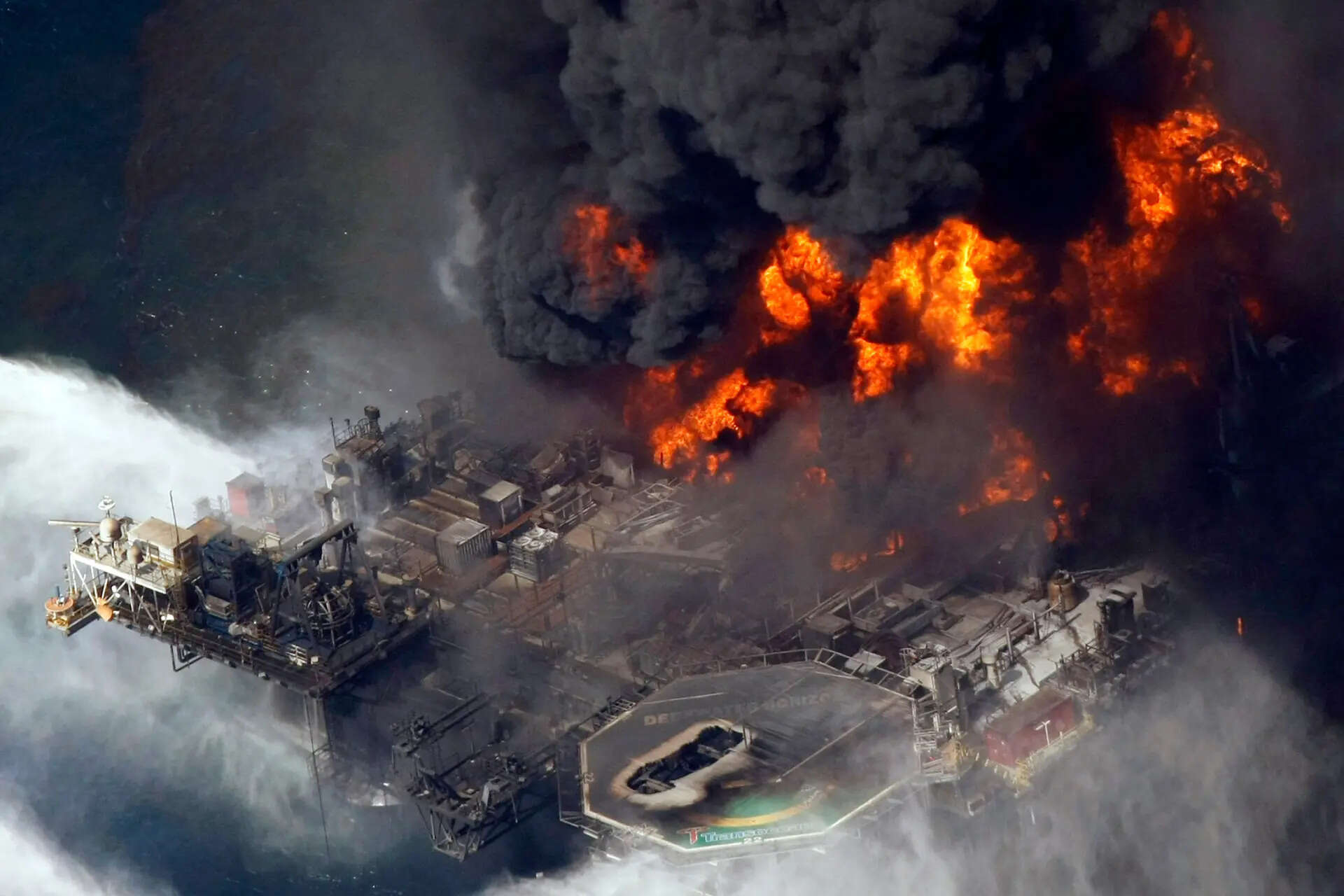
FILE – The Deepwater Horizon oil rig burns, April 21, 2010, in the Gulf of Mexico more than 50 miles southeast of Venice, Louisiana (AP Photo/Gerald Herbert, File)
The effects were immediate and widespread. Tens of thousands of marine animals, including dolphins, whales, sea turtles and seabirds, died. All cetacean species in the Gulf, a group that includes whales, dolphins and porpoises, were exposed to the oil. While the extent of the damage was clear at the time, scientists continued to evaluate its long-term consequences, especially for species that were not yet fully understood.Recently, the region has witnessed new incidents that confirm the persistence of such risks. In late March, a major oil spill spread more than 373 miles (600 kilometers) across the waters off the coast of the Gulf of Mexico, seeping into seven nature reserves and disrupting coastal ecosystems. According to reports by the Associated Press, the leak originated from a ship, which has not yet been identified, anchored near the coastal city of Coatzacoalcos in Veracruz state, along with two “natural leaks.”
“
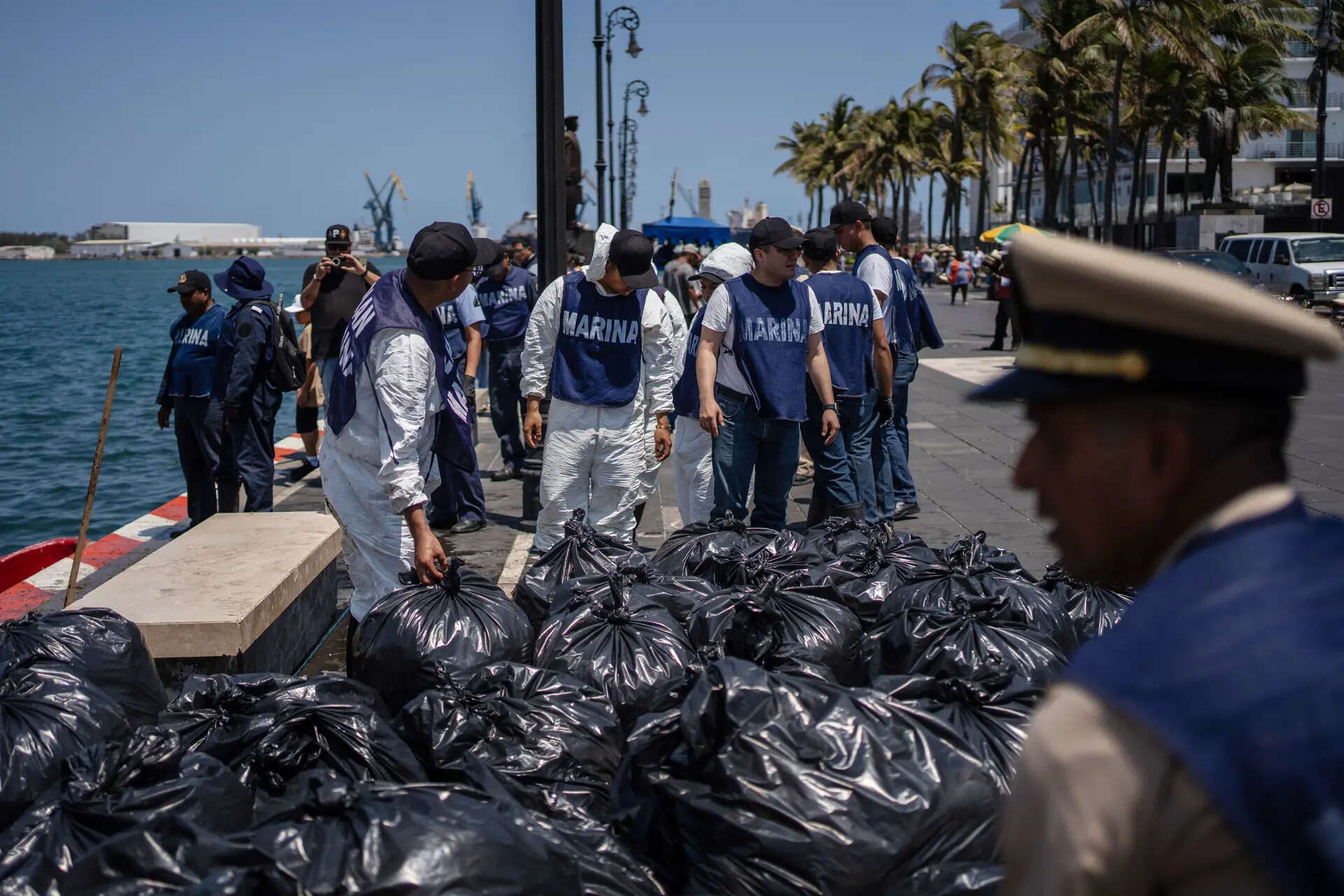
Bags full of oil-stained sargassum collected by Mexican Navy sailors lie at a port in Veracruz, Mexico, Thursday, March 26, 2026, after Mexican authorities said an oil spill in the Gulf of Mexico originated from an unidentified ship and two natural oil seeps. (AP Photo/Felix Marquez)
The authorities said that about 430 tons of hydrocarbons had been collected along the coasts of three Mexican states and ruled out serious environmental damage, but local reports and photos showed dead turtles, eels and fish washing up on beaches and near the beaches, while fishing activity in Veracruz, which is usually at its peak before Holy Week, was severely affected.
He discovered the whale too late
Among those species is Rice’s whale, a large baleen whale that lives exclusively in the Gulf of Mexico. Although whales of this type have been observed for decades, they were only officially recognized as a distinct species in 2021, following genetic and anatomical analysis of a stranded individual found in the Florida Everglades in 2019. The species is named after marine biologist Dale W. Rice, who in 1965 was the first to write about the presence of what he thought were Bryde’s whales in the Gulf. Rice whales can grow to about 40 feet long and are thought to inhabit a narrow range of waters in the northeastern Gulf, usually at depths of 100 to 400 metres.
Their behavior makes them particularly vulnerable: they dive to the bottom of the sea They hibernate during the day to feed on specific prey such as silver drifting fish, and return near the surface at night, where they are more vulnerable to ship strikes.
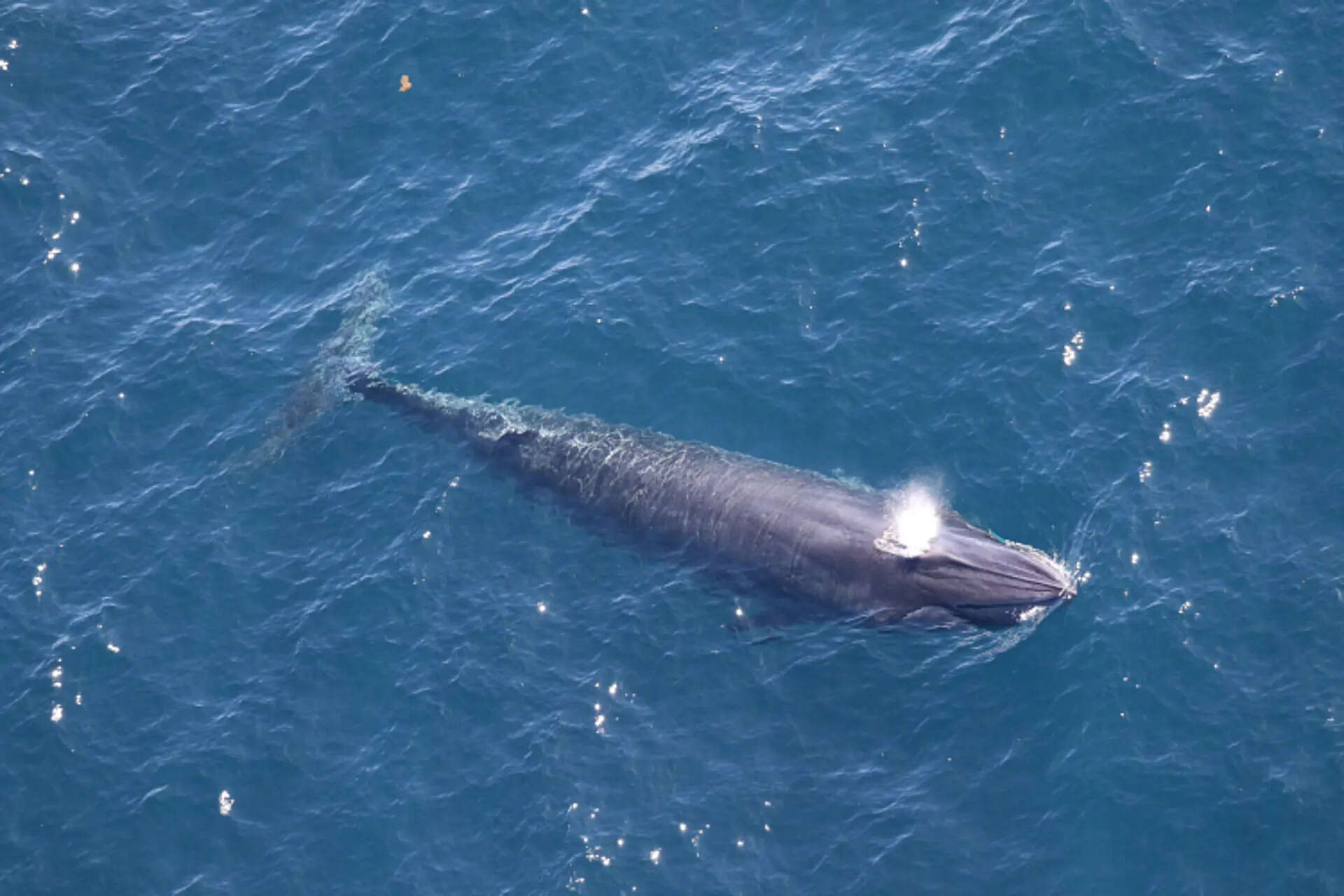
In this 2024 photo provided by NOAA Fisheries, a Rice’s whale can be seen from aboard a NOAA Twin Otter off the Texas coast in the Gulf of Mexico. (Paul Nagelkerk/NOAA Fisheries (Permit 21938) via AP)
Its population is very small. Scientists estimate that fewer than 100 individuals still exist, and some assessments suggest the number may be closer to 50. The impact of deep water seepage on this species has only become clear in recent years.
According to the National Oceanic and Atmospheric Administration, exposure to oil has contributed to a population decline of more than 20%. The species “lives absolutely on the edge,” Jeremy Kishka, a professor of biological sciences at Florida International University, told PBS, noting that its limited habitat, specialized diet and exposure to human activity leave little margin for additional pressure.
How expanded drilling could affect marine life
Scientists and conservation groups have identified several ways in which increased oil and gas activity could impact the Gulf’s ecosystem. Immediate risks include the possibility of new spills, which may lead to the recurrence or worsening of previous damage. Even without a major accident, routine operations introduce noise, ship traffic and pollution into the environment. Noise from digging and exploring can interfere with whales’ ability to communicate and search for food.
Increased ship traffic increases the likelihood of collisions, especially for species such as Rye’s whales that spend time near the surface at night. Changes associated with fossil fuel extraction also contribute to broader environmental transformations. As ocean temperatures and conditions change, the distribution of prey species can change, affecting animals that rely on specific food sources.
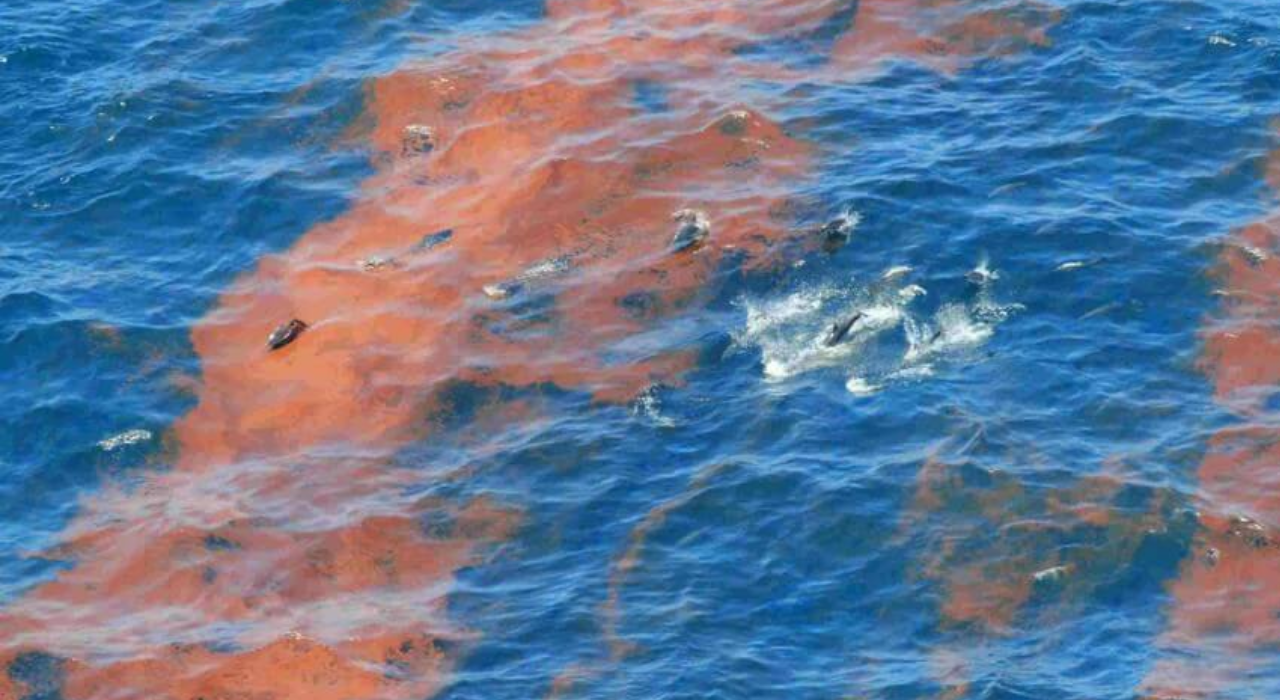
Dolphins swim in the oiled waters of the Gulf (Source: NOAA)
Lettice Laver, chief of conservation and stewardship at the New England Aquarium, told PBS that many of the broader impacts of climate change are “already learned,” but added that the expansion of drilling “only exacerbates the immediate risks locally and the long-term risks.” The effects are not limited to whales. The consequences extend across species, Michael Jasny, who directs the Marine Mammal Conservation Project at the Natural Resources Defense Council, told PBS, listing “sea turtles, manatees, whooping cranes, various seabirds, rice whales, sperm whales” and “endangered corals,” adding that “these are all threatened or endangered species in the Gulf of Mexico.”
Protection put aside
Prior to the exemption, federal agencies assessed the impact of oil and gas activity on the Bay Area ecosystem.
In 2025, the National Marine Fisheries Authority concluded that such activity would likely lead to the extinction of the rice whale and recommended measures to limit the damage, including restrictions on vessel speeds. These measures will no longer apply under the exemption. The decision sparked strong criticism from environmental organizations, some of which tried to prevent the vote through legal procedures before it took place.
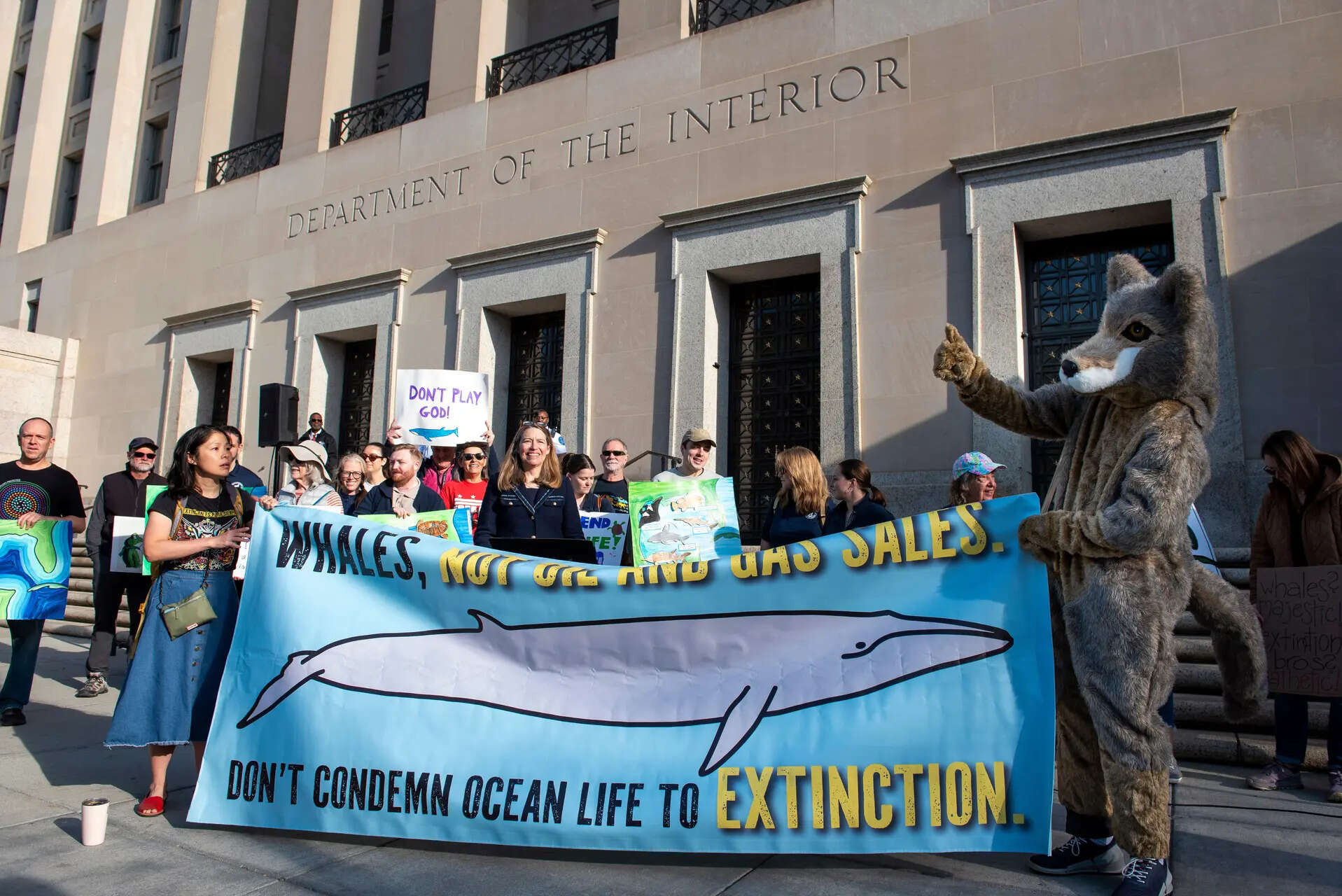
Conservation groups gather to oppose the Trump administration convening a species commission, at the Department of the Interior in Washington, Tuesday, March 31, 2026. (AP Photo/Cliff Owen)
“Americans overwhelmingly oppose sacrificing endangered whales and other marine life so the fossil fuel industry can get richer,” Brett Hartle, director of government affairs at the Center for Biological Diversity, told the BBC.There are also concerns about the precedent set by the decision. Michael Jasny warned that if exemptions could be granted in this context, it raised the possibility of similar decisions being made elsewhere.Jasney said the Trump administration could “turn this… into something that can be called upon at any time, for almost any purpose,” asking, “If it can be done for drilling in the Gulf, why not California? Why not Alaska?”
Industry response and next steps
Industry representatives have defended the decision, saying offshore energy development can go hand in hand with environmental safeguards. Andrea Wood, a spokeswoman for the American Petroleum Institute, told the BBC that the industry has a “long track record of protecting wildlife while developing marine energy responsibly,” adding that there must be a balance between “science-based protection” and “meeting growing energy demand.” Environmental groups said they planned to take further legal action in response to the exemption.