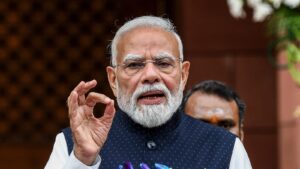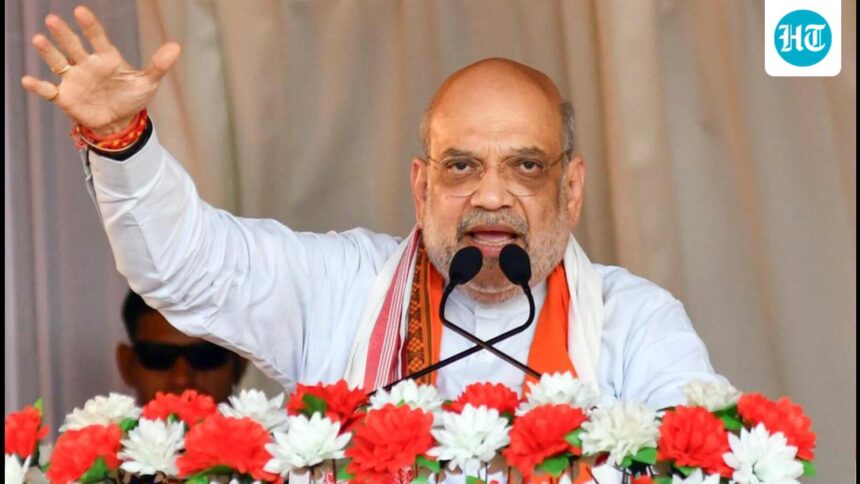
Union Home Minister Amit Shah on Friday reiterated the Bharatiya Janata Party’s (BJP) promise to introduce a Uniform Civil Code (UCC) across the country, stressing that tribals would be kept out of its jurisdiction.

“If you form the BJP [Bharatiya Janata Party]The government you are leading in Assam, we will bring in UCC, which will ensure that no one gets married four times. I confirm that the tribes will remain outside the scope of authority. “We know who to cover,” Shah said at an election rally in Goalpara ahead of the April 9 Assembly elections in Assam.
The BJP on Tuesday issued a 31-point manifesto to the polls, promising UCC, a controversial and polarizing issue, would indicate a common set of laws on personal matters such as marriage, divorce, inheritance and succession for all citizens. Article 44 of the Constitution, one of the directive principles of state policy, upholds UCC. But religion-based civil laws have governed personal matters since independence.
In February 2024, the BJP-ruled state of Uttarakhand became the first state in the country to pass the UCC Act. Gujarat, another BJP-ruled state, followed suit last month. The All India UCC is the third major unfulfilled ideological promise of the BJP. The construction of a Ram temple in Ayodhya and abrogation of Jammu and Kashmir’s semi-autonomous status under Article 370 of the Constitution, the other two major ideological goals, have been achieved since the BJP came to power at the Center in 2014.
Shah accused the Congress of using tribals, who account for more than 12% of Assam’s population, as vote banks and ignoring their welfare. He credited Prime Minister Narendra Modi with elevating Draupadi Murmu, a tribal person, to the post of president. Shah highlighted the significant increase in the tribal welfare budget since Modi took over as Prime Minister in 2014.
Shah promised to set up a big dairy factory in Goalpara and every tribal family would be provided with one cow and one buffalo each. He reiterated the BJP’s promise to detect illegal immigrants in Assam and other parts of the country and asked for five more years to complete the task. Shah pointed to eviction campaigns targeting “illegal settlers” from 49,500 acres of government land and forests over the past five years.
Assam Chief Minister Himanta Biswa Sarma has sharpened his tone against registered migrants in the run-up to elections in Assam, where a perceived threat to the indigenous language, culture and land from outsiders has led to unrest that has claimed hundreds of lives. Ethnic and linguistic tensions in Assam date back to the 19th century, when the British declared Bengali the official language in 1836. Protests against this move forced its withdrawal in 1873.
Partition in 1947 and the linguistic reorganization of states in the 1970s sparked new protests against “outsiders.” In the 1980s, a six-year agitation against Bangladeshi “infiltrators” ended with the signing of the 1985 Assam Accord, which was signed on March 24, 1971, as the deadline for citizenship, regardless of religion. Bengali-speaking Hindus who moved to Assam from Bangladesh before December 31, 2014, can become Indian citizens under the Citizenship (Amendment) Act.
Shah accused the Congress of disturbing Assam and playing politics with the lives of the youth of the state. He added: “But we signed agreements with the rebel groups, and so far more than 10,000 young men have laid down arms, which has brought peace to the state.”
He accused the Congress of doing nothing to protect the state’s culture. Shah highlighted the installation of a statue of General Ahom Lachit Borphukan, a memorial to 860 people killed during the Assam agitation in the 1980s, and a UNESCO World Heritage Mark on the Charideo Maidams during the BJP rule.