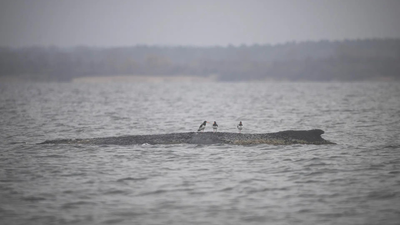
A wayward humpback whale has finally clawed its way out of trouble in the Baltic Sea, ending a days-long odyssey that left onlookers glued to shore. The 12- to 15-meter-long giant, which was stranded in shallow waters near Wismar, was able to swim freely last week, giving officials and onlookers a reason to rejoice.The whale’s journey was not smooth at all. After initially getting stuck near Timmendorfer Strand, rescuers brought in an excavator to help guide it away from an underwater sandbank — a move that looked more like a construction site than a conservation effort, but it achieved the goal. However, the exhausted animal soon found itself in trouble again, prompting authorities to take a step back and let nature (and a little rest) do the heavy lifting.For a while, it looked like the whale might make a wrong turn, briefly heading toward port before correcting course and heading toward open water. By Tuesday morning, the image had disappeared from sight, leaving behind relieved officials and a stunned public. The drama drew crowds to the coast and turned into a live spectacle, with constant updates and video streams tracking every splash and flick of the tail.But the story is not over yet. Far from its natural habitat in the Atlantic Ocean, the humpback still faces a long and uncertain journey across the Baltic and North Seas.
But for now, Germany’s most famous seafarer has had a break, and has perhaps gained a reputation as a very tough traveler. “The whale swimming freely yesterday is a very good first sign, but the road to the North Sea is still long and we can only keep our fingers crossed until it gets there,” Burkhard Paschek, scientific director of the Ocean Museum in Germany and scientific coordinator of the rescue effort, told ZDF TV.With no tracking device attached to it – its skin is said to have become vulnerable due to prolonged exposure to low-salinity Baltic waters – experts can now only hope the animal finds its way back without help. Why it entered the Baltic Sea in the first place remains unclear, although some believe it may have gone off course while following a shoal of herring or during migration. Currently, Germany’s most famous seafaring visitor is living alone, sailing the long way back towards the Atlantic.