Amid reports that voters who do not cast their votes in the upcoming West Bengal elections may face deletion from future electoral rolls, Bengali migrants living in New Delhi are returning to their native districts to ensure they are able to vote in the state elections scheduled for April 23-29.

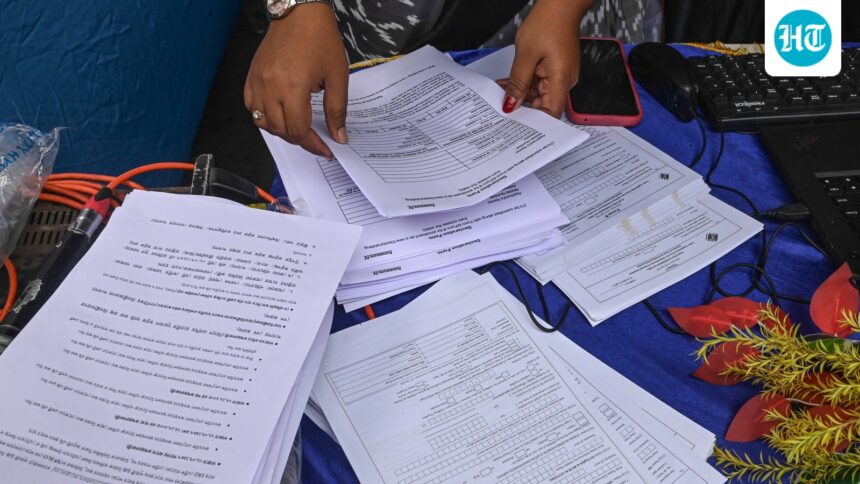
Many migrant workers from West Bengal reported omissions or discrepancies in electoral rolls after the audit. As a result, they are returning to their home country not only to cast their ballots but also to check or correct their voter registration status before the April 19 deadline.
One migrant worker said his name had not yet appeared on the voter list. Of the four brothers in his family, only one is listed, while the other three are currently treated as “foreigners.” He added that although people around his settlement were planning to travel to vote, arranging transportation had become difficult due to the large number of travellers. He also noted that while some names had been listed, particularly those who voted in 2002, others had been delayed, allowing time for re-verification before the deadline.
Read also | TMC says: Widespread attempts to register outsiders as voters in Bengal
“Our vote will be on the 23rd, and we will go to cast our votes. People from the entire settlement will go, but since many will go, there is a problem with tickets (travel). Some people are names on the list – those who voted in 2002 – but for others, the names came late or late. They also have a chance to settle the matter; the deadline is April 19, and there is time to re-verify. So people will start going from the first: my name is not on the list yet, and Of the four brothers, only one name is on the list; the other three are not listed. At present, we three brothers are considered “foreigners,” and one brother is considered “Indian.”
Another migrant from Cooch Behar said she plans to return home with her family to vote, and expressed confidence that such issues may not be as widespread now. However, she admitted that similar problems had affected members of the previous generation, as some of their relatives’ names had been deleted from voter rolls in the past.
“Yes, I will also go with my family to vote. I haven’t really heard anything like that. Basically, this problem happened with the last generation. I don’t think something like this can happen now. I have many relatives whose names were removed earlier – there was a problem that arose then,” she said.
A third migrant said that while his name was still on the list, his wife’s name had been removed without explanation. He said that such cases are not isolated, adding that in his family, the names of his wife and sister-in-law were deleted from the electoral rolls.
That person said, “Yes, we’re going to go vote. Yes, the names have been removed – my wife’s vote has been removed. My vote is fine, but my wife’s vote has been deleted; I don’t know why. There are many such cases where names have been removed. In my family, two votes have been removed – my wife’s vote and my sister-in-law’s.”
Earlier on March 24, West Bengal Chief Minister Mamata Banerjee resumed her criticism over the Special Intensive Review (SIR) process, alleging that the nexus between the Election Commission of India and the BJP is trying to strip people of their voting rights.
Meanwhile, the Supreme Court orally noted that the Election Commission of India’s (ECIs) decision to conduct the Special Intensive Review (SIR) of voter lists had gone relatively smoothly in the states, except West Bengal.
Chief Justice of India (CJI) Surya Kant observed that there is almost no litigation (jurisdictional dispute) regarding the practice of SIR in other states.
“Except in West Bengal, whichever state the SIR is being implemented, things have gone smoothly everywhere. Even in other states there are, if not equal, complexities. But generally no litigation has come from other states,” the CJI said.
The remarks came as the court was hearing a batch of appeals pointing out various procedural irregularities in ECIs SIR in West Bengal. Given the specificity of the situation, the Supreme Court had issued an earlier order.
Currently, the special intensive review is being done in West Bengal under the supervision of the judiciary. Post the SIR exercise, the total number of voters in West Bengal now stands at 7,04,59,284 voters (7.04 lakh crore) compared to 7,66,37,529 (7.66 lakh crore) before the SIR exercise, showing a change of over 61 lakh names in the list.
According to the Commission, 60,06,675 voters were under adjudication, and the first supplementary list of adjudicated names was released.
The allegations come amid rising political tensions in West Bengal, as parties prepare for the upcoming state assembly elections. The state will go to the polls in two stages, with voting scheduled for April 23 and 29, while the votes will be counted on May 4.
In the 2021 Lok Sabha elections in the state, which were held in eight phases, the Trinamool Congress registered a landslide victory by winning 213 seats amidst intense competition with the Bharatiya Janata Party, which jumped to 77 seats. The Congress and the Left Front got a blank result in the recent assembly polls in the state.