

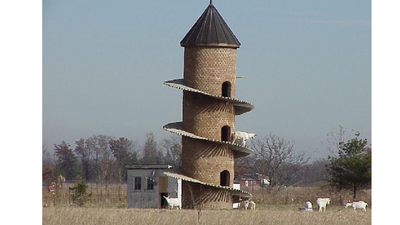
A 31-foot-tall brick tower was built specifically for goats in rural Illinois, and yes, it’s totally real. The structure wrapped in a spiral of narrow slopes allows goats to climb, rest and look out over the surrounding farmland.
What may seem like a quirky or even silly idea at first has already gained widespread attention online. But behind its unusual design lies a practical purpose, combining animal behavior, agricultural innovation and a touch of creativity to transform an ordinary dairy preparation into something a little more special.
What is it ‘Goat tower ‘
The building, often referred to as “Pa’s Goat Tower,” is located in Windsor, Illinois, and was built by farmers David and Marcia Johnson.
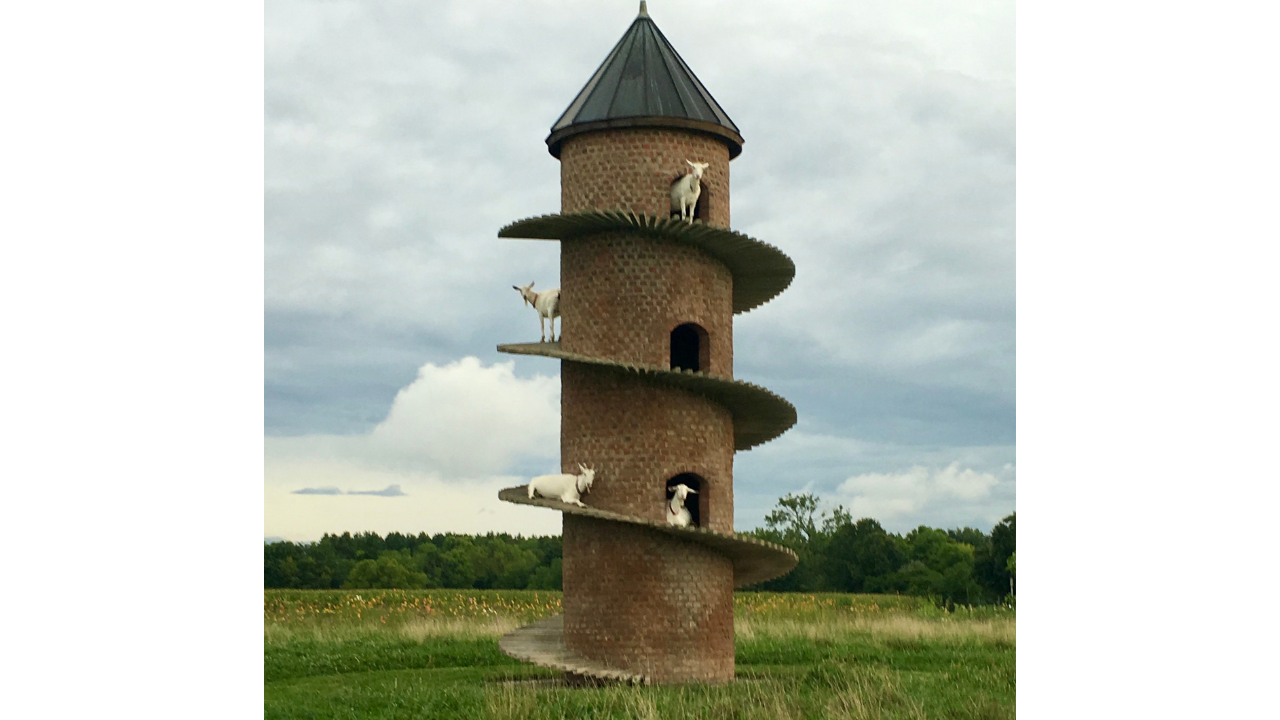
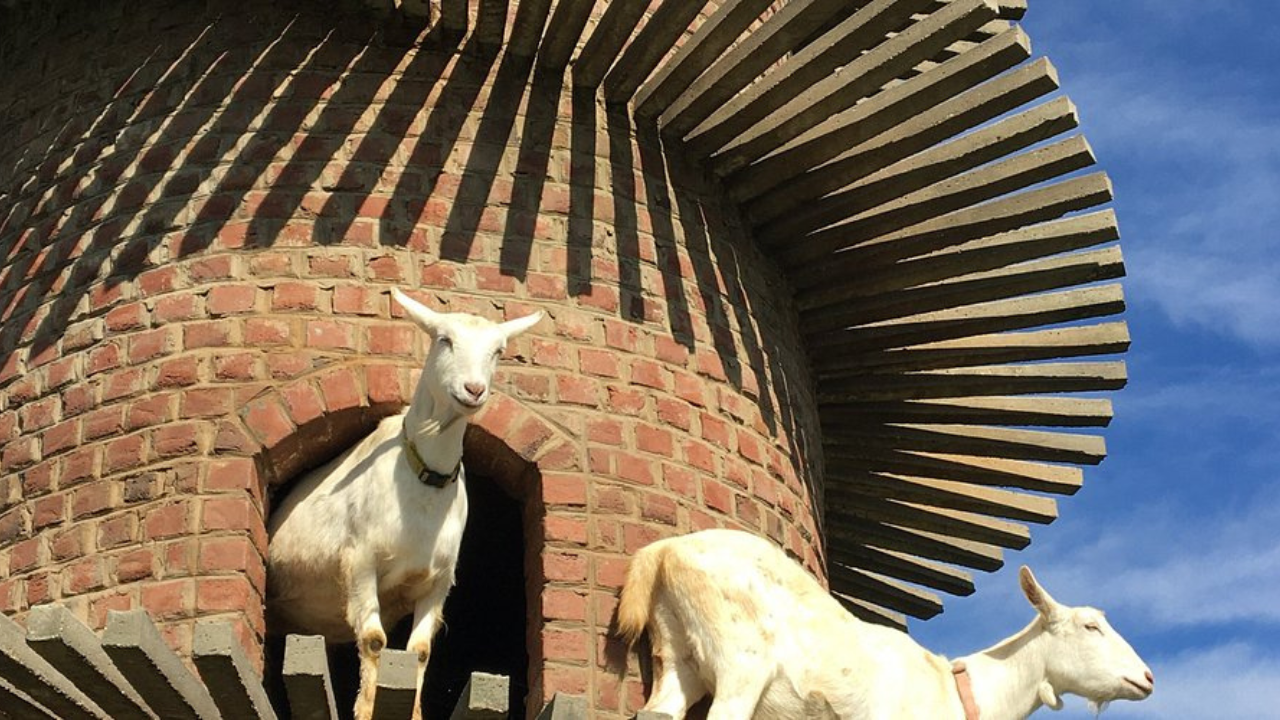
Standing approximately 31 feet tall, the tower is constructed from approximately 5,000 hand-crafted bricks and features a continuous spiral pathway consisting of hundreds of steps.Inside, the tower is divided into multiple compartments where goats can rest, while an external spiral allows them to climb to the top. The design is functional and visually stunning, resembling a miniature castle built not for humans, but for livestock.
At first glance, the idea seems quite whimsical. But goats are natural climbers. In the wild, they instinctively seek out elevated terrain to monitor their surroundings and stay active. Flat farmland does not offer this stimulus.By creating a vertical environment, the tower allows the goats to express these natural behaviors. Animal welfare research suggests that such enrichment can reduce stress, prevent boredom, and limit repetitive behaviors often seen in confined livestock.
What seems strange, in fact, is a deliberate adaptation of animal instincts.
More than just novelty: function meets design
While the tower serves a practical purpose, it also stands out as a piece of unconventional architecture. Its spiral design and compact height evoke comparisons with famous landmarks, giving it a distinct visual identity.Over time, it has developed into a local attraction. Visitors often stop to watch goats skittering down the slopes, turning a simple farm feature into a point of curiosity.
In this way, the structure blends utility and tourism, helping the farm attract interest beyond its immediate surroundings.Although recent social media posts indicate it is new construction, the Goat Tower is not scheduled for construction in 2024. It was originally designed in the late 1990s, with goats introduced shortly after its completion.Their reappearance online reflects how easily old and unusual structures can find new life in the age of viral content.
Stripped from its context, the tower seems almost fantastical, which is exactly what fuels its popularity today.
The bigger picture: Rethinking agricultural space
The Goat Tower highlights a broader shift in how farms approach animal welfare. Instead of focusing solely on efficiency, some farmers are experimenting with environments that encourage natural behavior.Such structures challenge the assumption that livestock spaces should be purely utilitarian.
Instead, they show how creativity and science can intersect, resulting in designs that benefit animals and farmers alike while capturing the public’s imagination.
From curiosity to symbol
What started as a practical idea became something more symbolic. The sign represents a combination of ingenuity, humor and care, proving that even in traditional industries like agriculture, unconventional thinking can flourish.Ultimately, the Goat Tower lives up to its name not just because it houses goats, but because it represents the greatest example ever of how the unexpected works beautifully in the real world.