[Thisstorycontainsspoilersfrom[ThisstorycontainsspoilersfromForbidden fruits.]
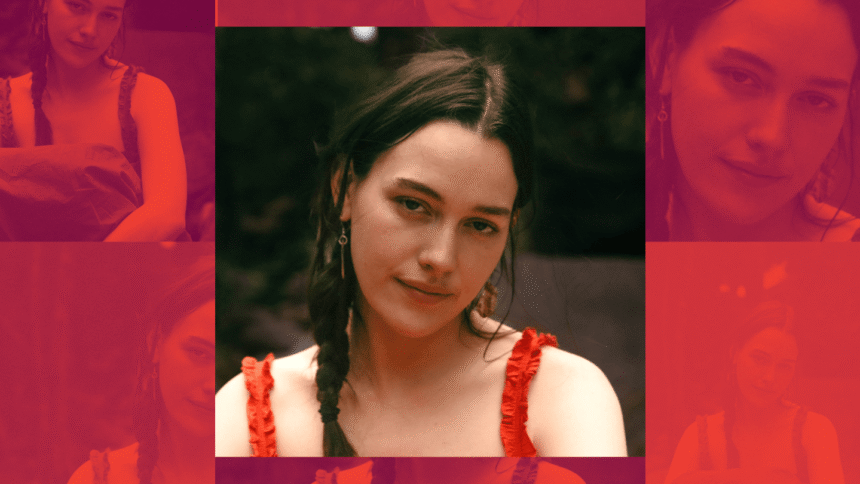
When Victoria Pedretti appears on your screen, know that she’s there for a reason.
“This bitch doesn’t want to do anything she has to do,” the 31-year-old actress joked. Hollywood ReporterBecause they only focus on projects that have an impact on people.
Over the past decade, Pedretti has cemented her status as a modern-day “scream queen” with her intense performances in Mike Flanagan’s filmography. Haunting horror anthology series and later the hit Netflix series YouStarring opposite Penn Badgley. She also appears in the currently streaming Netflix movie, Something very bad will happen.
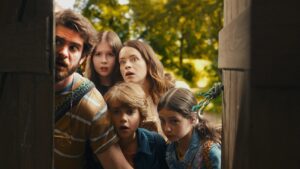
Now she is presenting to the audience once again in the horror comedy film Forbidden fruitsdirected by Meredith Alloway. The film revolves around Apple (Lili Reinhart), who leads a secret witch cult with co-workers Sherry (Pedretti) and Fig (Alexandra Shipp) in a mall store. But when new employee Pumpkin (Lola Tong) questions their sisterhood, they are forced to confront inner darkness or meet violent ends.
“I’m really interested in the conversations it can foster,” she says of the photo. “It’s a fun movie, but it’s a Trojan horse for a lot of larger conversations about consumerism, about grief, about friendship and abusive societal dynamics.”
Below, Pedretti talks about why she was drawn to the tournament Forbidden fruitsbringing Cherry to life on screen, why her character approaches sex in a “sport-like way,” her dream roles, and more.
Going back to where it all started, what first led you to pursue a career as an actor?
Like most of us who work in the entertainment industry in any way, be it journalism or otherwise, I feel like we really enjoy films, television and theatre. I was obsessed with escape and stories, and was glued to the television throughout my childhood. I loved the magic of walking into the theater and the lights going out. And just being able to immerse myself in a story has really helped me in life in so many ways. And I thought it could be a really powerful thing if I could bring that to people.
monitoring forbidden fruits, I felt like it was a dark, twisted and magical version I mean girls. How did you get involved with the project and what was your reaction when you first read the script?
It’s rare to read a text that’s enjoyable in this way, while also simultaneously dealing with a lot of uninteresting themes and things that I think are very human and universal and specific. And it really resonated with me. I was in it a long time ago, probably three or four years before the film was actually shot. And it was amazing to stay in touch and be on that journey and then to see it come to fruition, that was pretty cool. It was great to have a lot of time to be able to think about the project, but also for it to mature.

Your character Cherry comes off as a ditzy and insecure girl at first, but eventually, she realizes there’s so much more to her. Talk to me about how you wanted to portray Cherry on screen.
It made me think a lot about those types of women we know. There are a lot of women who are underestimated, and a lot of women who present themselves in ways that people can find distracting or make assumptions about because of it. Whether it’s that people are really nice and not particularly intelligent, you know, seriousness is linked to intelligence. I also think a lot about these famous sexual symbols of women and how often there is a process of sexualization while at the same time there is a process of dehumanization. And maybe that’s why I take my work so seriously, but I find it really interesting.
I was very fascinated by Marilyn Monroe when she was a little girl, because it was great that she kind of brought to the surface what we all do, which is play characters. The self is truly such a complex thing that we can’t even fully know it, so why not play around with the way we present ourselves to the world and speak to it? Much of the tragedy of Marilyn Monroe is that she was made out to be stupid because she was beautiful. She wasn’t allowed to keep it all. This is very tragic and something I think a lot of women struggle with.
Cherry is also the only character to have intimate scenes in the film. What did your conversations with your intimacy coordinator look like when it came to preparing for it?
It’s interesting because you say intimate, as all the characters have intimate scenes. I found the sex scenes to be incredibly lacking in intimacy, like actual emotional intimacy. Our Intimacy Coordinator was amazing. I’m very interested in that. It’s interesting to film sex scenes that depict sex in a way that seems to move the story along, revealing something about the character. So this conversation was very important to me, [which] Why were we showing Sherri having sex? This is because the way you have sex is very performative.
She approaches it in an almost sport-like way. It’s not about communication at all. And I haven’t seen that much. It’s the way she tries to get her needs met while at the same time giving all of her actual intimacy and loyalty and love to Apple, and it’s almost like she’s objectifying these guys in so many ways, which is so sad because they’re bringing her gifts. They really love her and she’s not giving them the actual intimacy and openness that they probably deserve if they choose to put themselves in this situation together. And I’m really proud that there’s nudity in this movie, but nudity doesn’t come with sex. The nudity comes with just two girls talking together and feeling comfortable around each other, enough to be naked while having a conversation about many things other than sex.

I feel like the mall is its own character in the movie. Since mall culture has been slowly dying in recent years, do you think this film can help bring it back?
Oh, I lived in the mall when I was a kid. This was a place where I could be free and hang out with my friends and not even buy anything much of the time or just browse the sales racks at Forever 21. I couldn’t help but love them all. It’s also a huge symbol of corporations and capitalism, and in the movie, it’s actually used to represent that. The world we live in is a kind of huge mall. Do I think it will revitalize the mall culture? I don’t know. …I wonder if that could give us the chance to reinvent the mall.
Cherie’s gruesome death was certainly one of the most shocking moments in the film – what was your reaction when you first read that in the script? How was filming that scene?
I think I screamed when I read it, probably. Then I said: “How does one do that?” There was a conversation where they were talking about not showing too much of it. So I always imagined it being cut off, but it’s very important that you see the ugliness of it. It was a great thing to do. I love doing stunts. It’s fun to play as your hand being eaten by the elevator. Personally, I thought it was kind of ridiculous, but since then I’ve heard that people have died [on escalators]. Maybe not exactly this way… Honestly, I was told not to Google that and I chose not to (He laughs).
What are you most looking forward to when fans get to see the film?
We talk about the movie. I’m really interested in the conversations it can foster. There’s a lot there. It’s a fun movie, but it’s a Trojan horse for many larger conversations about consumerism, about grief, about friendship and abusive societal dynamics. It’s very difficult to know where to focus in a conversation about the film because I think it touches so much; [but] I don’t think it hits you over the head. It doesn’t feel like a morality tale, so I like it.

Having already dealt with psychological, horror and thriller genres, do you have a dream genre that you haven’t done yet?
I mean, I’m in New Zealand now, so I’m like, “I want To be in a fantasy movie. I want to play a hobbit or a dwarf.” And I’ve always loved historical fiction. I love period pieces. It’s always exciting to do something you’ve never done before.
Your performance has been praised Haunting Hill House, You and Haunting Bly Manor. Given the success you have seen in your career, what is one of the biggest challenges you have overcome to get to where you are today?
It’s always reminding yourself that nothing is mandatory and that there is no one way to do things and keep trying to find my own way. I’m not like everyone else. I shouldn’t do things the way other people do. I still care about the life I have outside of my work and continue to put more and more efforts into building that for myself… Also, I have creative projects that are entirely driven by my own projects. Well, not quite, it’s still cooperative, but not in an attempt to make a living; And even more so in trying to survive creatively because once your passion becomes your job, it’s very easy for that passion to dissipate because you’re bound to it. Again, commitment. This bitch doesn’t want to do anything she has to do (He laughs), which can be linked to what I heard.
I did not follow this [career] Because I thought I would appear in films that would be shown in cinemas. I started doing this because I wanted to make an impact on people, even if it was on a small scale, even if it was a play that very few people had seen or a movie that very few people had seen. So keeping this intention alive is really necessary and not easy. It’s a balancing act.
If you had to describe what makes Victoria Pedretti, Victoria Pedretti, what would you say?
Being so far from home, you really realize the power of where you come from, and I’ve been thinking about that a lot. I’m my father’s child, for sure. This is a big part of who I am and where I come from. I’m from Philadelphia and the surrounding area, and when you’re this far away, or even in Los Angeles, it becomes apparent. Also, whatever hell she appeared as, there was some essence that I couldn’t begin to describe at this moment. Who I am is always changing too, and making room for that is really important. But I would say that I don’t really like to do what I have to do. This is definitely a big feature that has already come up in this conversation, so I’ll admit it (He laughs).