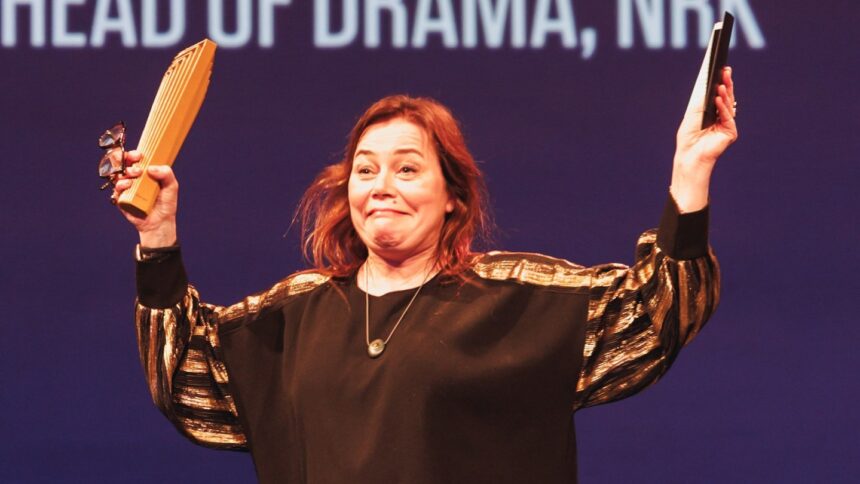
Marianne Verevold-Boland has spent her career shaping some of Norway’s most influential television channels. As Head of Drama at NRK, she oversees the roster that has helped define the modern Scandinavian soap opera boom, from exit and State of happiness to Power Play and Marianne is very tall. But it was her role as a producer scam (Shame) – youth drama that became a global phenomenon and spawned several international remakes, including the American version of American Idol Producer Simon Fuller – who brought her international fame, cementing her reputation as one of Europe’s most influential television executives.
A trained actress who began her career as a children’s television presenter in her teens, Forvold-Boland moved seamlessly through roles, as writer, script consultant and producer, bringing a storyteller’s instinct to the commissioning process. This perspective, coupled with a strong public service ethos, has been a key element in NRK’s ability to punch above its weight internationally despite relatively modest budgets.
On Tuesday night in Lille, Forevold-Boland was honored with the Women in Series Award at the international television festival Series Mania, in recognition of her leadership and creative vision in the global television landscape.
Speaking to The Hollywood Reporter, Forvold-Boland discusses her unconventional path to a TV executive, and the lasting impact of scamAnd why risk and trust remain essential in an increasingly algorithm-driven industry.
How did you first get into television?
I started as a children’s TV presenter at NRK when I was 19, straight out of school. At the same time, I was training as an actor. That was my background in acting and storytelling. It was an honor to do both. But at some point, I realized that I loved television, and I loved being part of something bigger, and making something together. That’s when I moved fully into the world of television.
What kind of work were you doing early on?
A little bit of everything. Mostly for younger audiences, but also some projects for adults, across both television and radio, some entertainment, some infotainment, and even documentaries. Working at a public broadcaster like NRK means you can explore different forms of storytelling. That’s what I’ve always been drawn to, the idea of being part of a group, and creating something together across different roles.

What are the biggest changes in the TV industry since you started?
In my view, the biggest shift is the level of competition. Funding projects has become more difficult now, and this creates a more cautious environment. People are more afraid of making the wrong decision. But this is a “professional guesser” profession. We need to stick to curiosity and fun, even though we have a lot of responsibility. We give people stories that can influence how they see the world.
So the caution is largely due to competition?
Yes. Competition is fierce. But public broadcasters like NRK are ultimately owned by the public, which gives us a certain amount of freedom. Not everyone has that. There is a risk that if you become too careful, the content will become more generic. I don’t think this is what the public wants.
We need to respect the public. They are ready for stories that challenge them. Entertainment is not just about comfort. It’s about emotion. Laughter, anger, surprise. Great storytelling should make you feel something. And sometimes it’s about giving people shows they didn’t know they’d like.
This idea seems central to scam. How did this offer come about?
In many ways, we were building on years of experience producing web dramas for young audiences. We spend a lot of time researching, talking to our audience, and understanding their fears, hopes, and what matters to them.
When we were tasked with returning 16-year-olds to NRK, we already had an institution.[[scam showrunner]Julie Andem was the heart of the project.
It’s hard to explain why it became such a global hit. But I think it boils down to something very simple: it’s about love, learning to love yourself, and finding someone who loves you. This is my world.

The show resonated deeply with audiences. Do you remember any particular reactions?
there are many. But the girl who stayed with me was a girl who wrote to a national newspaper thanking the program for helping her process her own experience of sexual assault.
And then there was the online community. I remember someone writing that they were watching season 3 and wondering if they should tell their parents they were gay. The response from other viewers was: “Go for it. We support you.” This type of connection is incredibly powerful.
NRK operates on a much smaller budget than many European broadcasters. How do you maintain this level of quality?
We don’t have the same financial strength, so our superpower must be trust. Trust in the talent, in their vision. Work closely together as partners, whether it’s with writers or production companies, to protect this vision. If we share the same belief in a project, that’s where the power comes from.
What are the biggest challenges facing public broadcasters today?
Relevance, always. Especially with younger audiences. We have to offer two fronts at the same time: broad and entertaining content, but also something special, something you can’t find anywhere else. This balance is crucial.
We have a responsibility. At NRK, our mission is to promote and develop democracy. This means telling stories that open minds, create conversation, and offer new perspectives.
Do you feel the industry is taking less risk now?
Yes I do. I think what we’re missing are shows that really stand out, both in terms of tone and storytelling. There is a risk that decisions are increasingly based on algorithms. If this happens, we may end up with content that is more general than we should be.
What motivates you after all these years?
Stories can have an impact. with scamAnd to see how a local Norwegian show could resonate around the world, that was extraordinary. But most importantly, seeing how people can help, even in small ways, is what matters. If a story gives someone a tool, a new perspective, or helps them feel less alone, that’s why we do it.