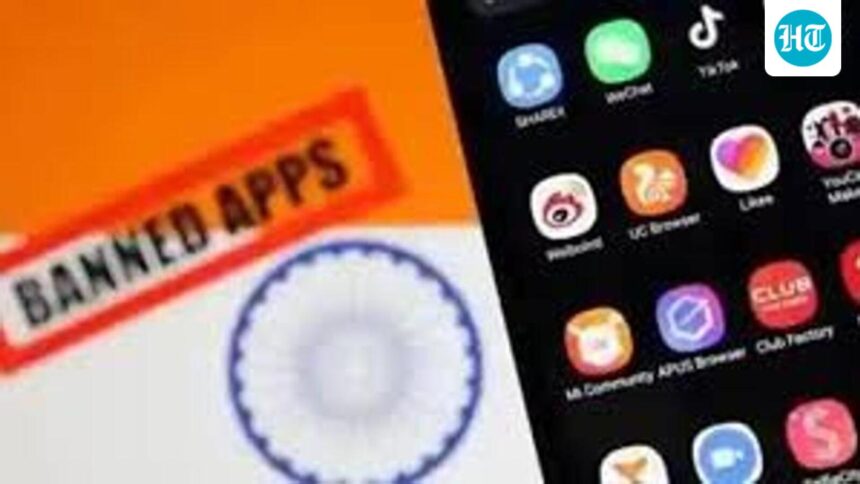
The government has blocked 652 mobile applications over data security concerns and “other malpractices”, the Ministry of Electronics and Information Technology (MeitY) told the House of Representatives on Wednesday.

In a written response to a question asked by Congress leader Rahul Gandhi, MeitY state minister Jitin Prasada said the blocking was implemented under Section 69A of the Information Technology Act, which allows the government to restrict access to online content in the interest of sovereignty, security and public order. However, the government’s response did not address many of the specific questions raised by Gandhi. The government did not provide a list of apps of Chinese origin that may still be operating in India under their rebranded versions, nor did it explain what action has been taken against these entities.
HT reached out to IT Ministry officials to ascertain how many of the 652 banned apps were of Chinese origin, but did not receive a response. However, China has claimed that since June 2020, India has banned more than 300 Chinese mobile apps across sectors such as social media, e-commerce and gaming, according to the minutes of a meeting of the WTO Council on Trade in Services dated July 25, 2025, which records the actions as of June 13.
The first round of app bans in India in June 2020 came in the immediate aftermath of the Galwan Valley clash, which escalated tensions between India and China. The government then said that the 59 apps were blocked over concerns that they would collect and transfer user data to servers outside India. Among the banned apps, which remain banned to this day, include TikTok, PUBG, WeChat, and Shein.
Over the years, many Chinese apps banned by India have resurfaced on Android and iOS app stores, often under rebranded or changed versions, a concern Gandhi also noted in his question.
In 2022, MoS MeitY Rajeev Chandrasekhar, in response to a question in the Lok Sabha, said the Ministry of Home Affairs had identified 348 mobile applications, developed in multiple countries including China, that were collecting user data and transmitting it to servers outside India without a licence. At the request of MHA, MeitY has blocked these apps. The latest figure of 652 applications indicates that the number has almost doubled in four years.
Regarding surveillance, the government, in its parliamentary response on Wednesday, highlighted new security rules for surveillance cameras such as detecting device origins, testing for vulnerabilities, and issuing mandatory laboratory certificates. It said the 507 models are now certified and that non-compliant devices cannot be purchased by government departments. However, it did not reveal how many surveillance cameras had been purchased in the past five years or where they came from.
Furthermore, the department did not detail the security protocols governing the AI systems used by the government or identify any foreign AI platforms currently in use.