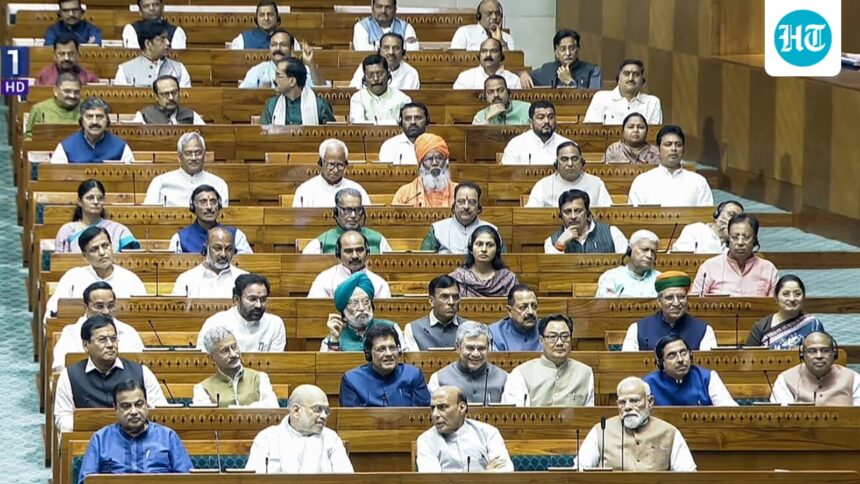
The ongoing Budget session may be postponed early in view of elections to the five assemblies next month, but it could resume for a few days after the elections to pass key bills including amendments to the Women’s Reservation Act, people familiar with the matter said.

The Budget session is scheduled to continue till April 2, but with polls being held in Assam, Kerala and UT Puducherry on April 9, Tamil Nadu on April 23, and West Bengal on April 23 and 29, several political parties have expressed their preference to adjourn the session soon to enable legislators, especially from these states and UT, to focus fully on the campaign. Several leaders, such as Congress’s Gaurav Gogoi, RJD’s NK Premachandran, and Trinamool’s Abhishek Banerjee, moved to their states for elections and stopped attending Parliament.
Read also: It’s not Delhi, this Indian city was the most polluted last year, the report shows
The issue was discussed at the Business Advisory Committee meeting of the Lok Sabha on Tuesday. According to three leaders who attended the meeting, government managers agreed to the proposal. One minister, who requested to remain anonymous, said, “There has been a request from many opposition leaders, especially from states witnessing elections. So, the government is planning to postpone the budget session this week. The session could be called after the elections to finish the pending work.”
Before adjourning the session, the House must pass the all-important Finance Bill 2026, and the Rajya Sabha must refer it back to the House. Approval of the draft finance law, which means final approval of the annual budget, is a constitutional obligation of the government and should be completed in the current second half of the budget session.
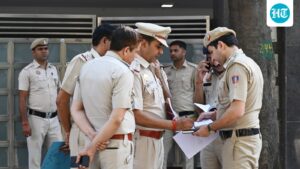
Two opposition MPs said the government was likely to adjourn the parliament session this week, but added that it was not clear how many more pieces of legislation it would push through before then. Lok Sabha Speaker Om Birla devoted seven hours to discussing the controversial Central Armed Police Forces (General Administration) Bill, 2026. The bill proposes that 67% of the additional DG posts and 50% of the Inspector General posts in these forces will be held by IPS officers on deputation, while all the posts of Special DG and DG will be reserved for them.
The proposed legislation also seeks to create a uniform legal framework for all five Indian police forces and codifies the mandate of Indian Police Service (IPS) officers at senior levels. CAPF associations have long opposed this practice and approached the Supreme Court, which on May 23, 2025, directed the government to “gradually reduce” the mandate of the IRS.
The Lok Sabha on Monday passed the Transgender Persons (Protection of Rights) Amendment Bill. The legislation significantly narrows the definition of transgender people, removes the right to self-identification, introduces medical boards for certification, and provides penalties of up to life imprisonment for crimes such as kidnapping and forcible mutilation of children.
But all eyes are on the government’s plan to amend the Nari Shakti Vandhan Adhinyam or Women’s Reservation Bill to allow its early implementation. On Tuesday, Congress president Mallikarjun Kharge sent a letter to Parliamentary Affairs Minister Kiren Rijiju reiterating the demand for an all-party meeting.
“The government now appears to be planning another amendment to the Constitution amendment passed in September 2023. All opposition parties are now reiterating their demand for an all-party meeting to discuss the proposed Constitution amendment. To make the meeting more productive, it is necessary for the government to circulate a memorandum detailing exactly what has been proposed. The all-party meeting should be held after the completion of the current round of assembly elections on April 29, 2026,” he wrote.