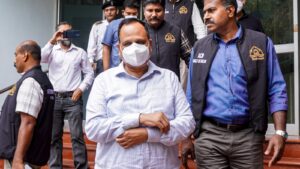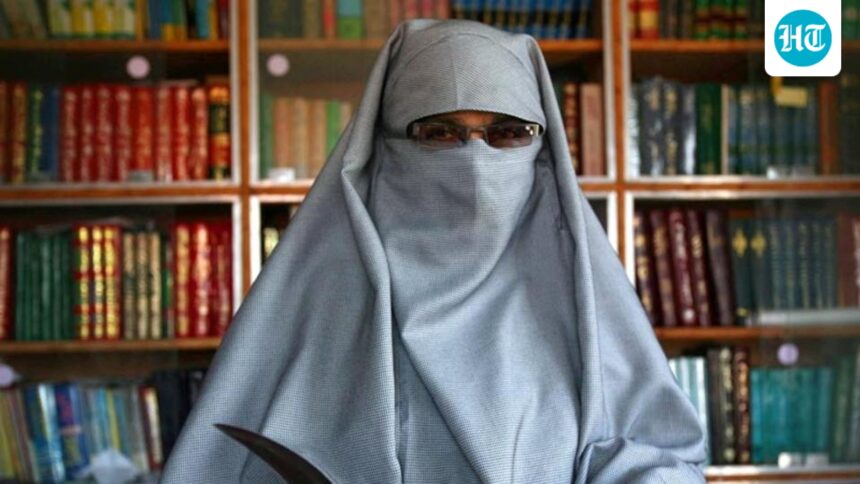
A Delhi court on Tuesday sentenced Kashmiri separatist activist Asiya Andrabi to life imprisonment, while two of her accomplices, Sophie Fahmida and Nahida Nasreen, were sentenced to 30 years in prison each. This follows her conviction on January 14 under several sections of the Unlawful Activities (Prevention) Act (UAPA).

Additional Sessions Judge Chander Jeet Singh delivered the ruling after completing arguments on the quantum of punishment.
Andrabi, who founded the women’s separatist group Dukhtran Millat (DeM) in 1987, was arrested in April 2018. She was charged under the UAPA with conspiracy to carry out terrorist acts, being a member of a terrorist organization seeking the secession of Jammu and Kashmir from India, and supporting such groups.
The court convicted the trio on January 14, 2026, of several offenses under the UAPA and the Indian Penal Code (IPC), including conspiracy to commit acts of terrorism and waging war against the state.
‘Waging war against India’: NIA filed in court
Following her conviction, the National Investigation Agency (NIA) sought life imprisonment for Andarabi, saying she had waged war against India and that a strong message should be sent that conspiring against the country would warrant the toughest punishment.
“The convicts are well-educated women whose actions were part of a deep-rooted conspiracy to wage war against the government of India. They were not just part of the conspiracy, they were the main perpetrators,” the agency said in its written submissions.
What do you know about the banned DeM group?
DeM has been banned under Schedule-I of Unlawful Activities (Prevention) Act, 1967 and is alleged to have been involved in anti-India activities by inciting the common people of Kashmir for an armed uprising against the Indian government with the aid and assistance of terrorist organizations based in Pakistan.
The chargesheet filed by the NIA accused Asia and her aides of spreading “mutinous accusations, hate messages and speeches against India” through various social media platforms, including Twitter, Facebook, YouTube and television channels, including channels in Pakistan.
With input from agencies