

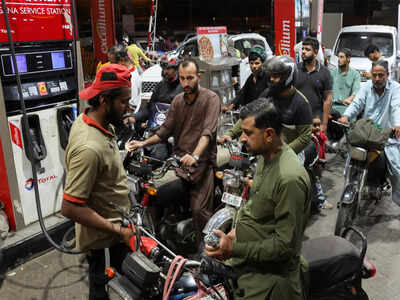
As the Middle East war continues to escalate, tensions are rising for the South Asian nation of Pakistan. The country is facing an economic crisis as Iran has disrupted fuel shipments through the Strait of Hormuz, its main oil supply route.
Pakistan depends on Saudi Arabia and the United Arab Emirates for more than 85% of its crude oil, most of which passes through this single sea lane. Recent attacks on at least 16 ships, including tankers, have slowed traffic, leaving ships stranded in Karachi, the country’s main commercial port.The supply disruption led to higher fuel prices around the world. Pakistani Finance Minister Muhammad Aurangzeb had previously predicted that the country may see the monthly oil import bill rise to $600 million as prices continue to rise.
Fuel Diplomacy: South Asian neighbors turn to India for energy after war disrupts Gulf energy routes
High oil costs are affecting farmers who are preparing for the spring harvest season. “The use of tractors and other agricultural machinery is unavoidable in most stages of planting and harvesting, and they are largely diesel-powered,” said Amer Hayat Bhandara, a farmer from Punjab’s Pakpattan district. Agriculture accounts for more than 23% of Pakistan’s GDP and employs 37% of the workforce, making the sector particularly vulnerable to price shocks.
Meanwhile, the city’s residents are no strangers to the crisis. Diesel rickshaws, taxis and passenger vehicles are becoming more expensive to operate. “They could have gotten the oil from Russia,” Muhammad Roshan, a rickshaw driver in Rawalpindi, told the New York Times. “Why didn’t they explore this opportunity?”The government raised fuel prices by 20% on March 6 to reduce fuel hoarding, marking one of the largest increases worldwide since the beginning of the US-Israel war in Iran.
This move has hit families hard, especially in a country where nearly half of the population lives in poverty, according to World Bank estimates.
“Survival loan by loan”
Economists warn of wider consequences if the crisis continues. “Pakistan is already bankrupt and living on loans after loans,” Qaiser Bengali, a Pakistani economist, said in reference to the IMF aid. “Any long-term disruption could topple its economy.”Retail activity slowed ahead of the holiday, with many customers prioritizing essentials.
“There is no such rush in the markets,” said Shabbir Ahmed, a clothing merchant in Karachi.With energy supplies constrained and prices rising, Pakistan’s rural and urban populations are bracing for a difficult period ahead, with livelihoods, education and traditional ceremonies affected.
Dealing with presentation shock
Some schools are shifting to online learning, even though many children lack access to laptops, tablets or reliable internet.
Families are canceling their trips on the occasion of Eid al-Fitr, a time of celebration usually at the end of Ramadan. Ali Akbar, a real estate agent in Islamabad, said he was postponing his flight home and considering moving his children to a school within walking distance. “Their monthly transportation costs have already risen to $48 from $36 over the past week,” he said.Pakistan has tried to ease the shortage through domestic measures, including boosting solar energy for electricity production and reducing official travel and the work week.
The authorities also requested Saudi assistance to supply oil through the Red Sea ports. However, economists warn that cutting workdays could hurt daily wage earners and middle-class families.While its economy suffers, the country is treading cautiously on the diplomatic front. The government worked to strengthen relations with the Trump administration while avoiding criticism of the US strikes on Iran. To alleviate the energy crisis, Pakistan asked Saudi Arabia to route oil shipments through its ports on the Red Sea.