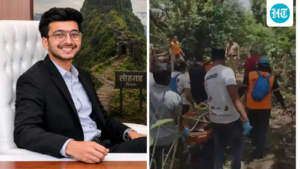
It was a Tuesday – Rakshabandhan, August 20, 2013 – when the phone rang at the Rana’s family home.

Ashok Rana, who was then a chef in a private catering company, answered the call. On the other end there was news about his eldest son, Harish Rana, who was studying civil engineering in Chandigarh.
Like many young men his age, Harish was obsessed with fitness and thought about supplementing his income – and paying his school fees – by participating in bodybuilding competitions. Like many middle-class families, the Rana family was looking forward to a bright and healthy future for their eldest son.
It wasn’t to be.
The call informed Ashok that his son had fallen from the fourth floor of his paid accommodation.
For the next 13 years, Harish remained comatose, completely unresponsive and bedridden, dependent on feeding tubes for nutrition and hydration. His family provided round-the-clock care, first at several hospitals and later at their 13th-floor apartment in Ghaziabad’s Raj Nagar area.
As that painful journey came to an end on Wednesday when the Supreme Court allowed the withdrawal of medical treatment from Harish, Ashok said his feelings were mixed. “As a father, this is very painful,” he said. “But for humanitarian reasons, this is the best we can do for my son.”
“It is not just about my son, but there are many others in such a situation in the country. I believe it is God’s grace that has guided the Supreme Court judges… and I am happy that with this ruling, many others may find a way,” he said.
“On the other hand, I feel very sad. It was a Tuesday on Rakshabandhan day and we received a message about his fall. We reached the trauma center around 3 am and learned that he had suffered head injuries and other injuries. Whatever happens next, I feel there is a sewa service written in our karma, and we are doing it and will continue to do it,” he added.
Read also: Passive euthanasia law issue
Ashok said Harish was interested in fitness and decided to participate in a competition to help his father fund his education.
“It was tuition fees $1 lakh and his hostel fees were about $ 60,000. He thought about participating in the body show thinking he would win the prize money and help me. He had won two competitions and was going to the third when this accident happened,” the father said.
The family brought Harish back to AIIMS in Delhi.
“We spent about a week at AIIMS and then transferred him to a private facility where he was admitted for 18 days. The bill arrived $7 lakh and we were running out of money. I asked the doctor only one question: will he wake up or not? “They didn’t have a clear answer,” the father said.
Over the past decade, the parents have taken Harish to multiple hospitals in the hope that he would improve, including a Noida hospital about five months ago. He said: “The treatment given to him was hyperbaric oxygen therapy (HBOT), which is used to treat severe wounds. My son suffered a serious head injury, but nothing worked.”
Then the family decided to go to court.
“We approached the court when we realized that our son’s condition was incurable and irreversible. Earlier, in the case of Common Cause v Union of India, the court had laid down guidelines and conditions for withdrawal of medical treatment, especially life-sustaining treatment. We just wanted to apply these guidelines in our son’s case as well,” Ashok said.
Medical treatment negatively affected the family’s financial situation. Ashok said he sold his house in Delhi’s Mahaveer area three years ago and moved to his current residence in Ghaziabad.
The family bought an adjustable hospital bed for Harish with an air mattress to ensure he does not get bedsores. But he got it in the end, and he was in a lot of pain,” Ashok said.
The father thanked the High Court and said that the life-sustaining treatment that Rana was currently receiving in the form of a PEG tube would be withdrawn, and he would be provided with appropriate palliative and comfort care. “We have not yet decided when we will take him to AIIMS for the operation,” Ashok said.