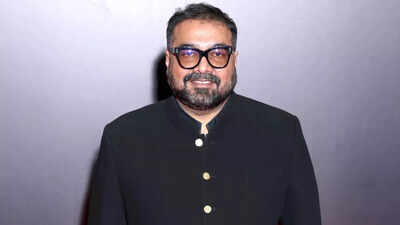
Anurag Kashyap spoke about one of the most difficult periods in his career, which was the cancellation of his ambitious series Maximum City. Now the ‘Gangs Of Wasseypur’ director has revealed that he suffered a heart attack and had to go to a rehabilitation center when the streaming platform decided not to go ahead with his show.
This series was intended to be an adaptation of Suketu Mehta’s popular book ‘Fartest City: Bombay Lost and Found’. Kashyap had been developing the project as a large-scale show for Netflix, which initially approved the idea before ultimately deciding not to move forward with it.Lashyab said the way the project was handled left him in a state of extreme shock. “During lockdown, I was writing Maximum City,” he said in an interview with Midday.
They had already decided after reading the first part that it couldn’t be done; It will be very difficult. But no one had the courage to come and tell me. I continued to write and spent a lot of time doing it. My team knew about it, they were told about it, but they didn’t tell me. So imagine giving two years to something and becoming emotionally attached to it.
“I had a massive internal explosion.”The director explained that he did not start working on the series until after receiving the green signal from the platform, but he later discovered that the executives who approved the project had not actually read the book.
“I didn’t start working on ‘Maximum City’ until after it was given the green light. My first question to everyone at Netflix was, ‘Have you read the book?’ They all said yes. No one had read the book. It started with a lie. I gave the green light for the book, I gave the seed money to prepare, and then after reading the script she says, ‘This can’t be done,’ when in fact the script I wrote was very true to the book. At that time, I was thinking of Netflix as my home.
To me, if they greenlight something, it means they’re going to do it. The way they treated me caused a huge meltdown inside me.Kashyap said the emotional distress soon manifested into serious health problems. He revealed: “The first thing I had was a heart attack. I had a stent put in and I was put on blood thinners. I couldn’t cope with it, I reacted badly to the vaccines, and developed severe asthma. I was put on steroids, and steroids keep you awake and agitated, so I started drinking.”
It was a combination of many things. My daughter had a nervous breakdown and she looked at me and asked me to go to the rehabilitation center, so I went.
“However, even his time in rehabilitation was difficult. Kashyap revealed that he suffered a serious ligament injury during his stay. He said: “At rehab, I tore a ligament in my right leg, which got worse because neither I nor the rehab staff realized it in time. It kept getting worse and I was in so much pain.
I left rehab and went to the doctor who told me I had messed up. I can barely walk. Surgery was not possible due to blood thinners.
I was lying in bed with my legs up – suffering from asthma, steroids and blood thinners.Despite the painful separation, Kashyap said he has now moved on and chose not to hold a grudge over what happened. “I am very happy now. I have forgiven everyone in my mind. Everyone has consequences.
“I am very happy ever since I left Mumbai,” the director said. Kashyap currently resides in Bengaluru. During the same conversation, he also talked about how the live streaming scene in India has evolved since global platforms first entered the market. According to him, the early days of streaming services were more supportive of experimental and independent storytelling, but the platforms’ priorities have changed over time.“One of the senior people from Silicon Valley said India is a wasteland. What he meant was that all they want is more subscribers. They just want subscribers, and they want to maximize them. They don’t want quality. In the beginning, it wasn’t like that because they were trying to break into the market. And I was told to my face: ‘We want subscribers, we don’t want you to be sophisticated and smart.’”