Ramadan is one of the most important holy occasions in Islam, and as the holy month ends, worshipers will plan trips to religious sites for gratitude and prayer.
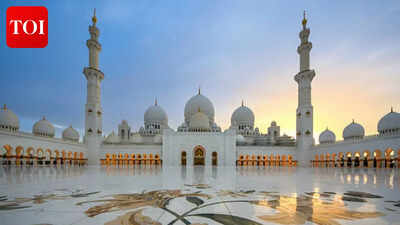
The Sheikh Zayed Grand Mosque, the largest mosque in the United Arab Emirates, has intensified preparations for public safety and comfort as thousands of worshipers await the arrival of prayers in the final nights of Ramadan. The mosque has enhanced its readiness in all its landmarks: Sheikh Zayed Grand Mosque in Abu Dhabi, Sheikh Khalifa Grand Mosque in Al Ain, Sheikh Zayed Grand Mosque in Fujairah, and Sheikh Khalifa Grand Mosque in Ras Al Khaimah.
Preparations for prayer
The mosque aims to provide a calm and spiritual atmosphere for visitors to perform daily prayers, taking into account the increasing turnout of worshipers during the blessed days and nights, especially on the night of the twenty-seventh of the holy month, where more than 70,000 worshipers gathered in one night in recent years. The center is scheduled to commemorate the rituals of the last ten days by holding Tarawih and Tahajjud prayers in its mosques.
Tahajjud will be held daily at midnight (12:00 noon) in a spiritual atmosphere led by the imams of the mosque, who are Idris Abkar, Yahya Aishan, Alaa Al-Muzajji, Abdullah Al-Balushi, and Abdul Basit Abdul Samad, in addition to hosting the reciter Raad Al-Kurdi. ‘The Center continues to broadcast supplications live daily through its official YouTube channel, its Instagram account, and television coverage with Abu Dhabi TV and Fujairah TV.
Increase in parking spaces
To facilitate access to the mosque and its landmarks, the center has allocated more than 8,000 parking spaces in the Sheikh Zayed Grand Mosque in Abu Dhabi, in addition to 1,500 parking spaces for women and more than 60 parking spaces for people of determination. More parking is also available near Wahat Al Karama, ADNEC and Zayed Sports City. The Sheikh Khalifa Grand Mosque in Al Ain has allocated 2,176 parking spaces, including 28 parking spaces for people of determination, in addition to the Sheikh Zayed Grand Mosque in Fujairah, which provides more than 2,000 parking spaces. A detailed video explaining the parking areas and entry gates according to the official maps was published on the center’s social media platforms.
Expanding taxi service
To manage the significant increase in the number of visitors, the Integrated Transport Center, affiliated with the Department of Municipalities and Transport in Abu Dhabi, participated in intensifying traffic monitoring and expanding taxi services and public services throughout the holy month of Ramadan. In order to efficiently serve the high number of visitors and devotees, ITC has allocated an estimated 100 taxis to operate daily. Furthermore, additional vehicles were provided during the last ten nights of Ramadan, when visitor numbers typically rise for night prayers. Inspectors and transportation coordinators will supervise operations on site, with designated areas for pick-up and drop-off in coordination with the mosque administration.
Elevated bus services
In order to manage the usual high traffic at this time of year in the areas surrounding the mosque, public bus services have been enhanced. This aims to facilitate travel and navigation for residents and international tourists alike, without the need for a car. Under the Ramadan plan, Line Q3 will now operate larger buses with a capacity of up to 85 passengers, replacing the smaller vehicles previously used on the line while transporting a greater number of passengers with less traffic. During the evening hours, when visitors are highest, two additional buses will operate and approximately 60 additional trips will be carried out between Rabdan Bus Station and Sheikh Zayed Grand Mosque Station. Three buses have also been allocated to transport passengers from Rabdan Bus Station to nearby suburbs to help reduce waiting time. An additional 27 evening trips have been added to the mosque, with bus routes X5, 54, 44 and 23 modified to stop directly at the mosque.
Intensifying patrols and monitoring
The ITC monitors the roads and signalized intersections around the mosque. With the help of the integrated traffic management system and surveillance cameras, vital areas were monitored through its traffic control room. Portable and fixed Variable Message Signs (VMS) are installed to assist motorists and visitors, while road service patrols and tow teams have to respond quickly to accidents or breakdowns. In addition, traffic patrols will be intensified during iftar hours and the late-night prayer period when crowd numbers increase.
Customize other services to maximize smooth operation
Not only in terms of transportation and navigation, but the authorities have also taken initiatives to make the experience inside the mosque comfortable and memorable as well. The center has provided approximately 1,500 prayer rugs for the outdoor areas, in addition to more than 30,000 disposable prayer rugs around the columns.About 70 electric vehicles were allocated for people of determination and the elderly to transport them from the parking lots to the prayer halls. This is in addition to 3,515 comfortable seats and more than 50 wheelchairs for senior citizens and people of determination. To ensure the safety of the children attending, the center provides identification bracelets at all information points to reach their parents when needed. Finally, ambulances, a field hospital, and civil defense teams were stationed at the site to respond to emergency situations, if any. The authorities indicated that all these measures aim to ensure a smooth experience for worshipers visiting the mosque, which is known for hosting some of the largest Ramadan prayer gatherings in the UAE.