The Central government has formed a grievance redressal committee and taken steps to increase LPG supplies amid reports of shortage of cylinders for commercial use in several parts of India. This comes at a time when the ongoing US-Iranian conflict is affecting supply lines from West Asia.

The three-member committee comprises executives of public sector companies Indian Oil, Hindustan Petroleum and Bharat Petroleum Corporation Limited, sources told news agency ANI.
He lives: Updates on the US-Iran conflict
Hindustan Petroleum Corporation (HPCL) posted on its handle
As for non-domestic sectors that are not classified as “essential”, such as hotels and restaurants, HPCL said their applications will be reviewed by this committee “on the basis of merit, necessity and product availability”.
It also shared three email IDs where applications can be submitted for “essential requirements from other sectors”: edlpg@bharatpetroleum.in, indanecareho@indianoil.in, and lpg.sbu.head@hpcl.in.
“The real requirements of restaurant associations regarding commercial LPG will be met and this committee will also reprioritize the supply as per the requirements,” sources told ANI.
What the reports and ads say
Meanwhile, there were reports citing sources in India Today that domestic LPG production “increased by 10% in the last few days”, although no official confirmation is yet available. A source told India Today newspaper, “We were in a crisis earlier, but today we are not in any crisis for petroleum products.”
At the heart of the situation lies the Strait of Hormuz, a sea lane that Iran is said to have closed. But government sources said that India now gets 70% of its crude oil supplies from sources outside the Strait of Hormuz.
They said that the government has not taken any decision to limit the export of refined oil.
Oil Minister Hardeep Singh Puri said in recent days that India has “adequate buffer stocks” of petroleum products such as LPG.
On the other hand, the Union government has already activated the Essential Commodities Act to ensure uninterrupted supply of domestic cooking gas, direct refineries and petrochemical units to maximize LPG production and divert major hydrocarbon streams to the LPG complex.
The order below defines some bars:
- The supply of natural gas to certain sectors is a priority and must be maintained – subject to operational availability – at 100% of their average consumption over the past six months. These sectors include domestic pipelined natural gas supplies, compressed natural gas for transportation, as well as pipeline operating requirements.
- Fertilizer plants must be supplied at 70% of their average gas consumption over the past six months, again subject to operational availability. This percentage has been set at 80% for the tea and manufacturing industries and other industrial consumers supplied through the national gas grid.
- As for gas distribution in the city, outlets have been asked to ensure that industrial and commercial consumers in their networks receive 80% of their average over the past six months.
says the union oil ministry
Meanwhile, the Ministry of Petroleum and Natural Gas has ordered refineries to increase LPG production and directed that this additional production be directed specifically for domestic use, it said in a post on X.
Already the 21-day gap between two bookings has been increased to 25 days “to avoid hoarding and prevent black marketing,” officials said.
Ground reports from countries
But in Maharashtra, Minister Chhagan Bhujbal asserted that hotels will face a decline in commercial LPG supply.
In a video message, Bhujbal, the state food and civil supplies minister, said several hoteliers met him and expressed their concern over the situation arising out of restrictions on LPG supply.
“I personally met the Chief Minister (Devidra Fadnavis) and discussed the situation. There are clear instructions from the central government to all oil companies to give priority to domestic gas. Hence, there will be a decline in commercial gas supply in due course,” he said.
He said the impact would be particularly felt in Mumbai, the country’s commercial capital.
He said the option of using kerosene had been suggested by restaurants, but hotel owners raised safety concerns and noted that switching to the fuel would require a complete change to the current system.
State Revenue Minister Chandrashekar Pawankole warned of strict action against those hoarding LPG cylinders.
He also criticized the Congress, alleging that the opposition party was trying to create confusion among people over the gas supply issue.
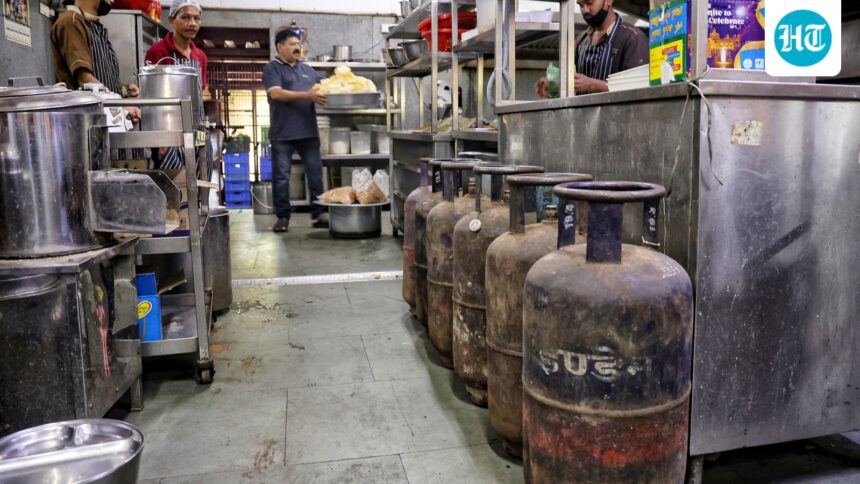
The effects have been felt in Kerala as well. A Thiruvananthapuram News Agency report noted an acute shortage of LPG cylinders, and quoted industry sources as saying that gas distribution to commercial establishments such as hotels had “almost stopped”.
“I had to switch to a wood stove.”
Hotels and restaurants in Kerala consume several LPG cylinders, even as many as 15 per day, depending on their size and scale of operations, sources said.
A busy, medium-sized 24-hour hotel in Kochi on Tuesday partially converted its food to traditional wood stove due to the unexpected crisis.
“We cooked rice using a traditional wood stove today. We could not close the hotel suddenly as around 25 people work here,” the hotel owner said.
He said they usually use up to five cylinders a day and there are none in reserve now.
A hotelier in Kozhikode said they will have to close the hotel if the LPG scarcity persists. “During the normal season, we need at least six cylinders a day,” he said. “Since it is Ramadan fasting time, we can handle up to four cylinders. But when we placed the order this morning, we weren’t even getting that number of cylinders.”
“The Indian Oil Corporation (IOC) informed us on Monday that commercial cylinder refilling will be discontinued. But establishments falling under the category of essential services, and households, will not be affected, as far as we know,” officials from the Kerala Hotels and Restaurants Association (KHRA) said.
He said the association has already sent a memorandum to Prime Minister Narendra Modi, Petroleum Minister Hardeep Singh Puri and CM Pinarayi Vijayan seeking immediate access.
State Civil Supplies Minister GR Anil said that a meeting of industry stakeholders and officials concerned was held. “Kerala is a consumer state and therefore we have asked the Center to pay special attention to the hotel industry in the state in distributing LPG cylinders,” he said.
Requirements scale
India consumes about 31.3 million tons of liquefied petroleum gas annually. Up to 87% of these are in the domestic sector, i.e. home kitchens; The rest is in commercial establishments such as hotels and restaurants.
Up to 62% of demand is met through imports.
The American attacks resulted Israel’s response to Iran, and Tehran’s retaliation, closed the Strait of Hormuz, a major sea route through which India gets 85 to 90 percent of its LPG imports from West Asian countries, including Saudi Arabia and Qatar.
Impact on bookings
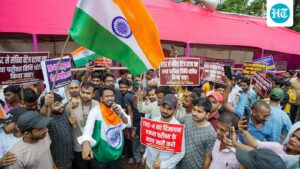
Hotel associations in Bengaluru and Chennai have also reported unrest, warning that restaurants in the two cities concerned may have to halt operations on Tuesday, March 10, if LPG supplies are not restored.
Banquet bookings made by hotels will be affected, along with food supply to IT parks and college hostels, the Chennai organization said.
The National Restaurant Association of India (NRAI) also urged the government to intervene as it warned of the “catastrophic closure” of businesses.
Restaurants in Gurugram and Mumbai have also reported shortages of commercial LPG.
“We have spare cylinders that can last about three days. If the situation continues, we may have to shift to residential cylinders or reduce menu items,” Rohit Arora, manager of a restaurant in Gurugram, told HT.
According to an NDTV report, restaurants in areas like Dadar, Andheri and Matunga have dropped slow cooking items in their menus and shortened their opening hours in order to save on commercial LPG gas.
Meanwhile, the Pune Municipal Corporation (PMC) has temporarily shut down the city’s gas burners and directed to prioritize available propane and butane for domestic LPG supplies across the country.
High prices for liquefied gas cylinders for commercial use $115 and for home use $60 last week.
The global issue: How the United States responds
Chairman of the US Joint Chiefs of Staff Gen. Dan Kean was asked on Tuesday whether the US military was open to escorting ships through the Strait of Hormuz.
Keane said he was “considering a range of options to determine the military conditions to be able to do this.”
US Defense Secretary Pete Hegseth referred to a post by President Donald Trump on social media threatening Iran not to stop the flow of oil through the shipping route. “He takes very seriously the condition of this strait,” Hegseth said.