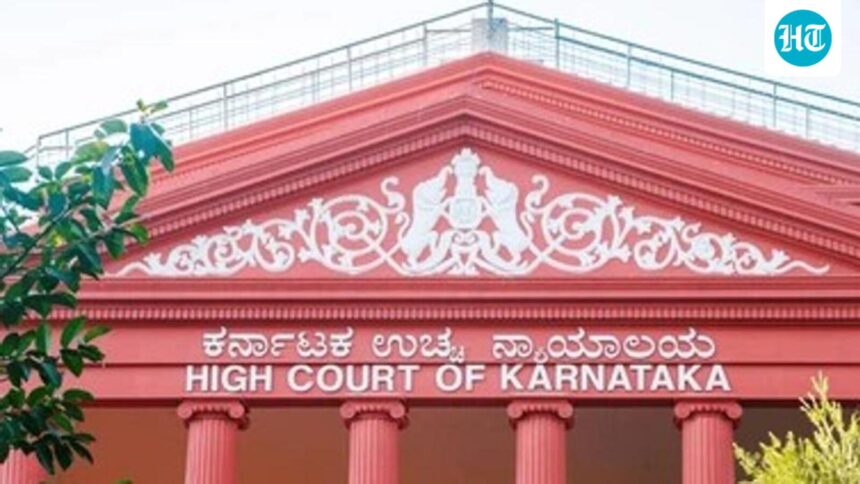
The Karnataka High Court on Tuesday sought the Union government’s response on the appeal filed by X Corp against a single-judge decision that upheld the Centre’s authority to issue directions blocking content through the Sahyog Central portal for automatic takedown notices to online intermediaries.

A bench of Chief Justice Vibhu Bhakru and Justice CM Punacha directed the Union government to file its response within four weeks.
Senior advocate KG Raghavan, who appeared for X Corp, told the bench that the appeal seeks to set aside the single court judgment of September 24 last year, which had dismissed the social media company’s plea that questioned the scope of Section 79(3)(b) of the Information Technology Act, 2000.
In its original petition filed in March last year, challenging the Union government’s mandatory direction for social media intermediaries to join the Sahyog portal, X Corp had argued that central government officials had no independent statutory authority to issue blocking orders under Section 79(3)(b) of the Information Technology Act. It has argued that such directions can only be issued under the detailed procedural framework set out in Section 69A of the Information Technology Act, which has been read with the Information Technology (Intermediary Guidelines and Digital Media Ethics Code) Rules, 2021.
Read also: X to challenge the K’taka HC judgment on Sahyog Gate
However, on September 24 this year, a single bench of Justice M Nagaprasanna rejected this contention and dismissed X Corp’s plea that the government’s use of the Sahyog portal was legally valid and consistent with the scheme of the Information Technology Act.
Justice Nagaprasanna had said at the time that content on social media needed to be regulated and that the court had found no merit in the issues raised by X Corp in its petition.
The Union government, represented by Solicitor General Tushar Mehta, had argued before the court at the time that X’s refusal to join Sahyog was a “deliberate act” of non-cooperation that was hampering the government’s efforts to address “threats to public order and national security”.
SG Mehta also warned that X Corp’s refusal to join the portal may result in the social media intermediary losing safe harbor protection and that it may lead to prosecution under the IT Act.
However, senior advocate Raghavan said on Tuesday that the single judge failed to consider that Section 79, which provides a safe harbor clause designed to protect intermediaries from liability, cannot be used as a “derivative power” by the government to order the removal of content.
X Corp asserted that the government’s actual legal power to issue a blocking or removal order comes from Section 69A of the Information Technology Act which allows online content to be removed or blocked, but also provides safeguards like written orders, fair hearings, etc. to intermediaries.
Raghavan told the court that the Supreme Court had also upheld the safeguards under Article 69 in its landmark 2015 judgment in Shreya Singhal v. Union of India.
The Supreme Court then said that it would consider the matter after the union government submitted its response.