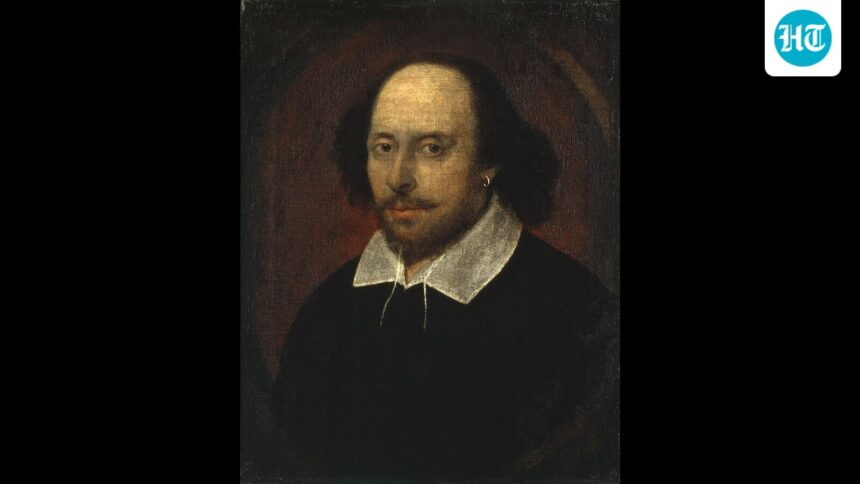
Next Sunday, March 15, even as war, this time unleashed by Trump’s America, rages across the Middle East, some of the world’s most famous American faces will gather at the Dolby Theater in Los Angeles for the 98th Academy Awards. One of the films with the most nominations this year (eight!) is the historical drama Hamnetbased on the private life of a prominent literary figure from 16th-century England, who, according to fellow playwright Ben Jonson, “was of no age, but of all ages” – William Shakespeare. The film revolves around the devastating loss of Shakespeare’s 11-year-old son, Hamnet, which the grief-stricken father dealt with in part. The film speculates that he poured his grief into writing what is considered his greatest work. village.

In his time, Shakespeare (1564-1616), a pupil at the Grammar School (Stratford-upon-Avon) whose works began to be noticed and exhibited in London in the 1590s, was considered an “arrogant raven” by Wits, a snobbish group of prominent Oxbridge-educated writers of the time. But Shakespeare’s 39 plays – histories, comedies and tragedies, all of which dealt with universal themes such as love, jealousy, grief, ambition and betrayal, and written with verve, wit, wisdom and a masterful mastery of language – and which featured complex, relatable characters, have become hugely popular around the world, not only when they were first performed but also in the 21st century.
What helped create the global phenomenon of “poetics” – the glorification of the Bard of Avon – was the vast footprint of the British Empire, which introduced Shakespeare into school curricula in North America, Australia and, of course, India. But it is the work itself, whether it is the playwright’s refusal to paint his characters in black or white, or his sympathy for human frailty, both integral to Indian storytelling, that has ensured that Shakespeare’s plays have been adapted again and again over the centuries, in a variety of Indian languages, in literature, theater and cinema.
Considering that Mysore and Bangalore had been ruled directly or indirectly by the British since the death of Tipu Sultan in 1799, it was not surprising that Kannada literati fell under Bard’s influence. One of the early adaptations of the Kannada stage occurred as early as 1871 – Nagadavarano Nagisova kati (A Story That Makes Those Who Don’t Laugh, Laugh) was written by playwright Channabasappa Comedy of errorsShakespeare’s shortest and most comical comedy. In 1889, Anandarao Ramavarma Leelavathi Charitrmythologically according to the fashion of the time, the two star-crossed lovers were resurrected by Lord Vishnu himself. A few bewildered viewers realized that it was an adaptation of Romeo and Juliet, suitably adapted for an Indian audience that appreciates happy endings, especially divinely empowered ones.
Supporters of Kannada literature in the twentieth century continued to engage deeply with Shakespeare. Kuvempu’s 1930 feminist adaptation of village, Raktakshifocused on the powerful story of Ophelia (Rodrambi). DV Gundappa’s translation of Macbethwhich he made while caring for his bedridden father in 1936, was the first faithful translation, as opposed to adaptation, of a Shakespearean play into Kannada. Poet Nizar Ahmed spoke of the thrill he felt when he was introduced to Rude Mechanics A Midsummer Night’s Dream In the Kannada spirit, he knew immediately how they would speak in his translation. In 2013, Chandrashekhara Kambara wrote the award-winning Jnanpith Maari Kaduan environment-focused adaptation of Macbeth that has been called “Shakespeare’s Namaskara”, in which Birnam Wood, Maari Kadubecomes the narrator. More recently, KV Akshara of Ninasam brought the influences of globalization and the influence of big business to VInesina Viabara (The Venetian Trade) translated Merchant of Venice.
Kannada cinema was similarly fascinated by the poet, especially with Taming of the Shrew. The most famous of the many adaptations is Bahadur Ghandu (1976), starring Dr. Rajkumar as a peasant and Jayanti as a “Let them eat cake!” Princess of the Kingdom and the wonderful movie Nanjandi Kalyana (1989), starring newcomers Raghavendra Rajkumar and Malashree.
Spot on, the versatile poet is still living and thriving in Kasturi Kannada.
(Rupa Pai is a writer who has had a long-lasting love affair with her hometown of Bengaluru)