The Los Angeles City Council voted on Wednesday in favor of proposals aimed at improving filming conditions in the city, as the auditorium packed with Hollywood workers and union representatives erupted in applause.
All eligible council members voted to approve the seven initial motions put forward by colleague Adrien Nazarian to “keep Hollywood home.” These include measures to expedite the Soundstage certification process and require city departments to report compliance with Mayor Karen Bass’ 2025 executive order on filming. It also includes proposals to launch an independent audit of Los Angeles’ permitting system and introduce free “micro shoots” (of 10 people or fewer).
Additional proposals from Nasserite passed on Wednesday will Facilitating an agreement with Los Angeles counties and local cities to coordinate their permitting regulations will require the city’s tourism department to present the “Made in Los Angeles” branding campaign idea to the council and will work to standardize filming requirements throughout the city.
“Together, we are sending the world a message: Los Angeles does not stand still. Los Angeles is not clinging to outdated regulations and we will not give up our iconic industry without a fight,” Nazarian said in a news conference following the vote.
These measures are urgently needed, as some in the industry emphasized during the public comment period. One IATSE member’s voice cracked as she said, “I’ve been in the entertainment industry for the past 25 years, and I don’t have any other skills… and I don’t want any other skills.” She said she needed to work, and “we all need to work.”
Carlo Perez, business manager for Local 755 of the union of plasterers, sculptors and shop workers, recalls one person being shot Fast and furious A movie in Georgia and replacing Georgia license plates with California license plates. “We need to stop this, we need to cut it off while there is still something to salvage,” he said.
“We have generations of talent that you won’t find in any other city,” added one self-described producer.
But there were also hints at the opposition when it came to the details of the proposals. While they generally expressed support for efforts to boost production in the city, several industry union representatives requested in their public comments to be included in discussions about future proposals. Tom Davis, Chair of the California IATSE Board, asked for work and safety standards to be taken into account in his public comments.
Advocates for downtown Los Angeles, including DTLA President Susan Holley and Councilwoman Isabel Jurado, have expressed concern about how the proposed reforms would impact residents and businesses in the neighborhood. “Please don’t cut the community out of this conversation,” Holley said.
In response, Nazarian promised to reach an “amicable solution” with Jurado regarding filming operations downtown. He added that he was listening to other concerns. “Safety standards will not be compromised,” he added.
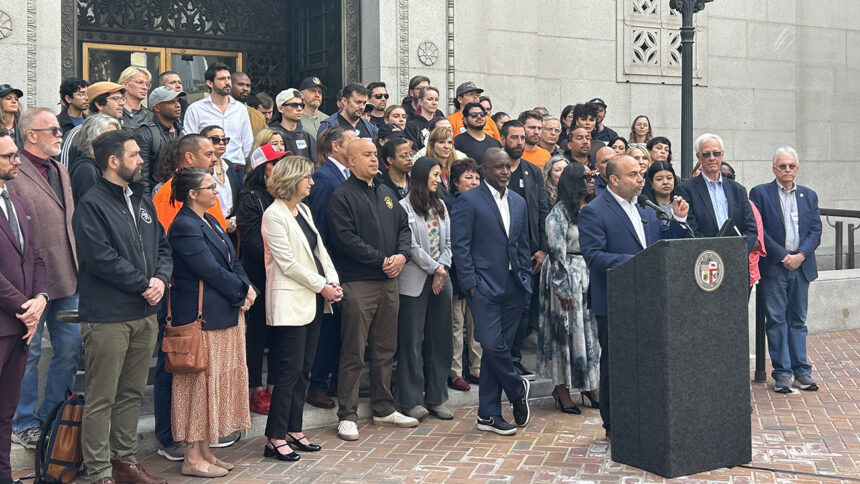
However, during the press conference following the vote, the councilman spoke at the front of a crowd that included union leaders, the head of the city’s film office and members of the grassroots local group “Remain in Los Angeles” — a show of unity despite the behind-the-scenes discussions. The councilman’s office stated that his proposals are the result of more than thirty meetings with studios, unions, independent filmmakers and related companies.
“For too long, the conversation has been about what we are losing,” he told cameras and reporters. “Today, it is about what we are building.”
The Nazarene is not finished yet. The council member introduced proposals earlier this month aimed at incentivizing local post-production vendors and other businesses ancillary to the entertainment industry, creating a fund to promote small and medium-sized productions and creating production and post-production retention programs.
He also launched proposals calling for amendments to the city’s contract with FilmLA to introduce new transparency and accountability measures and a pilot program to waive fees for small productions with 50 or fewer employees..
“We will continue to work with workers, we will continue to engage with studios and freelancers, we will continue to review data, and we will continue to remove unnecessary barriers while protecting worker safety standards,” Nazarian said Wednesday.