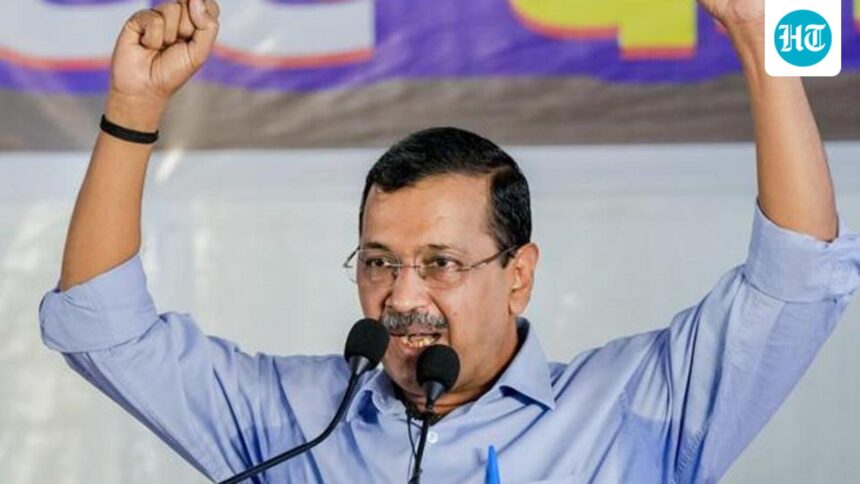
The Central Bureau of Investigation, in its appeal challenging the decision to dismiss all 23 accused in the Delhi tax policy probe, including former Delhi chief minister Arvind Kejriwal, claimed that Justice Jitendra Singh conducted a “mini-trial” and passed an order based on a selective reading of the agency’s case.

The CBI asserted that the judge lacked a basic understanding of the prosecution case as a whole and the corresponding law at the charging stage. She termed the negative statements made by Singh against the agency and its investigating officer in his February 27 order as “unwarranted and incomprehensible”.
Last Friday, Singh acquitted Kejriwal, his then deputy Manish Sisodia and 21 others of any wrongdoing in the planning and implementation of the now-scrapped 2021-2022 tax policy. He observed in his ruling that the CBI materials did not reveal even a prima facie case, let alone the existence of serious doubt.
The CBI moved the Delhi High Court on the same day challenging the decision.
In the 974-page appeal, reviewed by HT, the agency argued that the policy-level changes in Delhi’s liquor policy were not merely administrative decisions, but were constitutive acts in furtherance of a “pre-arranged quid pro quo”, facilitated by senior leaders of the Delhi government and the Aam Aadmi Party (AAP).
“There is unquestionable evidence among senior bureaucrats to show prior intention of Manish Sisodia and Arvind Kejriwal to formulate a tailor-made policy. These include privatization of wholesale mode, amalgamation of manufactured and acquired comments in the form of public opinions, and non-inclusion of statutory opinions demanding status quo. There is ample digital evidence to support this,” the CBI plea said.
Certainly, Singh’s ruling was clear that there was no evidence.
He said: “This court does not hesitate to state that the material on record does not reveal even a prima facie case, let alone any serious suspicion, against any of the accused. Accordingly, accused Nos. 1-23 have been acquitted of all the crimes alleged against them in this case.”
“Due to the absence of any admissible evidence, the prosecution case has become legally flimsy, unsustainable and unfit to proceed in law,” Singh added.
His order also refuted conspiracy notions: “…the comprehensive conspiracy theory, so emphatically presented, stands completely incoherent when tested against the evidentiary record.”
But the appeal filed by the CBI claims that Singh did not understand the case and did not follow the process.
“While issuing the impugned order, the Special Judge essentially conducted a mini-trial dealing with separate parties of the conspiracy separately. He passed the order based on a selective reading of the prosecution case, ignoring material showing the guilt of the accused,” the CBI alleged, while adding that the order was “patently illegal, perverse and suffers from obvious errors on the face of the matter.”
The agency added: “Not only does it fail to appreciate the facts of the case in their proper perspective, but this inaction on the part of the special judge has led to negative remarks being passed against the investigating body, as well as against the investigating officer, all of which are unwarranted and incomprehensible, to say the least.”
The federal agency also claimed the judge lacked understanding of her case. “…The Special Judge completely ignored the basis of the conspiracy, but evaluated in detail small discrepancies, which did not apply even as presented by the Prosecution. In fact, the Judge formulated his own understanding of the individual roles of the accused from a completely different perspective. The observations contained in the impugned order attest to the fact that the Special Judge lacks a basic understanding of the Prosecution case as a whole and the corresponding law at the charging stage.”
The RBI also argued that its case, “read as a whole, reveals one continuous criminal conspiracy beginning at the policy formulation stage and culminating in the generation and use of bribes for the Goa elections.”
But Singh said the CBI’s attempt to link its allegations to the Goa elections is based more on inference and assumption than on legally sustainable material.
In its appeal, the CBI alleged that “the conspiracy was conceived at the highest political level, whereby the policy framework was deliberately changed to create a special wholesale system with an enhanced margin of 12% from the existing 5%, and capital turnover norms were also relaxed, despite expert recommendations to the contrary.”
“The policy changes were not just administrative decisions, but were constitutive acts to consolidate the pre-arranged quid pro quo, facilitated by senior leaders of the Delhi government and the Aam Aadmi Party,” he added.
The Delhi High Court is scheduled to hear the CBI’s appeal against the release of the accused on March 9.