


Experience shows that markets often view geopolitical disruptions as temporary. (Amnesty International image)
Global markets are entering a period of turmoil and uncertainty! Ongoing tensions in the Middle East following US and Israeli strikes on Iran and the death of Ali Khamenei may have investors running for cover – looking for a safer asset class.During the night of February 27-28, the United States and Israel carried out joint air strikes on Iran as part of “Operation Epic Fury.” President Trump’s statements publicly signaling regime change suggest the standoff could develop into a long campaign rather than remaining just a limited exchange, say market analysts at the Franklin Templeton Institute.What does the situation mean for stock markets, Energy markets (Oil), gold and other asset classes? Here’s what Franklin Templeton Institute analysts say:From a market perspective, the key uncertainty is whether the conflict would remain limited to direct military involvement or expand into disruptions affecting energy supplies and logistics networks, which would result in a higher and more persistent risk premium.
At the heart of the ongoing uncertainty from a global market and trade perspective lies the Strait of Hormuz. While a full blockade would carry severe consequences for Iran itself, the country has the potential to disrupt maritime traffic through tactics such as ship harassment, seizure, drone activity, cyber operations, or the use of proxy forces.
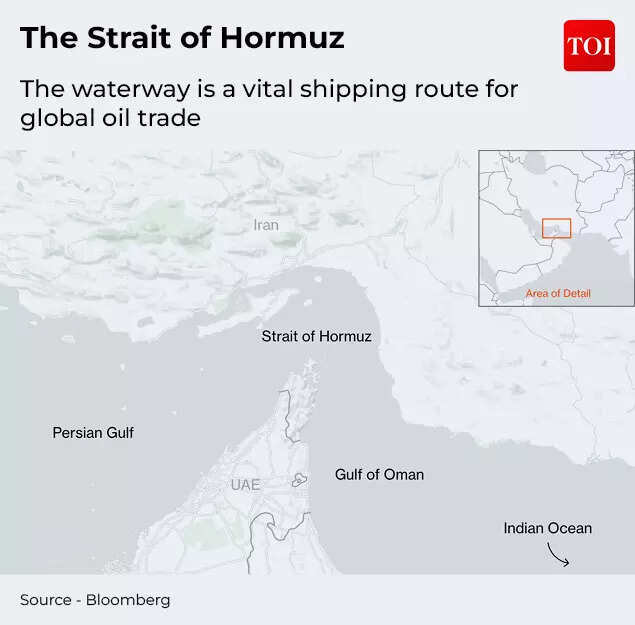
Strait of Hormuz
They say the most immediate economic impact is expected in energy markets, where crude oil and natural gas prices are likely to rise.
Analysts believe that such measures will keep geopolitical risk premiums at high levels. In 2024, approximately 20 million barrels per day moved through the Strait of Hormuz, representing about a fifth of global consumption of petroleum liquids. Even limited intervention – which could result from delays, redirections, or isolated seizures – can push prices up by increasing the perception of risk long before any actual shortages become apparent.
US-Iran War: Why closing the Strait of Hormuz is India’s worst nightmare | He explained
LNG should not be overlooked in this context. Qatar has the third largest LNG export capacity in the world, and nearly a fifth of global LNG shipments pass through the Strait of Hormuz, which is largely made up of Qatari exports. As a result, shipping risks in the region affect gas markets as much as oil markets.Read also | US-Israeli strikes on Iran: How will India be affected by the closure of the Strait of Hormuz? He explainedShipping costs have already begun to rise, with insurance costs acting as a major driver.
Insurance companies have begun issuing cancellation notices and reviewing war risk insurance premiums for trips in the Gulf region. Some routes have reportedly seen insurance premium increases of around 50%, while previous periods of stress have recorded rises exceeding 60% on important trade corridors. These developments effectively tighten supply conditions even when production levels remain unchanged.The potential for conflict to spread throughout the region is increasing.
Franklin Templeton Institute analysts believe that the immediate response to such shocks across global financial markets is usually driven by adjustments in risk perception rather than by fundamental economic changes. “The initial market reaction to this type of event will typically see Treasury yields fall and stocks fall – mostly a repricing of risk premiums. Impacts on activity/earnings may be delayed and uneven.
The US dollar reaction is not guaranteed; “Gold tends to benefit while Bitcoin is trading as a risky asset (e.g., as stocks fall), which reinforces that it is not typically a reliable hedging/diversification tool in geopolitical drawdowns,” say Franklin Templeton Institute analysts.However, they note that experience shows that markets often view geopolitical disruptions as temporary. Initial increases in risk premiums are often followed by the realization that the overall impact on corporate profitability is limited. The duration of the conflict, developments in shipping and insurance costs, and the final resolution will be more important than the initial headlines.“We do not yet classify this as a clean setup for a buy-on-the-dip, as the duration, shipping/insurance mechanics, and endgame are more important than the first title,” they say.From an investment perspective, analysts say the near-term outlook favors sectors linked to energy markets, as well as companies benefiting from higher shipping and insurance costs, along with defense-related industries. At the same time, caution is warranted towards emerging markets that rely heavily on energy imports and towards cyclical sectors sensitive to fuel costs and logistics, including airlines and some industrial sectors.“For protection, we prefer bullish/volatility structures in oil prices and selective exposure to gold over large-scale short positions in equities – the path will be driven more by shipping/insurance realities than by the new cycle,” the researchers concluded.