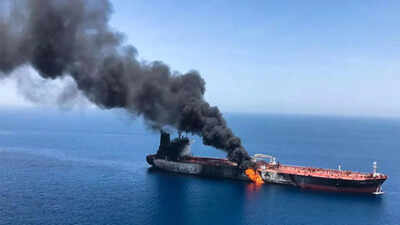
Representative image (Image: ANI)
An oil tanker was attacked off the coast of Oman in the strategic Strait of Hormuz, wounding four crew members and forcing a full evacuation, as tensions continue to rise following US-Israeli strikes on Iran.The Omani Maritime Security Center said that the Palau-flagged tanker Skylight was targeted about five nautical miles north of Khasab Port in Musandam Governorate.
Iran closes the Strait of Hormuz in response to US-Israeli attacks; Global energy is in danger
All 20 crew members – 15 Indian nationals and five Iranians – were evacuated safely. Preliminary information indicates that at least four people were injured and were taken for treatment, according to Gulf News.The Omani authorities also confirmed that the port of Duqm was targeted by a drone attack.
The strait was effectively closed after a warning from the Iranian Revolutionary Guard
The attack came a day after the Iranian Islamic Revolutionary Guard Corps announced via radio broadcast that the Strait of Hormuz was closed to international navigation.While Tehran has not officially announced a full blockade, Reuters reported that several ships in the area received very high frequency warnings stating that “no ships are allowed to transit the Strait of Hormuz.”The British Navy said such orders were not legally binding but advised caution.
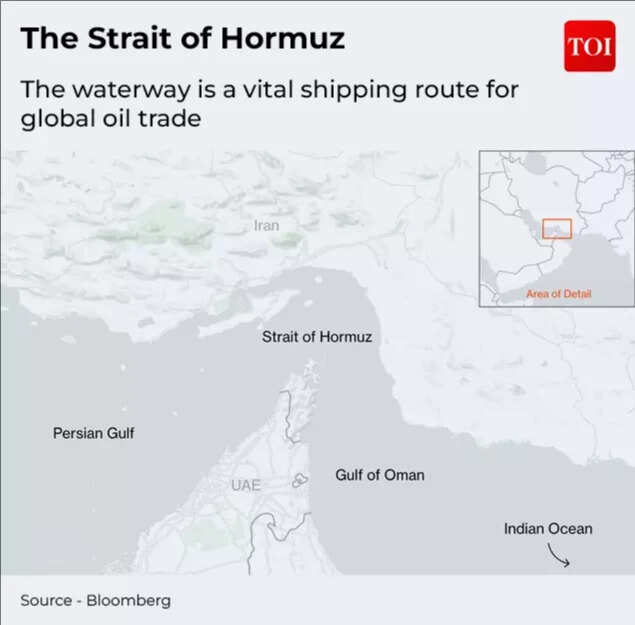
An official at a European Union naval mission told Reuters that the disturbances were increasing rapidly, although traffic had not completely stopped.The strait, which connects the Persian Gulf to the Gulf of Oman, carries nearly 20% of global oil supplies and large quantities of liquefied natural gas, especially from Qatar. It is considered one of the most important marine choke points in the world.
The ships ground to a halt, and insurance companies withdrew cover
Many tanker owners and major oil companies have halted shipments of crude oil and liquefied natural gas via this route.
Satellite images showed spare ships near Fujairah in the United Arab Emirates. German shipping giant Hapag-Lloyd said it would suspend transit through Hormuz, while French group CMA CGM instructed ships to seek shelter.Consulting firm Kpler noted that at least 14 LNG carriers had slowed, stopped or turned back. Certain ships, including the Indian-flagged KHK Empress and Desh Abhimaan, reportedly reversed course, according to Euronews.Marine insurance companies have suspended coverage for trips in the region, leaving operators exposed to higher risk premiums.
Regional ripple effects
According to news agency ANI, Iran stopped three ships belonging to the Pakistan National Shipping Company – Karachi, Lahore and Khairpur – from entering Hormuz. Two of them were detained in the port of Fujairah in the United Arab Emirates, while the other docked in Gwadar, Pakistan.This disruption comes in the wake of joint US-Israeli strikes that killed Iranian Supreme Leader Ayatollah Ali Khamenei, sparking missile retaliation across the region.Oil markets reopened on Sunday evening amid speculation that Brent crude could reach $100 a barrel, levels last seen after the Russian invasion of Ukraine in 2022. Barclays analysts warned that a prolonged pause could prevent up to 20 million barrels per day, or about 20% of global supplies.With traffic at a standstill and tensions rising, the situation in the Strait of Hormuz remains volatile, and further escalation could have dire consequences for global energy markets.