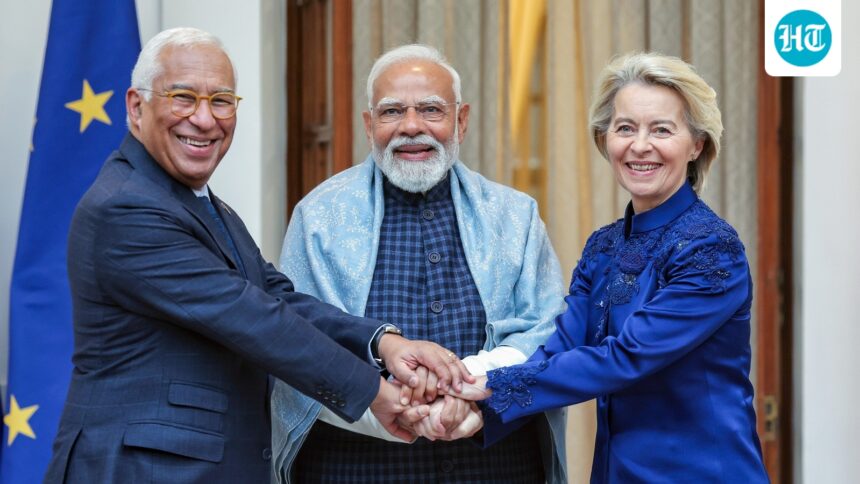
India and the European Union have agreed to grant each other “most favored nation” status for a period of five years from the date their trade agreement enters into force, according to a draft agreement released on Friday.

On January 27, the two sides announced the conclusion of the talks on the free trade agreement. The agreement, described as the “mother of all deals”, will allow 93 per cent of Indian exports to enter the 27-nation bloc duty-free. Imports of luxury cars and wine from the EU are also expected to become cheaper.
Read also | India-EU Free Trade Agreement clarified: Once signed, customs duties on exports will be eliminated by 90%.
Inside the trade deal between India and the European Union, according to the draft agreement
Under the draft agreement published by the EU Trade Ministry on Friday, India and the EU plan to grant each other most favored nation status once the agreement comes into force.
This means that neither party can offer more favorable tariff terms to other trading partners for five years.
The agreement also includes an annex providing for mediation, allowing disputes to be resolved through an expedited process with the assistance of a mutually agreed-upon mediator.
The two sides agreed not to impose new restrictions on imports or exports beyond what is permitted under World Trade Organization rules. They also decided to strengthen cooperation in digital trade under the proposed free trade agreement, according to the draft.
Read also | India-EU trade deal signed: Why the ‘mother of all’ deals caught US attention
To make trade smoother, New Delhi and Brussels will bring food safety and plant health rules in line with World Trade Organization standards. Certification and auditing procedures will also be simplified.
The text sets out plans for closer customs cooperation and faster clearance of goods. These obligations will become binding after ratification.
The two sides will begin exchanging annual import data one year after the agreement enters into force. This is intended to track how the agreement is being implemented and how the tariff benefits are being used.
They also agreed to provide fair and accessible appeals processes for customs decisions on imports, exports or goods in transit.
On digital commerce, India and the European Union committed to reducing unjustified barriers and supporting an open and safe online space.
It is worth noting that the European Union is India’s largest trading partner. The volume of bilateral goods trade reached US$135 billion in the fiscal year 2023-2024.
With input from agencies