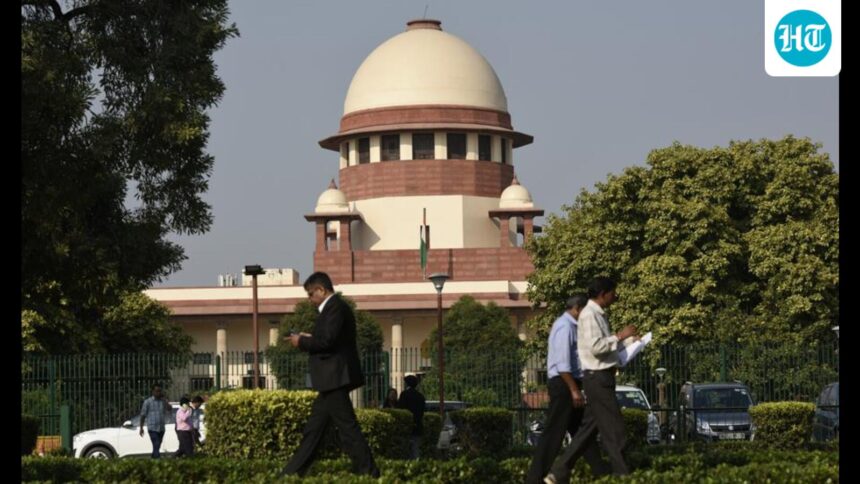
The Supreme Court on Thursday sought the Maharashtra government’s response to the bail petition filed by the father of the 17-year-old prime accused in the 2024 Pune Porsche crash, which killed two people. Vishal Agarwal moved the Supreme Court after the Bombay High Court denied him bail on December 16. He requested temporary bail, noting that the Supreme Court granted bail to other defendants in this case.

“We will finally grant it,” a bench of Justices BV Nagrathna and Ujjal Bhuiyan said. When the lawyer representing the State resisted, the bench noted that “petitioner [father] “He wasn’t driving, so why keep him inside.”
Senior advocate Mukul Rohatgi, appearing for Agarwal, submitted that his client is accused of conspiring to protect his son by exchanging his blood sample for testing. He urged parity with the other accused, saying Agarwal has been remanded in prison for 21 months since June 1, 2024.
On February 2, the same court released on bail three other defendants allegedly involved in the exchange of blood samples. She blamed the minor’s parents for not imposing strict control over the children.
The 17-year-old was returning from a late-night party with his friends allegedly under the influence of alcohol around 2 am when he rammed his car into a bike near Kalyani Nagar in Pune, killing two bikers, the prosecution said.
Agarwal responded to the bench observations on February 2 and said that the parents were not at fault, as the boy was with the driver who was driving the car. “As per the usual instructions, the driver was to drive the car and transport the children. Contrary to perception, the petitioner and his wife did not hand over the car to the minor,” he said.
Sometimes children take the wheel, Rohatgi said. He added that his client did not know that his son had convinced the driver to sit in his seat.
The state government had earlier opposed the release of the three accused on bail and submitted an affidavit saying the case revealed a “disturbing pattern of criminal behaviour” as the family of the main accused is known to resort to “influence, money, power and illegal means”. She said that any relief offered to the accused would affect the trial of the case.
“The nature and seriousness of the crime is extremely serious. The alleged acts are not limited to individual offenses, but have broader ramifications affecting public confidence in hospitals, forensic processes and the fairness of criminal trials,” the affidavit said.
The Supreme Court refused to release the accused on bail, and described the prosecution’s fears of the accused’s tampering with evidence as justified.