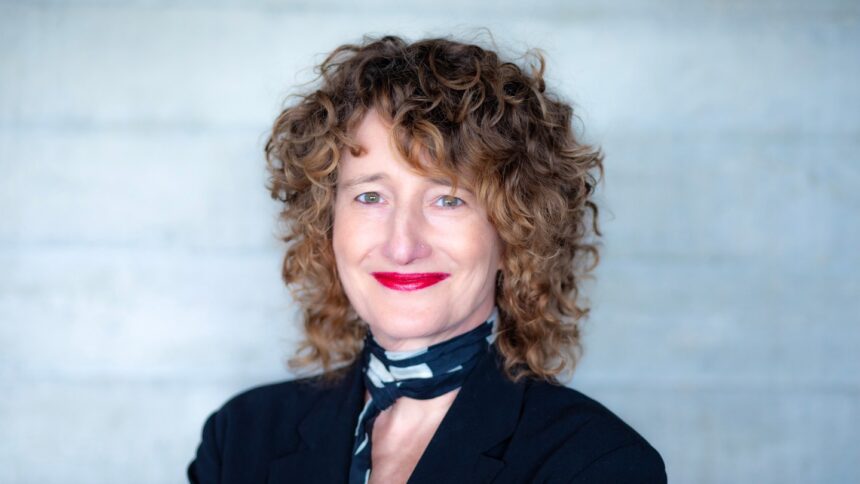
German and European film academies have thrown their support behind Berlinale director Tricia Tuttle, amid media reports that she is on the verge of being sacked following a political backlash over her pro-Palestinian speeches at the Berlinale awards ceremony.
“As filmmakers in Germany and abroad, we follow with deep concern the current discussions surrounding the Berlinale and the proposed dismissal of Tricia Tuttle,” the German Film Academy wrote in an open letter. “Recent criticism has focused on statements made from the stage. None of these statements were made by the festival leadership itself, but by invited filmmakers. The international film festival is not a diplomatic tool; it is a democratic cultural space worth protecting. Its strength lies in its ability to embrace divergent viewpoints and highlight a plurality of voices.”
The letter was signed by the Academy, German directors, screenwriters, distributors and exhibitors’ associations, as well as a group of German filmmakers, including Wim Wenders, Volker Schlöndorff, Margarethe von Trotta, Danny Levy, and this year’s Berlin Golden Bear winner Ilker Katak (Yellow letters). Several international directors also signed the agreement, including Kleber Mendonça Filho, Zar Amir Ebrahimi, Radu Jude, and Oren Moverman.
Earlier, the European Film Academy, the European Film Promotion Board and the European International Sales Board issued a joint statement in support of Tuttle.
“We look at the Berlinale as strong and inspiring and would like to express our sincere appreciation for Tricia Tuttle’s work as Festival Director,” the statement read. “This year’s Berlinale lineup showcased a remarkable range of European cinema and brought together audiences and industry professionals from around the world. Under Tricia Tuttle’s leadership, the Berlinale has strengthened its role as a major international festival and market for European film. We value the artistic vision and commitment she has brought to the festival. We believe her leadership provides a strong foundation for the Berlinale and for European cinema to move confidently into the future.”
The messages are in response to a report that Tuttle is about to be fired. Conservative German tabloid newspaper Bild It was reported that the German Ministry of Culture will hold a meeting on Thursday to discuss Tuttle’s future at the festival. Without mentioning any sources Bild She suggested that Tuttle could be let go, just two years into her five-year term as Berlinale director.
Bild The film is leading a conservative backlash against the Berlinale following the awards ceremony on Saturday, where a number of filmmakers made pro-Palestinian statements from the stage. German Federal Environment Minister Carsten Schneider withdrew from the ceremony after Palestinian director Abdullah Al-Khatib left his film. Records from the siege She won first prize in the viewpoints section, accusing the German government of being “accomplices in the genocide committed by Israel in Gaza.”
During the ceremony, several filmmakers spoke out against Israeli military action in Gaza, including Mary Rose Aosta, who Someday a child It won the Golden Bear Award for Best Short Film. Winner of the Best Screenplay Award: Genevieve Delaude de Sales (Nina Rosa(And the winner of the Grand Jury Silver Bear Award is Amin Alber)Salvation).
Tuesday, Bild Right-wing journalist Gunnar Schubelius published a column accusing Tuttle of “filming for Gaza propaganda”, citing a photo of the festival director with the preacher and the party. Records from the siege The cast and crew at the film’s world premiere at the Berlinale on February 15.
Schubelius was dismayed by the Palestinian flag the crew members were carrying, and the fact that many of the men were wearing the traditional Palestinian headscarf, or keffiyeh, which he called “Arafat’s scarf, the symbol of the armed struggle against Israel.” Tuttle was accused of allowing the Berlinale to be used as a tool by “anti-Semitic” activists.
In its letter, the German Film Academy denied such allegations.
The letter read: “Taking photos with international guests is part of the practice of such a festival. The appearance of different identities is not an endorsement; it is an expression of an open and democratic public sphere.” “When personal consequences are drawn from individual statements or symbolic interpretations, a worrying signal is sent: cultural institutions are under political pressure.”
The academy warned that threatening to fire Tuttle over the festival guests’ comments would jeopardize the “artistic freedom” and “institutional independence” of the Berlinale. They claim that the independence of cultural institutions “protects not only artistic freedom, but also the vitality of democratic discourse itself. If every controversy leads to institutional repercussions, then discourse gives way to control. We defend a culture of exchange, not intimidation. Where diversity remains visible, democracy remains alive.”
The Berlinale confirmed the meeting held on Thursday with the German Culture Ministry but declined to comment further.
Ironically, this controversy comes after two weeks during which pro-Palestinian activists and this year’s festival jury president Wenders were accused of not showing enough public solidarity with the Palestinians, even in imposing “censorship” on filmmakers who wish to express pro-Palestinian or anti-Israel views.