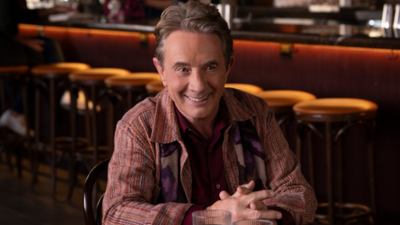
Martin Short has long been admired for his sense of humor, but behind the laughs lies a life marked by devastating losses that he faced with remarkable grace.Years before the recent death of his daughter, Katherine, the comedian opened up about the multiple family tragedies he endured and the honest philosophy that helped him cope.
Early losses shaped his outlook.
By the age of twenty, Martin Short had lost three immediate family members. His older brother died in a car accident when Short was 12, his mother died of cancer, and then his father two years later. Despite these blows, Short refused to view his family as tragic. “It sounds like a tragic family, but it’s really not,” he shared in his first profile for People magazine. “My mother had cancer, was sick and then in remission since I was 13.
She was an amazing person. Both my parents were. So I never looked at it as if it was a tragedy that I didn’t have them my whole life. You learn some sense of priorities. Our entire family has taken the attitude that if you have great moments, don’t question them; Just enjoy it.”
Dealing with the wife Nancy Dolman death
Short’s wife, Nancy Dollman, an actress and comedy writer, died in 2010 at the age of 58 after battling ovarian cancer. The couple was married for 30 years and had three adopted children: Catherine, Henry and Oliver.
Short described grief as difficult but transformative. “It’s been a difficult couple of years for my children,” he told The Guardian in October 2012. “This is the thing in life that we live in denial about, that will happen to us or our loved ones, and when it does, you gain a little and suffer a little.”
“There’s no big surprise.”He found solace in the belief that loved ones remain close after death. “I think when people die, they get closer to the people they love,” Martin Short explained.
“The idea that it just ends, and we don’t talk about them, that’s wrong. That’s based on the denial that we’re all going to die. So for me, she’s still here. At the same time, her death encouraged me to take risks. With real tragedy, you get a little bolder.”
It is the yin and yang: the positive part of the dark side of life.
Lasting flexibility
Short echoed this in Afterthoughts, telling his children after Nancy’s death, during an interview with People magazine, “I think my mother focused on our souls.” He quoted George Eliot: “Our dead are not dead to us until we forget them.” We were together for 36 years. “I didn’t want to forget Nancy.”These words highlight Martin Short’s poignant coping mechanism: embracing memories, rejecting denial, and letting loss fuel audacity.