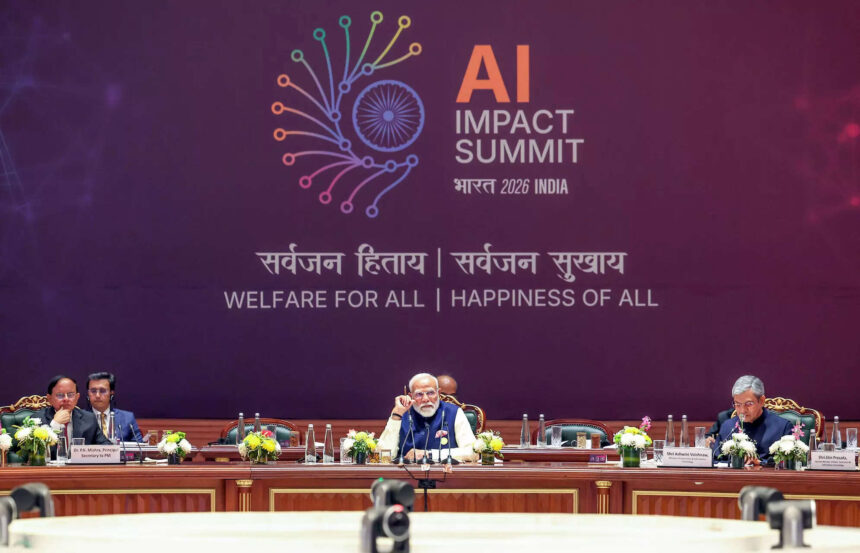
NEW DELHI: After a week of packed halls, high-level diplomacy and billion-dollar proposals, several national delegations at India’s AI Impact Summit will issue a joint statement on how the world should approach AI on Saturday, a day later than scheduled, as the government works to broaden global consensus on the document. The announcement, which is already supported by more than 70 countries, comes amid companies committing to invest more than $250 billion in the country and strengthening India’s push to shape the global AI agenda for the Global South. Union Minister for Electronics and Information Technology Ashwini Vaishnao on Friday said there was “large consensus” as discussions continued. “The declaration and its limits will be published transparently tomorrow,” he said, adding that India hopes the final number of signatories will exceed 80. Despite differences, the summit paved the way for cooperation: Indian officials Countries failed to reach consensus at the recent summit in Paris, but there appears to be greater synergy on many issues, between governments and businesses. Fundamental differences have also emerged regarding global governance. While the United Nations announced the formation of an independent scientific committee concerned with artificial intelligence, the American delegation warned against centralized global control over generative artificial intelligence, stressing the difficulty of formulating binding global rules.
Despite differing views, Indian officials said the summit laid the foundation for cooperation rather than confrontation. “This is about real action, not just paper,” Vaishnau said, citing bilateral discussions, industry commitments and plans to expand the AI 2.0 mission. Ashwini Vaishnaw said that the scale and diversity of participation underscores global confidence in India’s approach. “The world has confidence in India’s role in the new era of artificial intelligence.
“This is very important for all of us,” he said. According to the minister, the summit and exhibition were attended by more than five thousand visitors, with the participation of “practically every major AI player in the world.” Vaishnau said one of the highlights was accepting Prime Minister Modi’s vision of ‘ManavAI’ – artificial intelligence for humans, by humans, for humans – which puts the responsible and ethical use of AI at the centre. “For the first time, the debate about ethical and responsible AI has been brought to the forefront in such a meaningful way,” he said. Investment commitments also featured prominently. Vaishnaw said that pledges related to infrastructure related to artificial intelligence, data centers and related technologies have already exceeded $250 billion, while about $20 billion of investments in deep technology projects have been completed. “The numbers are important, but what is more important is the confidence that the world has shown in India,” he said.