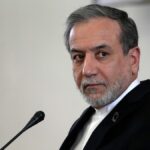
Mirza Fakhrul Islam Alamgir, General Secretary of Bangladesh Nationalist Party. | Photo credit: Reuters
Bangladesh’s relationship with India will not be “captive” to one issue and the presence of ousted Prime Minister Sheikh Hasina in India will not “prevent” Bangladesh from pursuing a broader relationship with India, said a senior leader of the Bangladesh Nationalist Party (BNP), which will form Bangladesh’s next government (Feb 17, 2026). Speaking specifically The Hindu At the party headquarters in Dhaka’s Gulshan neighborhood, BNP General Secretary Mirza Fakhrul Islam Alamgir said Bangladesh would expedite projects of interest to it and intensify development partnership with India.
“We believe that Hasina is really guilty of grave human rights violation. There is a demand to punish her and we believe that India should hand her over to us. But not handing over Sheikh Hasina to Bangladesh is not a hindrance to establish broader ties including trade and commercial ties. We want to establish better ties,” Mr. Alamgir emphasized.
Bangladesh has repeatedly asked India during the interim government to hand over Sheikh Hasina and other senior members of the Awami League who fled after the 2024 uprising, but India has not responded to these requests over the past seventeen months. Mr. Alamgir said Ms. Hasina and her ministers and bureaucrats, who are accused of murders and criminal acts during the insurgency, have due process of law. “That process continues,” he said.
When late PM Khaleda Zia was arrested during the Hasina era, Mr. Alamgir said India-Bangladesh relations have difficult issues to resolve but should not overstep the areas open for cooperation. “The US and China have a lot of problems in bilateral relations, but they are working together. We should not stick to just one issue in the India-Bangladesh relationship,” said Mr. Alamgir. He highlighted the historic role of BNP in Bangladesh politics and recalled that after Sheikh Mujibur Rahman’s assassination in August 1975, when Sheikh Hasina and her family members were in India, BNP founder President Ziaur Rahman visited India and hosted Prime Minister Morarji Desai. In January 1980, when Hasina planned to return to Bangladesh for her political debut, President Rahman recalled that she had gone to Delhi and met Indira Gandhi.
“Before next year, the issue of Farakka water comes under the renewal of Ganga waters treaty, and then there is the issue of cross-border killings and we have to talk on these issues,” Mr. Alamgir added, adding, “We cannot go to war with India. We have to talk. Those who talk about fighting India are talking crazy.” Along with BNP Chairman Tariq Rahman, Mr. Alamgir favors reconciliation with political rivals and visited leaders of opposition Jamaat-e-Islami and National Citizen Party (NCP) on Sunday (February 15, 2026).
He said revenge and violence were detrimental to building a healthy democratic environment in Bangladesh and that the interim government could not bring about reconciliation after the August 2024 violent uprising because “rebel leaders elected Professor Yunus”.

He presented the BNP’s 31-point agenda as an opportunity that would give India and Bangladesh an opportunity to work on trade, commerce, capacity building and digital infrastructure. “India has resources in technical education and we have a large number of unemployed youth. We need to help them build capacity so that they can get jobs in the Gulf,” said Mr. Alamgir. He suggested that the BNP government will have to deal with the debt burden left behind by the Awami League government and re-evaluate various projects to see which of the mega projects are wasted. “We will retain those projects that serve the interests of Bangladesh,” he said.
Published – February 16, 2026 02:44 pm IST