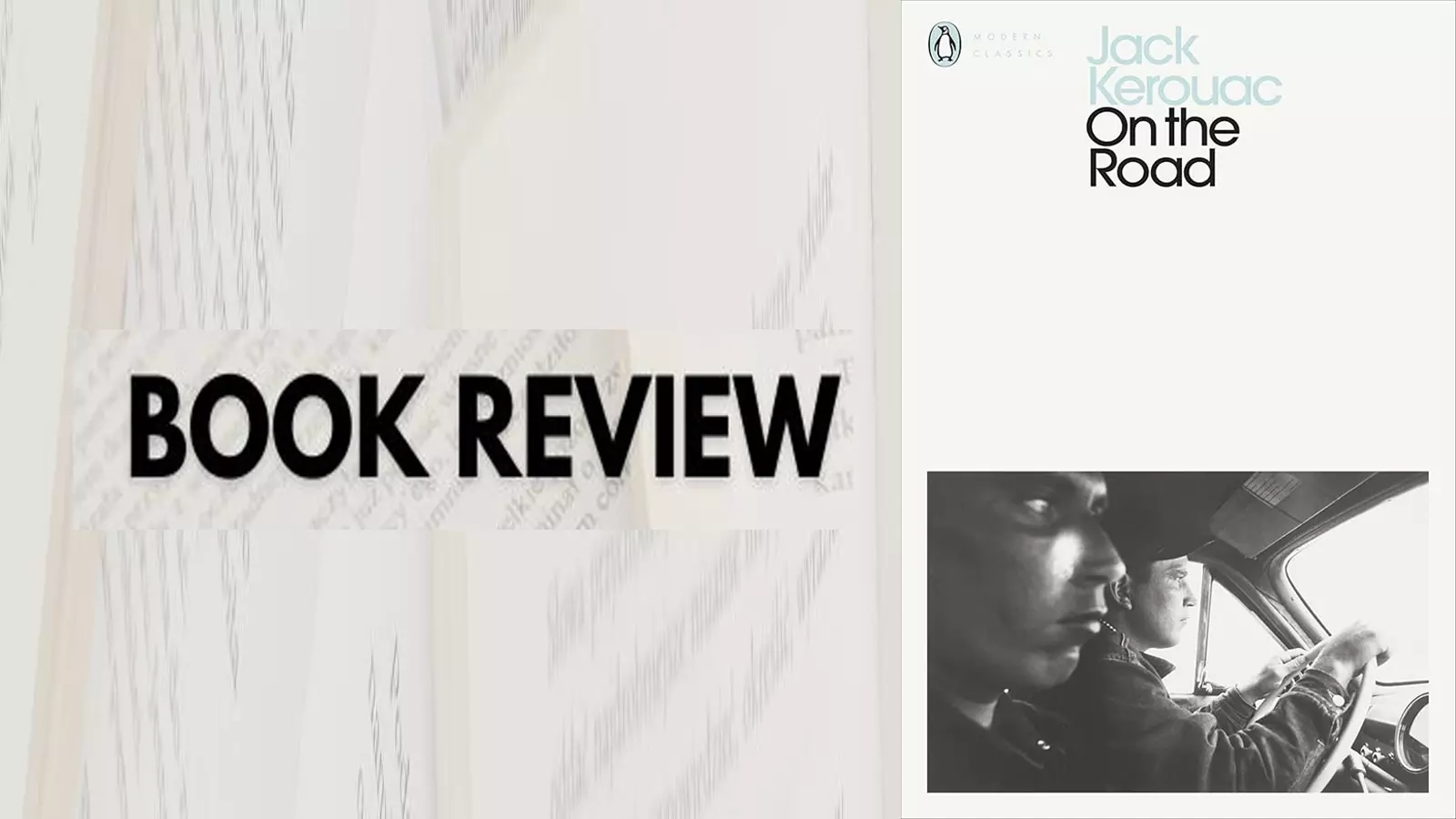
Jack Kerouac’s spontaneous prose style takes readers on a whirlwind journey of his alter ego, Sal Paradise, who wants to always be on the road. The way the narrator describes his lifestyle and travels is told in an epistolary way divided into 5 parts and sub-chapters, but there is also a level of authenticity to these expressions because this is also a “roman in clef”, where the writer has honestly described all his adventures in detail, and Kerouac was deliberately intended to do so, inspired by a 10,000 word letter his friend Neil Cassidy (in the novel Dean Moriarty) wrote to him. This is special because Kerouac believed that one day he would find the right words, and they would be simple.
Over the course of 280 pages, this novel unfolds in a stream of consciousness rambling style that exacerbates their hectic lifestyle punctuated with words that are often too chaotic for the brain to digest, keeping readers in their Hudson Commodore, and letting us experience what it was like to live as a penniless beatnik amidst a post-World War II America where drugs, sex, hiking, and bebop jazz flourished. On the Road is not a complicated novel at all and can be easily read and comprehended even by those new to the art of absorbing fiction. In a 1968 interview with William F. Buckley Jr., Kerouac stated that this novel is about two Catholic friends who are wandering around the country and that they find them. But to be honest, it’s much more than that.
Of course, it takes swimming through a few pages to actually enter the Benzedrine-filled headspace of the main narrator, Sal. He just got out of a divorce, but that’s not his concern. He’s only interested in his friend Dean (Neal Cassidy in real life), a carefree adventurer and womanizer who always wants to… no, always run away from his adult responsibilities in search of finding himself. “With the coming of Dean Moriarty, the part of my life you might call my life on the road began,” Sal says on the opening page. It is the main motivator that constantly pursues the protagonist to take a journey.
The entire novel proceeds like a typical road movie (of course that’s what the title is selling, right?) and begins with his first ever solo trip in 1947, where he sets out to travel from the East Coast to the West with a final destination in San Francisco, not in his own car but confidently via buses and long walks with only $50 in his pocket lent to him by his aunt. The entire text talks about what they do and what they do. He did, and I used to do that kind of thing all the time. They are ready to face whatever these strange, aimless journeys throw at them. Some of the fun stuff here is Sal’s brief fling with a Mexican woman named Terri, whom he met while on his way to Los Angeles. The reading is smooth and often rewarding, as Kerouac elicits breathtaking prose like “What’s that feeling when you turn away from people receding across the plain until you see their spots part? It’s the huge world leaping upon us, it’s a farewell. But we’re leaning on to the next crazy adventure under the sky…”, that’s poetic enough to keep us glued to it until the last page is over.
World War II was indeed a very painful time in history, and in a historical context, men or women in this world do not know what will happen in the future because of the horrific recent past. So they’re all in, enjoying delirious states of ecstasy from their souls, whether it’s writing poetry about heroin or swaying to Charlie Parker’s jazzy ornithology tunes, it’s the moment they want to be in. But there are also some nasty costs associated with it. Sal is clueless about everything.
They want to do whatever they want to eat up those kicks, whether it’s treating friends poorly or blatantly lying to women just to make love to them; He’s got you all covered in it. And Dean is the main character we need to talk about. He’s the kind of friend one always dreams of: wild, rebellious, energetic, and reckless. Sal says Dean has always been fascinated with traveling because he allegedly fathered his parents while they were on the road. As for Sal, he views Dean as a mysterious, charismatic force through the same lens with which Nick Carraway became fascinated by Jay Gatsby. Letting go is a special skill we can all learn from Dean.
He is hateful in his self-desires and in the senseless fulfillment he got from reckless driving, drinking himself black out, and chasing little girls. The passages where he abandons his three wives are a bit painful to read and always put a red flag in our subconscious. First, he messes around with his teenage wife, Mary Lou, to whom, even after he breaks up their marriage, he will return to her again just to have that fun while cheating on his pregnant second wife, Camille. Women have little voice in Kerouac’s novel. They are seen as just fun people until they start disobeying their ideologies.
Aside from women, Dean is also famous for abandoning his protagonist in a couple of instances, but we have to wonder why this man is so fascinated by such an undesirable character, is there any other motive behind it for him to truly adore these actions and who always says “Oh wow!” and “Oh my God!” Before he rubs his belly and tries to ruin himself and the people around him as much as possible. But screwing things up is the fun part for them too, as they’re always looking to get those kicks. Even the novel justifies this with one example of a character named Galatea, whom Dean’s friend Ed Dunkel marries just by seeing her finances. She says: “…You have absolutely no regard for anyone but yourself and your damn kicks. All you think about is what’s hanging between your legs and how much money or pleasure you can get from people, and then you throw it away…”, and that’s basically the message we all wanted to hear from this amazing work.
This novel strictly tries not to be didactic at all, it does not want to teach us any morals. Maybe this is what it was meant to be under the guise of “living in the moment.” But the payoff for Dean’s betrayal of Sal was satisfying, as there was a clear change in his personality. It happens when Sal sets off to see a Duke Ellington concert with his girlfriend and friend Remi Bonoceur, where Dean asks him to get off on 40th Avenue, but Remi refuses. When Sal’s girlfriend brings this up, he replies that Dean will be fine.
But once we reach the end, we realize that no one has ever experienced traversing the American terrain as much as Kerouac did. There are some startling instances where we can think back to our personal road trips we’ve been a part of in the past and they serve up an immediate reminder that we need to pack our bags again and put our feet on the tarmac immediately. On another level, the narrative also feels like a personal letter from your best friend because there are instances where Kerouac breaks the fourth wall and mentions the creative difficulties he faced in finishing this piece of literature within the novel. His taste in jazz is a confirmed fact that no one should turn a blind eye to.
Since its release, this novel has always stood out as a countercultural piece of work for an entire generation, and more importantly it had a profound impact on the hippie movement of the 1960s who worshiped it as much as they worshiped the Bible, becoming one of the major driving forces for them to start the Summer of Love happening. 70 years later, although the prose does not seem far-fetched and new because it was written on a scroll, it has some debatable elements that make us think of a different point of view in the present.
This article is written by Yoga Aditya, Intern at Deccan Chronicle, Secunderabad.