RAmadan arrives this year in February, in the heart of winter. Short days, cool evenings and the daily grind of work mean that being prepared is no longer about producing abundance, but about minimizing effort while maintaining care. For many families balancing jobs, kids and long commutes, the question isn’t what to cook, but how to make the month an easy one.
The most effective approach to Ramadan cooking is not variety but repetition. A small batch of meals that are easy to digest, quick to prepare, and gentle on the body can carry a family through 30 days of fasting with much less stress than daily replenishment. The goal is to do the thinking once, not every day.
At the heart of this approach is one basic dish: soup.
Across cultures, soup is a staple meal during Ramadan. In winter it becomes indispensable. It is warming, moisturizing and soothing, and allows the body to gently transition to eating after a long fast. split Red lentil soup Especially suitable for February fasting. It’s affordable, quick to cook, and freezes well. One pot prepared over the weekend can last for several days, eliminating the need to make daily decisions when the sun goes down.
Served hot for breakfast, the evening meal that breaks the daily fast, soup slows down the pace of eating and calms the stomach before anything else reaches the table. It’s not about tradition for tradition’s sake but about function. In cold weather, the digestive process naturally slows down, and the soup prepares the body to eat again.
Fried food is often served at breakfast and is of great importance. One or two small items are enough. Anything else becomes cumbersome to cook and heavy to eat night after night. Lebanese sambousek—small pastries filled with minced lamb, onions, parsley, and pine nuts—works especially well because it can be prepared in advance and frozen uncooked. The same applies to simple cheese rolls.
Both can be made in batches, frozen flat, and cooked straight from the freezer when needed. The advantage is as much psychological as it is practical. When the freezer is stocked, there is no last-minute pressure as the fast ends.
It’s best to avoid heavy fried dishes, such as fried chicken or fish, during the week. It requires more effort in the kitchen and tends to increase thirst the next day. Ramadan food works best when it is light and predictable.
Fresh salad is not an optional addition but a structural part of the meal. It brings moisture, texture and acidity, and balances soups and stir-fried foods. Fattoush Remains a reliable choice: herbs, vegetables, crusty bread and lemon. Alternatively, a simple salad with chicken, lettuce, tomatoes and cucumbers can be served alone for small families.
The key is to keep the components repeatable and easy to assemble. Washing and storing vegetables at the beginning of the week turns a salad into a matter of minutes rather than another task negotiated at the end of the day.
Rice, if served, should remain uncooked. Plain basmati rice, steamed and fluffy, provides comfort without the heaviness. Rich, elaborate dishes are best saved for weekends, when there is more time and less accumulated fatigue.
Suhoor, the pre-dawn meal before the fast begins, presents a quieter challenge in winter. Cold weather can mask dehydration, but long fasting hours still require careful hydration. The most effective suhoor foods are simple. Medjool dates soaked in milk for 10-15 minutes is a practical solution. Soft, nutritious and quick, it does not require any preparation in the first hours. Limiting your intake to two or three dates helps avoid sugar spikes and thirst later in the day.
Much of this approach relies on one small window of setup. One Sunday afternoon can take away most of the stress of the coming week. Cooking a bowl of lentil soup, shaping samosa, rolling cheese pastry, and washing vegetables creates a rhythm that lasts throughout Ramadan with minimal daily effort.
This cooking method is not about perfection or performance. It’s about recognizing that fasting does require discipline, and that food should support the month rather than complicate it. In winter especially, Ramadan rewards quiet repetition. When meals are planned familiarly and pleasantly, there is more room for the rest, contemplation, and quieter rhythms that the month calls for.
Lebanese carry Sambousek (pictured above)
This samosa uses a soft, cream-based dough that is easy to work with and produces a soft, delicate pastry.
makes 20-24
Preparatory school 40 minutes
He cooks 20 minutes
For the dough
3001 g extra thick double cream
250 grams – 300 grams Plain flourPlus more dust
For lamb stuffing
2 tablespoons neutral oil
1 small onionFinely chopped
300Grams of minced lamb
2 tablespoons pine nuts
1 small bunch of parsleyFinely chopped
¼ teaspoon ground cinnamon
¼ teaspoon everyoneSpices
sea salt
To prepare the dough, add the cream and 250 grams of flour to a medium-sized bowl. Mix until a soft dough begins to form, then gradually add the remaining flour, a little at a time, until you have a smooth, supple dough that is soft to the touch but not sticky. You may not need all the flour. Cover it and leave it aside to rest for 15 minutes while preparing the filling.
Heat the oil in a frying pan over medium heat, add the onions and cook for 10 minutes until they soften and become slightly golden. Add the minced lamb and cook for 10-12 minutes until browned, then break it up with a spoon. Add pine nuts, parsley, cinnamon, spices and salt to taste. Cook for another minute, then remove from heat and set aside to cool completely.
On a lightly floured surface, roll out the dough until it is 1-1.5 cm thick. Cut small or medium circles. Place a teaspoon of filling in the center of each piece, fold into a crescent shape, and seal the edges by pressing, crimping, or using a fork.
Freeze them in a single layer for up to three months, or fry them immediately in hot oil for 3-4 minutes, flipping once, until golden and crispy (allow an additional 5 minutes if frying from frozen).
Lebanese cheese Rolls
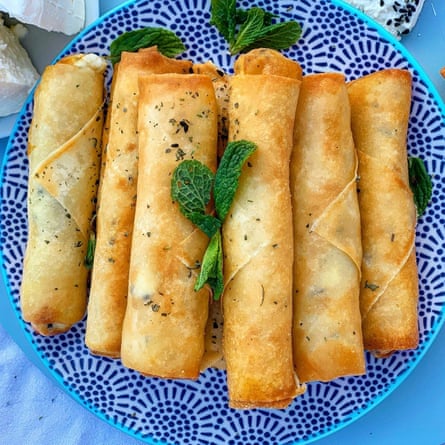
These crunchy rolls appear throughout the Middle East in various forms and are a staple on the Ramadan table. This version combines several types of cheese for a smooth, gooey center and is enhanced with nigella seeds and a bit of dried mint.
makes 15-18
Preparatory school 25 minutes
He cooks 15 minutes
A package of spring roll sheets
For the filling
100g passesI collapsed
150HalloumiGrated
200gm mozzarella massGrated
2 tablespoons cream cheese
4 teaspoons of black seed
½ teaspoon dried mint
oilFor frying
Place all the filling ingredients in a bowl, and mix well until combined. The mixture should be smooth but not loose.
Place the spring roll sheet on a clean surface in a diamond shape. Place a tablespoon of filling in the middle, slightly towards the top. Fold the sides over, then fold the top down, then roll it tightly into a cigar shape and seal it with a little water to secure it. Repeat with the remaining spring roll sheets and filling.
Freeze them in a single layer, or fry them immediately for 2-3 minutes, turning once or twice, until golden and crispy (allow an additional 5 minutes if frying from frozen). Drain briefly on kitchen paper and serve hot while the cheese is still melted.