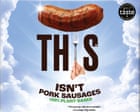
More than a dozen food companies have applied European Commission The use of terms such as “sausage” and “burger” for non-meat products should not be prohibited.
Companies including Linda McCarney Foods, Quorn and Dees signed a joint letter calling on commissioners to “let common sense prevail” ahead of debate on the proposed ban, which they said would cause “unnecessary confusion” without “helping anyone”.
The ban means, for example, selling bean burgers Europe Should be re-labelled as “patties” or “discs”, while the Welsh breakfast staple Glamorgan sausages – made with cheese and leeks – will probably become Glamorgan “tubes”.
The letter, organized by the Vegetarian Association, was sent to representatives of the European Commission, the European Parliament and the Council of the European Union. Such a request From Paul McCarney and eight MPs in December, the musician said labeling vegetarian sausages “should be enough for intelligent people to understand what they’re eating”.
Germany-headquartered supermarkets Aldi and Lidl, Europe’s biggest market for plant-based products, also oppose the proposed ban.
Paul Garner, commercial area leader at Suma Wholefoods, one of the longest-running producers of plant-based foods, said: “We’ve been championing vegetarian and plant-based foods since 1977 and we’ve seen a lot of innovation – and the inevitable pushback that follows.
“Here’s the thing: consumers are smart! They don’t need labels with policing words like ‘burger’ or ‘sausage’ to know what they’re buying. Clear ingredient lists and a little common sense are enough. Banning known terms makes life harder for shoppers and small producers without helping anyone.”
David Floechel, chief executive of Quorn Foods, said: “It’s a shame to spend energy revisiting a problem that consumers solved a long time ago.”
He said: “In 40 years, we have never once been told by a customer that they bought a Quorn product believing it was meat. We fully support the rules to prevent misleading claims, but we are concerned that these new restrictions risk creating unnecessary confusion and regulatory burden for manufacturers and consumers.
“We call on the European Commission, Parliament and Council to let common sense prevail and focus on policies that support innovation and accelerate the shift towards environmentally sustainable foods.”
Jenny Canham, public affairs lead at the Vegetarian Society, said: “As this ongoing debate draws to a close, businesses are the latest group to send a clear message that banning familiar vegetarian regulations is completely unnecessary. EU decision-makers must recognize the global risks of adopting language barriers.”
The measures, initially put forward by French centre-right MEP Céline Imart, were agreed in a vote in the EU Parliament last year. Widely seen as a victory for the meat industry amid a backlash against the popularity of meat-free diets, MEPs’ first vote in October passed it by 355 to 247.
However, the proposals must be approved by a majority of the EU’s 27 member states in a vote on March 5 to become law.