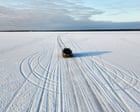
Temperatures are very low in Northern Europe, folks Estonia Now one can drive across the 20km stretch of frozen sea that connects the country’s two main islands.
The so-called “Ice Road”, connecting the islands of Saaremaa and Hyuma in western Estonia between the Baltic Sea and the Gulf of Riga, was officially opened on Sunday with a line of cars waiting to use it that afternoon.
After local residents suddenly started driving across the frozen sea, authorities decided to open the ice road, exposing themselves to serious dangers. Ferries are struggling to maintain normal services in the frozen sea after weeks of temperatures dropping to -10C (14F).
People living on the small island of Hyuma, population 9,000, travel to Saaremaa, population around 31,000, to shop, grab a cup of coffee or drop their children off at school. Getting to the big island ensures a connection to mainland Estonia.
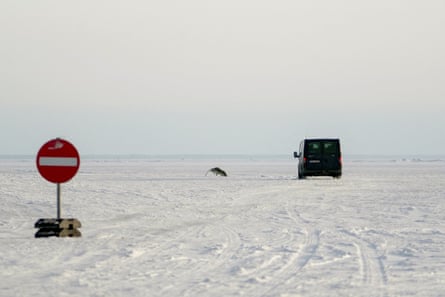
When the snow opened the road, it was also “part of our culture,” said Hyuma Mayor Hergo Tasuja.
“For generations and generations, the local people who live here, especially those who live near the sea, have been swimming and using boats in the summer,” Tasuja said. “And in the winter, it’s in their blood to go to sea” and step on the ice.
An “ice road” is essentially a marked corridor over the frozen sea where experts have determined the ice is thick enough to support the weight of cars driving on it.
Preparing the road is not easy, said Marek Koppel, road maintenance supervisor at Versten Eesti, an Estonian construction company responsible for road construction and maintenance.
Workers should measure snow thickness every 100 meters to identify areas with more than 24cm of snow, the minimum required for safety. They smooth out icicles and cracks. Weather conditions and snow density are monitored around the clock and the route is modified accordingly.
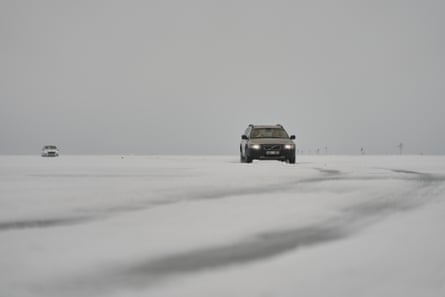
The vehicle must not weigh more than 2.5 tonnes and be driven at a speed of less than 20km/h (12.4mph) or between 40 and 70km/h (25 and 43mph) – anything in between can create vibrations that can damage the ice.
Cars are not allowed to stop and must maintain a safe distance from each other. Passengers cannot wear seat belts and doors must open easily to allow rapid exit in the event of an accident.
“The road is very good, very easy to ride,” said Alexei Ulivanov, who lives in nearby Tallinn and went to the islands to show his children that “it is possible to drive a car across the sea.”
According to Tasuja, the “ice road” was last used to connect the islands eight years ago. Since then, winters have been very hot in the country.
Construction company Versten said officials this week had signed a deal to open two more ice roads, this time connecting the Estonian mainland with two smaller islands.